Get Full Government Meeting Transcripts, Videos, & Alerts Forever!
Get email alerts on the Rezoning Industrial Development topic
No spam. Unsubscribe anytime.
Berkeley County planning commission delays decision on Eastport 40 industrial PD after residents raise traffic, wetlands and buffer concerns
Summary
Planning commissioners deferred consideration of a proposed 53.87-acre industrial planned development (Eastport 40 LLC) on Jedburgh Road until next month so the applicant can hold an additional community meeting and address staff deliverables including a final traffic impact analysis and departmental comments.
Planning commissioners on the Berkeley County Planning Commission voted to defer action on a rezoning request from Eastport 40 LLC — a proposal calling itself the Berkeley Commerce Park — after lengthy discussion about buffers, wetlands, traffic and community outreach.
The commission’s formal motion to postpone the item until the next monthly meeting was made by Commissioner Sonnet and seconded by Commissioner Hoover; the motion carried without a recorded roll-call tally. The item was deferred so the applicant can hold an additional community meeting and incorporate more feedback before the commission issues a recommendation to County Council, which has final authority on rezoning.
The developer’s draft park plan would rezone about 53.87 acres along Jedburgh Road from Agricultural Flex 1 (Flex 1) to a Planned Development Industrial Park (PD-IP). Staff said the conceptual layout shows six buildings totaling roughly 444,560 square feet (applicant-provided figure) with allowed uses excluding heavy manufacturing, mining and concrete plants. The PD text proposes a 100-foot minimum buffer adjacent to residentially zoned parcels that staff and the developer said cannot be reduced “under any circumstances.” The PD would also limit building height (PD text caps height at 80 feet) and requires preservation of wetlands and riparian buffers, including a proposed 75-foot buffer along one wetland to satisfy mitigation requirements.
Staff listed several items the applicant must address as the application moves forward: host an additional town-hall-style community meeting with attendance logs and feedback, incorporate written comments from fire, police, EMS and engineering into the PD text, finalize the Traffic Impact Analysis (TIA) and the related Jedburgh Corridor cost-share remittance process, account for any needed future right-of-way along Jedburgh Road, and consider connectivity to the adjacent Berkeley Charleston Tradeport Industrial Park to better distribute truck traffic.
West Mooney, a civil engineer with Revere Group representing Eastport 40 LLC, said the applicant plans another community meeting and is coordinating with county departments. “We have agreed to participate in that Jedburgh Road corridor study cost sharing agreement,” Mooney said, and added the sanitary sewer connection timeline depends on an ongoing Berkeley County Water and Sewer capacity project that staff expects to finish in 2026.
Mooney acknowledged the TIA is still in draft and that trip estimates likely represent a "worst-case" scenario; staff said the draft TIA estimates the PD would generate 529 peak-hour AM/PM trips and recommends turn-lane improvements and cost-share contributions of $3,570.70 per new peak-hour trip (figure presented by staff). The applicant also told the commission it would pay EMS fees at $0.41 per square foot, a contribution noted in the staff presentation.
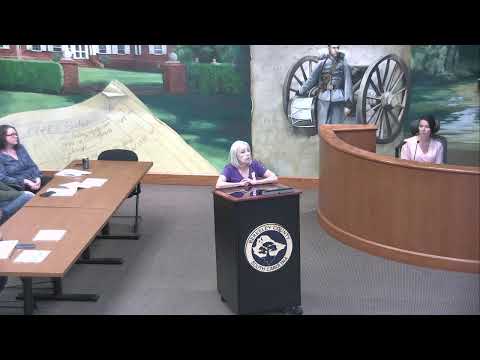
Nearby residents who spoke opposed the rezoning on quality-of-life grounds. John Carlin of 273 Smith Creek Lane told the commission he lives about 300 feet from the largest proposed building and said: "Put yourselves in my shoes — you're gonna have the noise, lights, and a building." Vince Dibble, who said his property is less than 200 feet from the largest building, urged commissioners to pursue alternate site access so trucks would not drive past a string of residences.
Commission discussion repeatedly returned to community outreach and details in the PD text. Commissioners and staff noted the applicant already increased the residential buffer from 50 feet to 100 feet in response to earlier feedback and said the applicant had reoriented loading docks away from nearby houses.
Because the planning commission is a recommending body, any change to zoning would next go to the county’s land use committee and County Council. The commission specifically deferred its recommendation to allow the applicant to conduct the additional public meeting, finalize departmental input and update the PD text and TIA as required.
The commission’s deferral does not approve the rezoning; if denied, the property would remain subject to Agricultural Flex 1 standards, staff said. If approved by County Council later in the process, the developer would be held to the PD text as drafted and any subsequent commitments reflected in that text.
No formal dates for the applicant’s next community meeting were given at the planning commission meeting; staff asked the applicant to provide meeting dates and documentation to the planning department.