Get Full Government Meeting Transcripts, Videos, & Alerts Forever!
Get email alerts on the Sidewalk Master Plan topic
No spam. Unsubscribe anytime.
Dallas Transportation staff report progress on sidewalk master plan; program has built 48 miles to date
Summary
City transportation staff briefed the commission on the Dallas Sidewalk Master Plan, reporting roughly 48 miles of sidewalks built under the program and work to bring existing curb ramps into ADA compliance.
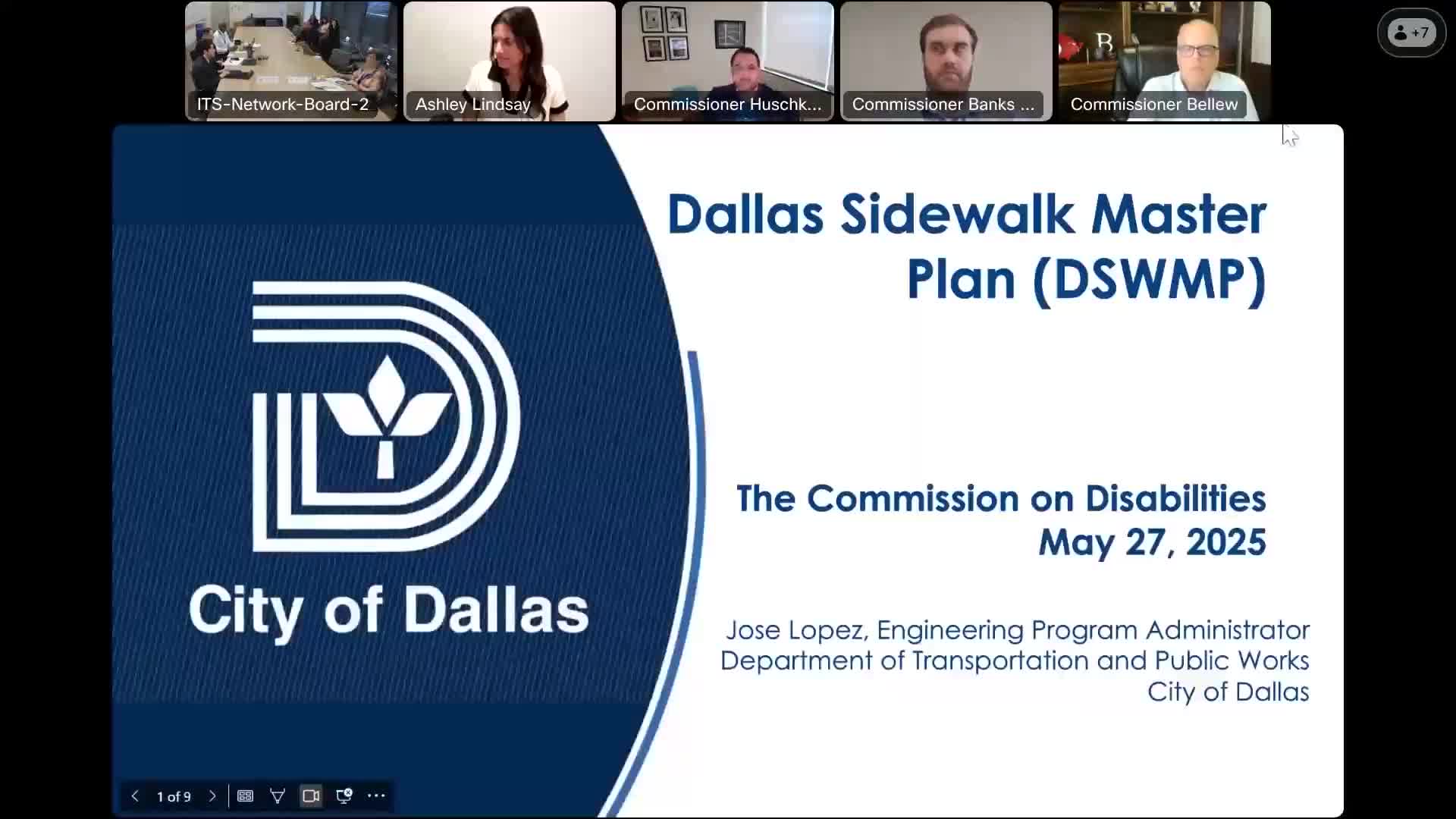
The Dallas Department of Transportation and Public Works briefed the Commission on Disabilities on May 27 about progress implementing the city’s Sidewalk Master Plan and the department’s priorities for accessibility.
Jose Lopez, engineering program administrator for the sidewalk program, told commissioners the master plan — adopted in draft form in 2021 and used to prioritize projects beginning in 2022 — guides citywide sidewalk construction and upgrades. Lopez said the program had completed approximately 48 miles of new or improved sidewalks at a cost of roughly $51.2 million and installed about 3,700 curb ramps (detectable warning surfaces and ADA-compliant landings) with an associated cost of about $9.6 million. The master plan focuses work using six core principles: safety, environmental sustainability, equity, economic vitality, housing and innovation.
Lopez said the city is building to the 2010 ADA Standards and using Right-of-Way Accessibility Guidance (PROWAG) for many project design elements, noting typical minimum widths of four to six feet depending on separation from the curb and site-specific constraints. He said the program is constrained by staffing and by coordination needs with other city projects (drainage and utilities) and franchise utilities; the program team has grown but remains limited.
Lopez estimated the program currently delivers roughly seven to eight miles of sidewalks a year and said the city is exploring ways to increase productivity by about 25 percent. He gave a broad timeline: many projects that require drainage design or other coordination can take two to three years from design to construction; the complete build-out of all identified needs could take several years, depending on funding and the need to coordinate with other capital programs.
Commissioners asked about maintenance, utility cut restoration and private-property responsibilities. Lopez said property owners remain responsible for maintenance and that the city’s cost-share program can reduce costs for homeowners rebuilding sidewalks; franchise utility coordination remains a challenge because utilities sometimes dig in recently improved sidewalks and leave repairs pending.
Lopez said the city will start a formal review of the plan and focus areas later in the year to update priorities and scoring. He noted commitments to incorporate tree preservation into sidewalk designs where feasible. Commissioners emphasized frequent, near-term maintenance issues, including storm debris on ramps and the need for a clear public reporting pathway for unsafe or blocked ramps.