Get Full Government Meeting Transcripts, Videos, & Alerts Forever!
Get email alerts on the K 12 Health Curriculum topic
No spam. Unsubscribe anytime.
Lake Oswego School Board adopts K–12 health curriculum after limited public review
Summary
The Lake Oswego School District board voted unanimously to adopt a K–12 health curriculum after a month-long public review. District staff say parents may opt students out of specific lessons; principals and teachers will manage alternative activities.
The Lake Oswego School District Board of Directors voted to adopt a K–12 health curriculum following a month of public material review and eight formal responses from community members.
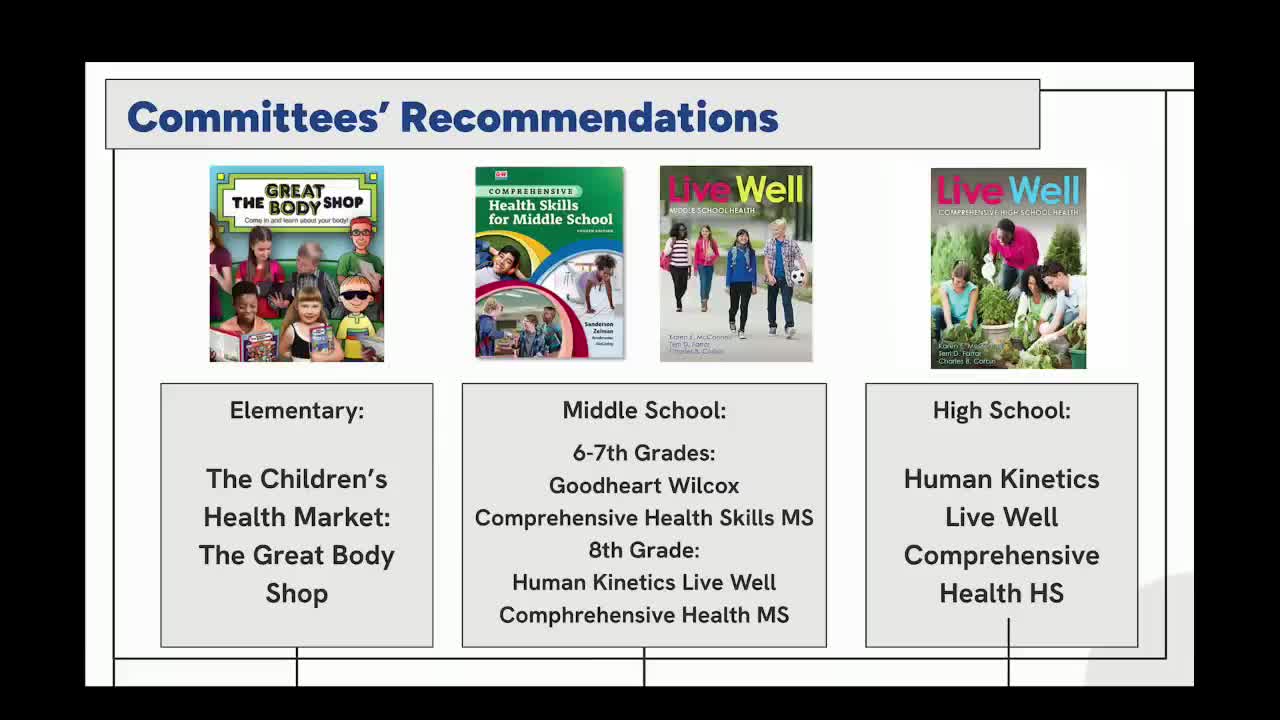
District staff presented the recommended instructional materials for each grade band: the Great Body Shop for elementary grades; Goodheart-Willcox comprehensive health skills for sixth and seventh grade; Human Kinetics Live Well for eighth grade and for high school. Staff said the selections align with the Oregon Health Education Standards and that some content in the adopted materials is required by Oregon law.
Why it matters: The board’s adoption sets the instructional materials the district will use. Staff emphasized that families retain the right to opt students out of specific lessons or units and that principals and classroom teachers will work with parents to arrange alternate learning experiences.
Board packet materials show the district hosted a public review from April 28 through May 23. Staff reported 170 views of the posted materials and eight submissions on the district feedback form; four respondents expressed general satisfaction while four raised concerns — chiefly age-appropriateness and whether some topics should be taught at home. District presenters said those concerns generally reflected state-required content and reiterated the opt‑out procedure.
During discussion board members asked for clarity on the practical mechanics of opt-outs, especially at elementary grade levels. Staff representatives said practices vary by school and team; common approaches include shifting students within a grade-team schedule or assigning student ambassadors or supervised activities so the student is not isolated during the school day. Board members asked staff to return guidance that would reduce the chance that an opting-out student has a poorer experience because of scheduling changes or substitutes.
A motion to adopt the K–12 health curriculum passed without recorded dissents. The board did not change the recommended materials during the meeting.
Looking ahead: Staff will continue outreach and recommended teacher notifications to families before units begin so parents have timely notice and can arrange opt-outs when desired.