Get Full Government Meeting Transcripts, Videos, & Alerts Forever!
Get email alerts on the Property Tax Appraisal topic
No spam. Unsubscribe anytime.
Williamson Central Appraisal District outlines 2025 values, homestead audit process and state bills affecting Georgetown taxpayers
Summary
Alvin Lankford of the Williamson Central Appraisal District reviewed 2025 preliminary market and taxable values for Georgetown, explained the district's homestead verification approach and highlighted state legislation that could change exemptions and business personal property treatment.
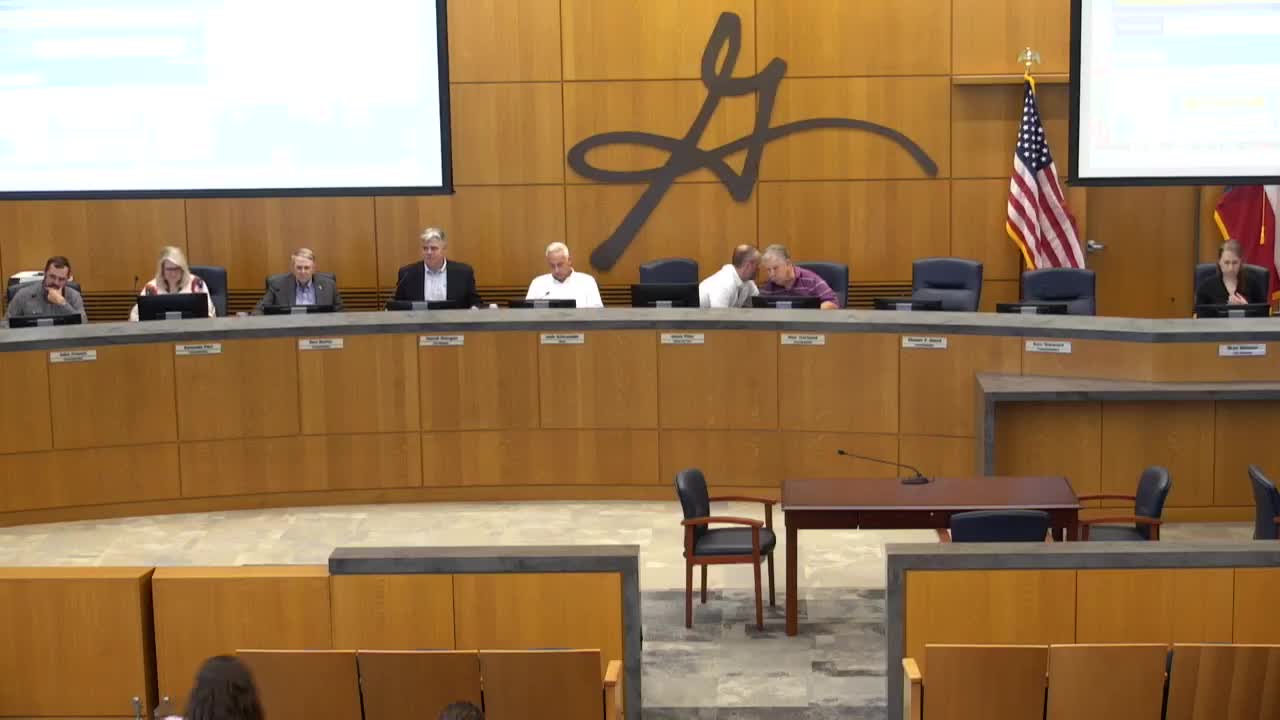
Alvin Lankford of the Williamson Central Appraisal District told the Georgetown City Council at a workshop presentation that WCAD's 2025 appraisal roll shows preliminary market and taxable values for the City of Georgetown and described how the district verifies homestead exemptions.
Lankford said the appraisal district's online tools now publish sales-comparison information and maps for each property and that WCAD sends new homestead applications only to properties it can reasonably flag for review. "There was a law change, last session, that changed tax code 11.43 h dash 1," he said, describing the new five-year verification authority.
The presentation matters to Georgetown residents because the appraisal roll determines the taxable base for city services and schools and because state legislation Lankford described would change the size and recipients of some exemption programs. Lankford urged homeowners to file homestead exemptions themselves and described new transparency features on the WCAD website, including a QR code on the notice of appraised value and a public-facing sales-comparison grid.
Key points from the presentation: - Homestead verification: Lankford said WCAD uses an external audit company and open government data to identify potential duplicate homesteads or conflicting addresses. He estimated WCAD sends a new application for verification on roughly 4% of homesteads, rather than mailing reapplications to all homestead accounts.
- Website transparency: Lankford demonstrated a new appraisal notice and an online sales-comparison grid that shows the subject property, comparables used, and adjustments. "We're trying to get ahead of that and put that information right in the appraisal notice," he said.
- Assessed vs. market value: Lankford reminded the council that the homestead assessed value is capped at 10% annual increases until the assessed value reaches market value and said about 30% of Williamson County properties remain capped. He walked the council through Power BI dashboards showing that Georgetown's preliminary total market value rose to about $24.75 billion and that preliminary taxable value was roughly $21 billion (numbers listed as preliminary, before protests).
- Time adjustments and methodology: Lankford explained that sales are time-adjusted to a Jan. 1 valuation date and that WCAD uses different approaches for residential (sales comparison) and many commercial properties (income approach, NOI), noting commercial appraisal notices do not include the same sales-comparison grid.
- State legislation affecting taxpayers: Lankford cited several bills and proposals. He said one bill would increase the school homestead exemption ceiling from about $100,000 to $140,000 and is "likely to pass"; he described House Bill 9 as creating a $125,000 business personal property exemption and estimated that could remove roughly $1.5 billion from Williamson County's BPP tax roll. He also discussed the temporary circuit-breaker 20% cap on nonhomesteaded property (set to expire in 2026) and a bill that would let appraisal districts publish exterior sketches and higher-resolution aerial imagery online.
Council members asked technical questions about commercial appraisal notices, time-adjustment methodology for sales, and how WCAD classifies multifamily versus townhomes. Lankford said commercial valuations are governed by how the market values the property (income approach when buyers look at income) and described effective year-built and quality-class (R0 to R10) adjustments for residential valuations.
Lankford repeatedly encouraged taxpayers to file homestead exemptions themselves ("it takes literally 3 to 5 minutes"), described WCAD performance measures (property value study and MAP review), and summarized budget comparisons showing WCAD among the less expensive appraisal districts per capita and per levy.
The council did not take any formal action during the presentation; the material was presented for information and will inform future discussions about city budgeting and outreach to taxpayers. Lankford pointed council members to the WCAD website and the Power BI dashboards he used for the demonstration.
For more detail the appraisal notices, the sales-comparison grid and the homestead filing link are available on the Williamson Central Appraisal District website; Lankford said the figures shown were preliminary and will change after the protest period concludes.