Get Full Government Meeting Transcripts, Videos, & Alerts Forever!
Get email alerts on the Emergency Management topic
No spam. Unsubscribe anytime.
Legislature codifies Guam Comprehensive Emergency Management Plan, mandates annual review and exercises
Summary
Lawmakers advanced Bill 66-38 COR to the third reading to require the Guam Comprehensive Emergency Management Plan (GCEMP) be codified, reviewed annually, and exercised; sponsors said the measure addresses lapses in plan maintenance and federal grant compliance.
The Legislature moved Bill 66-38 COR to third reading after extended floor debate in which lawmakers argued that codifying the Guam Comprehensive Emergency Management Plan (GCEMP) and requiring regular reviews and exercises is necessary to maintain federal grant eligibility and to avoid past lapses in preparedness.
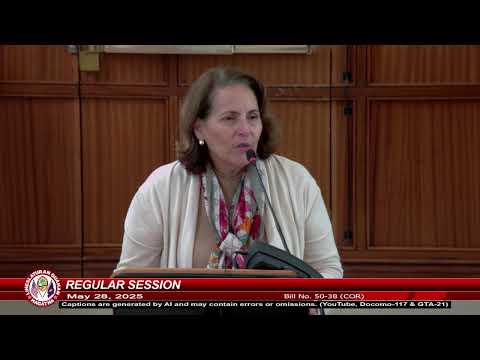
Speaker and bill author Frank (referred to on the floor as the speaker from Barragada) told colleagues the GCEMP was created to meet federal preparedness standards and that annual review and exercises had not been sustained in recent years. He tied the lack of formal exercises and reviews to operational failures and to potential federal funding risks: “...millions of dollars lost and possibly having to pay millions of dollars back because of the absence of a plan and the absence of exercising and adhering to a plan,” he said.
The amended bill would codify the GCEMP in statute, require the plan to be reviewed and exercised annually, require the governor to approve the plan and any amendments, and require submission of the updated plan to the Legislature and publication online. Supporters stressed the plan should be a “living” document, updated for hazards such as pandemics, typhoons and cybersecurity issues, and that exercises could range from tabletop drills to full-scale deployments. Several senators who had been involved in earlier versions of the plan or in past exercises described operational lapses during Typhoon Moir and the COVID-19 pandemic as evidence the plan needs statutory force and regular testing.
Amendments adopted on the floor included sending exercise reports to the Legislature’s speaker (to ensure a permanent public record) and allowing the governor to approve amendments without seeking legislative approval for routine updates while preserving the Legislature’s oversight through required reports. Committee and floor discussion noted an estimated average cost for conducting exercises — used in planning and grant applications — of about $196,000 per year; sponsors said federal grant programs (homeland security, emergency management, cybersecurity) typically fund such exercises but that funds had sometimes been spent elsewhere.
The chamber approved a floor amendment to add the speaker and the chairperson of the legislative oversight committee as recipients of the plan and exercise reports. By unanimous consent the bill, as amended, was placed on the third reading file and the sponsor added cosponsors on the floor.
The bill requires annual reviews and exercises and sets reporting requirements; it does not itself appropriate a new recurring local appropriation but sponsors discussed grant-funded exercise options and potential budget oversight if agencies fail to implement the plan.
The measure will proceed to third reading and likely to final passage, according to floor actions recorded in the transcript.