Get Full Government Meeting Transcripts, Videos, & Alerts Forever!
Get email alerts on the Public Health Contracts topic
No spam. Unsubscribe anytime.
Board rejects $10,000 MPHI accreditation contract after debate about privacy and nonprofit roles
Summary
A proposed $10,000 contract with the Michigan Public Health Institute to prepare Ottawa County Public Health for accreditation failed after commissioners raised concerns about nonprofit contractors, privacy protections and ideological ties.
The Board of Commissioners voted on May 27 on a $10,000 contract with the Michigan Public Health Institute (MPHI) to support Ottawa County Department of Public Health work on performance management ahead of the county's 2026 accreditation cycle; the motion to approve the contract failed on a tie vote.
The county's epidemiologist, Dorel Glassauer, described the grant-funded work and said the primary purpose was staff training and support to meet state local public health accreditation requirements. "We have no intention under the umbrella of this contractor transmitting any PHI to MPHI or any other entity," Glassauer said. He said the county plans in-person training for staff and that the MPHI-provided modules would be asynchronous, certificate-bearing modules used primarily as a documentation checkbox for accreditation.
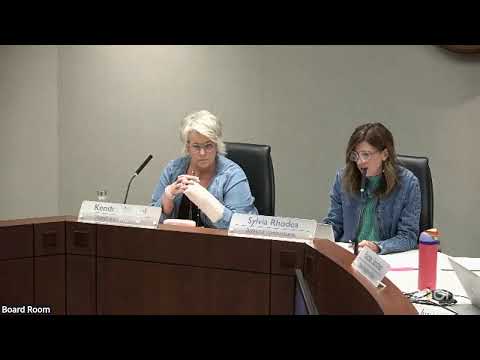
Commissioner Sylvia (last name not specified in the transcript) and others questioned the choice of MPHI as the contracting organization and raised concerns about whether public health tasks should be contracted to non-governmental organizations. Commissioner Moss said he would prefer the county fund the $10,000 from general contingency rather than enter a contract with MPHI, which he described as "ideologically captured." Moss asked whether MPHI's role effectively bypasses state transparency rules. "I do not support working and tying ourselves with a contract that is optional to MPHI," he said.
Glassauer said the vendor performing in-person training would not be MPHI and that the contract’s privacy and HIPAA-language exist to cover sensitive projects but are not expected to be used because the deliverables are training certifications and not patient-level data. "No PHI will be transmitted under this contract," he said.
A roll call taken after debate recorded the following votes on the motion to approve the MPHI contract: Commissioner Kires — yes; Commissioner Moss — no; Commissioner Miedema — no; Commissioner Wenzel — no; Commissioner Berry — yes; Commissioner Zylstra — yes; Commissioner Brugger — yes; Commissioner Bonnema — no; Commissioner Rodey — no; Commissioner Tieteples — yes. The vote count was five in favor, five opposed; the motion failed.
Ending: County public-health staff said they will continue accreditation preparation and agreed to discuss alternate funding or vendors; commissioners who opposed the MPHI contract said they may consider other funding sources or vendors for the same training needs.