Get Full Government Meeting Transcripts, Videos, & Alerts Forever!
Get email alerts on the Municipal Budget topic
No spam. Unsubscribe anytime.
East Lansing council adopts FY26 budget, tax rate and fee schedule after amendments
Summary
The City Council unanimously adopted the fiscal year 2026 budget, tax rate and fee schedule after a series of last‑minute amendments that removed two fees from the schedule. Council and staff emphasized the city’s structural budget pressures and the need for further work ahead of FY27.
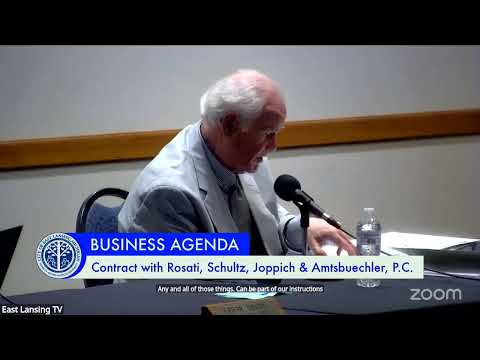
The East Lansing City Council unanimously approved the fiscal year 2026 budget, tax rate and fee schedule at its May 27 meeting after discussion and several council amendments to the fee schedule.
Audrey Kinkade, the city’s chief financial officer, told council the adopted resolution incorporated prior deficit‑reduction proposals and reflected fund equity reductions discussed in earlier budget sessions. Council debated individual fee items and offered several amendments before taking final action.
Council moved and approved an amendment removing the domestic partner fee and the medical marijuana caregiver fee from the fee schedule. An amendment from Council Member Watson to adjust the restaurant annual fee for small businesses failed; a later amendment to delete business charges tied to police calls also failed. After debate and several roll calls, the main motion to adopt the FY26 budget passed unanimously.
During discussion, staff summarized the city’s multi‑year fiscal forecast and told council that without action the general fund balance would decline in coming years. Kinkade confirmed the fund equity reduction built into the adopted document was $2,015,945 (reduced from an earlier $3,100,000 figure). Council members questioned several fee line items, including outdoor seating fees and a sidewalk/business seating fee structure; staff confirmed application and per‑chair fees apply and noted seasonal limits for sidewalk dining.
Council also discussed personnel and service tradeoffs in the budget. Council asked about specific positions, including an EMS coordinator and police positions, and noted expected overtime savings do not fully offset the proposed added positions’ costs. City Manager Mr. Bellman and staff described the budget as incorporating reductions, departmental proposals for cost savings and the use of one‑time revenues to smooth near‑term pressures.
The council’s unanimous adoption of the FY26 budget completes annual appropriations for the coming fiscal year while leaving several operational and structural questions for the FY27 budget process.