
Bill would create Nevada Health Authority to centralize purchasing, Medicaid and exchange functions
Get AI-powered insights, summaries, and transcripts
Subscribe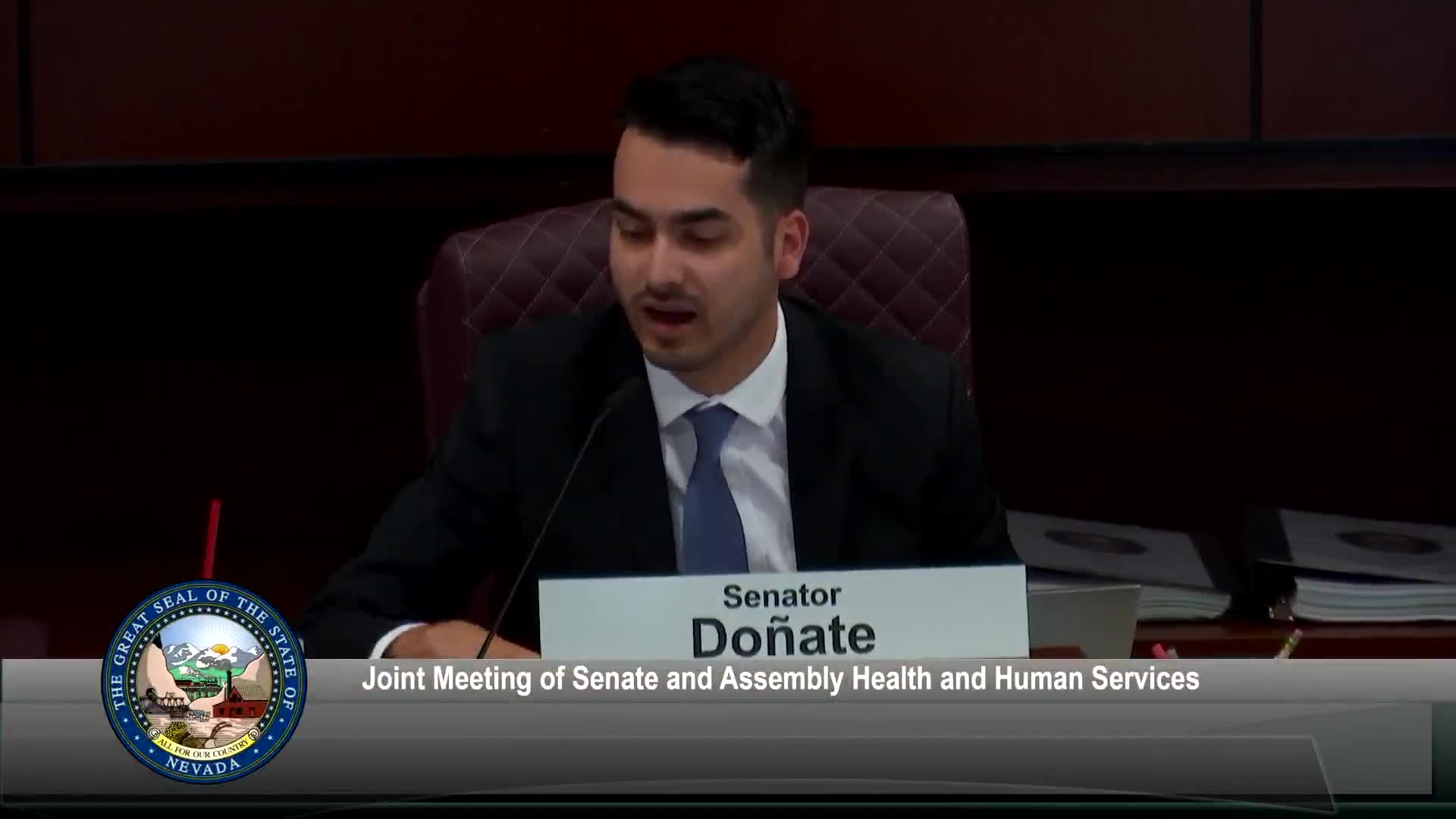
Summary
Senate Bill 494 would reorganize DHHS, establishing a Nevada Health Authority to purchase health coverage, operate Medicaid functions, administer the Silver State Health Exchange and host a Medicaid inspector-general unit. Supporters said centralized purchasing can improve value; labor and PEBB stakeholders sought refinements to board authority.
Senate Bill 494, presented by Department of Health and Human Services Director Richard Whitley and Nevada Medicaid Administrator Stacy Weeks, would split the current DHHS into a Department of Human Services (for service delivery) and a new Nevada Health Authority responsible for purchasing, paying for and regulating health-care coverage across multiple state programs.
"This will serve as the state's single state agency for regulating, purchasing, and paying for health care services for Nevadans," Weeks told the joint Senate and Assembly health committees, describing the authority's mission to improve outcomes, sustain funding and coordinate purchasing strategies.
What the proposal would do
- Create a Nevada Health Authority as the single state agency for Medicaid, transfer CHIP administration, and centralize the Silver State Health Insurance Exchange and the state's public-option functions under a "consumer health" division.
- Establish divisions within the authority for (1) Nevada Medicaid (formerly the division of health care finance and policy), (2) consumer health (exchange, public option and related programs), and (3) health-care purchasing and compliance (including licensing, investigations and a new Office of Medicaid Inspector General).
- Transfer the Public Employees' Benefits Program (PEBB) to the authority and add mechanisms to allow the PEBB board to use the authority's purchasing resources, subject to board oversight; the administration circulated a conceptual amendment intended to preserve key board functions while enabling centralized purchasing support.
Support and concerns
Hospitals, medical associations, medical schools, county leaders and business groups testified in favor, saying centralized purchasing and unified data would improve efficiency, strengthen reimbursement and better position Nevada to attract federal funds. Jacqueline Nguyen of the Nevada State Medical Association said the authority would "maximize existing resources and strengthen the coordination [of] delivery of our systems." Representatives of the Nevada Association of Counties said counties expect improved implementation of state programs under a consolidated structure.
Public-employee and retiree organizations and the PEBB stakeholder coalition supported the bill in concept but asked for amendments to preserve fiduciary powers for the PEBB board and to ensure participant protections. AFSCME and retiree groups filed suggested amendments to narrow or clarify appointment processes and to preserve board oversight of contracts; administrators said they had worked with those stakeholders to address concerns and had filed conceptual amendments for committee consideration.
Inspector general and program integrity
The bill creates (and the administration's amendment clarifies) an Office of Medicaid Inspector General within the authority to perform audits, surveillance and program-integrity work separate from program operations. Weeks said the separation is intended to remove conflicts that can occur when program staff also perform enforcement work and to ensure independent investigations and referrals to the attorney general's office where necessary.
Federal coordination and implementation
Whitley emphasized that some program moves require federal approvals or interlocal agreements. The bill allows the authority to delegate certain eligibility and enrollment functions to other state or local agencies if those entities meet federal requirements and sign interlocal agreements; the administration said it will work with counties, tribes and other partners on implementation details.
Next steps and conclusion
The hearing generated broad support and detailed technical feedback; no final committee vote was recorded during the session. Sponsors filed a conceptual amendment that clarifies PEBB governance and board processes, adds procedural language for county delegation of eligibility tasks and protects access to background-check data during transfers. Committee members indicated additional amendments could be considered in follow-up as the bill moves through the legislative process.