Get Full Government Meeting Transcripts, Videos, & Alerts Forever!
Get email alerts on the School Budget topic
No spam. Unsubscribe anytime.
Wake County Schools finance committee clarifies board budget, urges wait for county and state outcomes
Summary
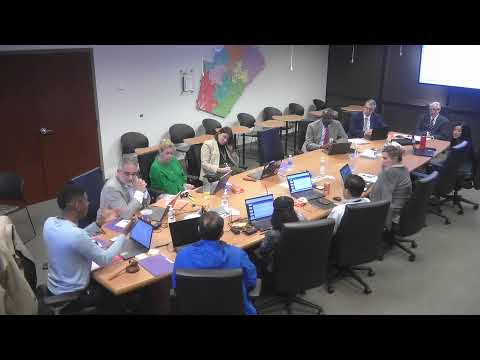
Chair Swanson called the finance committee to order and the panel spent most of the meeting clarifying the Wake County Board of Education’s recently approved proposed budget and the next steps as the county and state complete their budget processes.
Chair Swanson called the finance committee to order and the panel spent most of the meeting clarifying the Wake County Board of Education’s recently approved proposed budget and the next steps as the county and state complete their budget processes.
The committee’s presentation, led by staff member Mr. Nieder, described what the board proposed and corrected public narratives about items that had generated concern. "The budget eliminates dental insurance coverage for staff. That's false," Mr. Nieder said, adding that the superintendent’s and the board’s budgets never proposed terminating dental coverage and that the board removed any planned shift of premium responsibility from employees to the district. Under the current proposals, an employee premium of $6 per month for self dental coverage would continue.
The presentation said the board and superintendent included reductions because projected new needs — including opening four new schools, state-mandated salary and benefit increases and other cost drivers — exceed forecast revenue growth. Those cost drivers were described as roughly $60,000,000 in additional needs and a request by the board for an additional $40,300,000 in county funding; the county manager, David Ellis, proposed a $35,000,000 increase in funding to the district in his recommendation to county commissioners.
On staffing, committee members and staff repeatedly corrected an earlier mischaracterization that the budget would cut classroom staffing formulas. Mr. Nieder said the superintendent’s budget made no changes to the class-size formulas at elementary, middle or high school levels. The budget “does include a reduction of up to approximately 50 positions across the district,” Mr. Nieder said; staff emphasized those reductions are expected to be achieved primarily by eliminating vacant positions and by placing currently employed licensed staff into other roles where possible. The staff repeatedly framed the approximately 50 positions in the context of roughly 20,000 full-time district employees.
Committee members pressed staff about impacts to central services and classrooms. A board member asked what a Senate proposal to cut central-office allotments by 5% would mean locally; staff estimated Wake County would represent about 10% of that allotment and that the reduction would translate to roughly $550,000 in lost state dollars for central office personnel under a across-the-board assumption. Committee members said that, because the board previously reduced central services in the district’s internal budget process, further reductions could have indirect classroom impacts.
The committee also reviewed differences between the North Carolina Senate and House budget proposals. The committee described the Senate plan as favoring smaller salary increases, offering a step increase schedule with a one-time $1,500 bonus for many employees and proposing deeper cuts in higher education; the House proposal was described as favoring larger step increases and raising starting pay substantially (examples cited in the presentation showed state base pay rising for early steps under the House proposal). Mr. Nieder noted that these state proposals are still in negotiation and that details — including final employer retirement and health contribution rates — will affect Wake County’s final local needs.
Superintendent Robert Taylor and other staff raised concern about a Senate provision that would eliminate state funding for MSA intern stipends and remove the 500-hour internship requirement, which they said would reduce opportunities for paid, full-time principal internships that help develop future school leaders. "It will absolutely impact it," Taylor said of the stipend elimination, describing how internships allow candidates to step away from teaching duties to train alongside principals.
Next steps: staff recommended the board adopt an interim budget at its second June meeting to allow the district to operate while awaiting final county and state decisions. Staff said they will continue to monitor county deliberations (the county held public hearings and work sessions) and state negotiations and will return with updated figures and recommendations to reconcile the proposed budget to final county and state appropriations.
Votes at a glance: The committee approved adoption of the April 29 meeting minutes at the meeting. The motion to adopt the minutes was made by Chair Hegarty, seconded by Miss Gordon, and the chair said the ayes carried the motion. Separately, the presentation recounted that the full board previously approved the board’s proposed budget on May 6 and subsequently submitted that proposal to the Wake County Board of Commissioners for consideration.
The committee adjourned after the update; staff said the finance committee will not meet in June or July and intends to resume in August when more state and county budget information should be available.