Get Full Government Meeting Transcripts, Videos, & Alerts Forever!
Get email alerts on the Gaza Humanitarian topic
No spam. Unsubscribe anytime.
UN says aid flow to Gaza remains a trickle; WHO warns health system near collapse amid looting and attacks
Summary
The United Nations said a small trickle of humanitarian assistance has entered Gaza after nearly 80 days in which aid was blocked, but large stockpiles remain on the Israeli side and supplies moving through Kerem Shalom have been subject to looting and delays.
The United Nations said a small trickle of humanitarian assistance has entered Gaza after nearly 80 days in which aid was blocked, but large stockpiles remain on the Israeli side and supplies moving through Kerem Shalom have been subject to looting and delays.
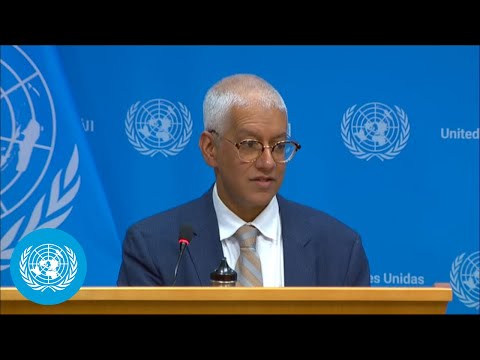
Farhan, the United Nations spokesperson, said that nearly 400 trucks had been cleared for entry to Gaza through the Kerem Shalom crossing in recent days but “supplies from only about 15 trucks have been able to be collected” inside Gaza. He paraphrased Secretary-General António Guterres as saying the aid authorized so far “amounts to a teaspoon of aid” when much larger volumes are required.
The UN described a complex, multi-step clearance process at Kerem Shalom in which manifests are reviewed, trucks are searched and loads are transferred between Israeli and Palestinian platforms. The spokesperson said the UN is seeking to shorten those steps and to open safer routes so deliveries can move faster once clearances are obtained.
The World Food Programme reported that 15 truckloads of food were looted en route to bakeries, and WFP warned that looting appears driven by desperation and hunger rather than organized criminal activity. The UN said teams on the ground have worked to engage communities to maintain trust so future thefts can be reduced. A small number of bakeries were able to operate yesterday using flour and fuel the UN provided, and partners collected bread for direct distribution.
The World Health Organization said the intensification of hostilities has brought Gaza’s already weakened health system to a breaking point. The UN briefing said an attack on Al-Awda Hospital in North Gaza burned patient-triage tents and medical supplies and destroyed vehicles in the basement; WHO’s attempt to reach the hospital was impeded and the fire had not been fully extinguished as of the briefing. Over the past week the UN reported four major hospitals suspended services because of hostilities, attacks or orders to evacuate; the briefing cited Kamal Adwan, Indonesia (Hamad), European Gaza and another facility.
The spokesperson said UN staff are at risk if security measures for convoys are not in place and reiterated that the UN “will not take part in any scheme that fails to respect international law and the humanitarian principles of humanity, impartiality, independence, and neutrality.” He also said roughly 80% of Gaza has been designated either an Israeli militarized zone or an area where people have been ordered to leave.
The briefing also described violence in the West Bank. The Office for the Coordination of Humanitarian Affairs (OCHA) reported rising settler attacks near Ramallah and in the Salfit area; one Bedouin community of about 20 households began dismantling homes after an outpost was established less than 50 meters away. In the Salfit-area town of Burqin, nearly 50 settlers reportedly torched Palestinian vehicles and eight residents were injured, some by burns sustained while trying to extinguish fires.
Why it matters: UN officials said the current scale of needs and damage means much larger, sustained, and faster humanitarian access is needed to prevent further deaths and collapse of basic services.
Looking ahead: The UN said it will continue to press relevant authorities to expand clearances, open safe routes and increase the volume of assistance, while working with communities to reduce looting and protect convoys.