Get Full Government Meeting Transcripts, Videos, & Alerts Forever!
Get email alerts on the Grants And Funding topic
No spam. Unsubscribe anytime.
Denton City staff outline HOT and sponsorship application process, deadlines and requirements
Summary
Denton City staff walked applicants through the hotel-occupancy-tax (HOT) and sponsorship application portal, spelling out documentation, budget, attendance and reporting rules; the portal opened May 12 and the submission deadline is June 13.
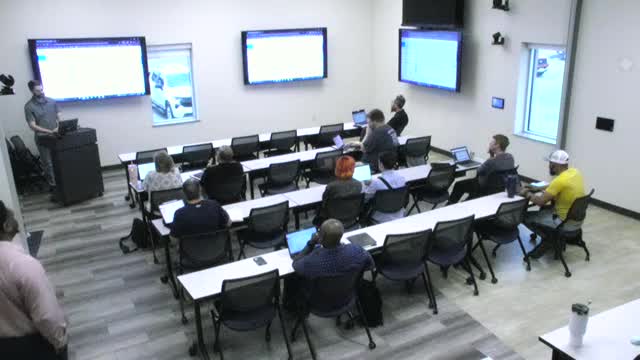
Denton City staff led a step‑by‑step webinar on the city’s hotel‑occupancy‑tax (HOT) and sponsorship application process, saying the online portal opened May 12 and that the formal application deadline is June 13.
The session explained eligibility and required materials for both HOT awards and sponsorships, including a minimum‑attendance threshold, budget details and supporting documents. Staff repeatedly stressed that HOT funds are intended primarily to advertise the city and draw visitors into Denton, while sponsorships are less restrictive but smaller in total size.
Why it matters: HOT funding is drawn from hotel‑occupancy taxes and is aimed at increasing tourism and hotel stays. The city will present full applicant requests to a review committee and then to the full City Council as part of the budget adoption process; applicants should expect a committee recommendation in July and a final budget approval in September.
City staff (identified in the meeting as “Staff member”) told applicants to describe their event and how requested funds will be used: “This is our plan,” the presenter said about listing anticipated funding and expenditures, and added, “Our goal for hot funds is everything that comes in the door goes right back out into the community.”
Key application requirements and timeline
- Deadline: The portal opened May 12; the submission deadline is June 13. - Attendance threshold: Applicants must document a minimum annual attendance of 200 people to be eligible for HOT funds. Staff said events under that number are generally not eligible until they can demonstrate growth. - Documents required up front: active nonprofit status, IRS tax determination letter, most recent 990, two years of financials (audited preferred but not mandatory), a current board list with addresses, bylaws, meeting schedule, W‑9 and a list of donations. Staff urged applicants to upload these documents when they apply to avoid delays in payment if awarded.
Budget and use rules
- Request and presentation: Applicants enter the full amount they are requesting. The city compiles all requests and compares them to forecasted HOT revenues before making committee recommendations. - Primary uses: Staff said the city expects most HOT money to be used for advertising that draws non‑local visitors into the city. The state statute’s categories (advertising, arts, historical, sporting events, etc.) are used to classify requested uses; applicants were advised to quote statute language and explain how the event fits those categories. - Administrative costs: If an organization’s general operating budget already devotes a percentage to administration, HOT funds may be used for administrative costs up to that same percentage of the HOT award. Staff gave the example that an organization whose regular budget is 50% administrative could use up to 50% of its HOT award for administration, subject to review and documentation (previous‑year financials). - Distribution: Staff said HOT revenues received by the city are intended to be redistributed to awardees ("everything that comes in the door goes right back out into the community").
Sponsorship vs HOT funds
- Sponsorship funds are smaller and less restrictive than HOT funds. The city indicated a sponsorship cash pool and an in‑kind pool (cash pool cited as $150,000; in‑kind total reported in the session as “400” — transcript did not specify the unit for that number). Applicants should state whether they are requesting cash sponsorship, in‑kind city services, or both. - In‑kind sponsorship: If applicants request in‑kind city services (police, fire/EMS, solid waste, facility rental/parks staff), those costs are calculated internally by the relevant city departments and presented to the committee. Applicants were told to check the in‑kind box even if unsure, which will trigger a special‑events review to determine likely service needs and costs.
HOT‑specific questions the city emphasized
- Marketing and metrics: For HOT requests, staff asked how applicants will market the event to audiences outside the city limits and what metrics (ticketing, registrations, ad impressions, QR scans, kiosks) applicants can provide to show draw from outside Denton. Staff encouraged applicants to upload ad examples and campaign metrics to the Documents area. - Hotel stays and room blocks: Applicants were asked to estimate how many attendees will use hotels and for how many nights, and whether a room block has been arranged. If applicants want help contracting hotel blocks, staff will initiate contact with the Convention & Visitors Bureau. - Event location and insurance: Applicants must indicate if events take place on city property and, if so, must provide proof of insurance (city‑required liability minimum discussed in the session as $1,000,000) at a later stage when the award is contracted.
Timing and awards
- Committee schedule: After the June 13 application deadline, staff compile applicant information for the review committee (meetings planned late June/July). The committee makes allocation recommendations; the City Council must adopt the budget (typically in September) before awards are finalized and contracts issued. - Post‑award changes: If an award or amounts differ from the request, staff said the city will notify applicants and ask for a revised budget; adjustments during the year are possible through a formal request and review.
Practical guidance staff provided
- Use the portal’s Save button frequently; Complete & Continue requires all required fields on a tab to be filled before advancing. - Attach an itemized Excel budget if available, but high‑level categories are accepted at application time. - If applicants collect attendee data (tickets, QR codes, registration ZIP codes), upload sample metrics or summaries to strengthen a HOT request. - Virtual‑only events are not eligible for HOT funds; a virtual component is permitted, but an in‑person component inside Denton should be the event’s primary driver.
Ending
Staff offered to reopen sections of the online form for applicants who submit but then realize they omitted required material, and said the city will issue reminders and may contact applicants if items are missing. City staff encouraged applicants to contact the HOT/sponsorship team if they need clarifications or technical help with the portal.
"If you need to make any changes throughout the year ... you just have to request those changes through us," staff said, adding the city will check revised budgets against the statute and program limits. The presentation closed with staff contact details and an offer to help applicants connect with hotels, the Convention & Visitors Bureau and other city departments as needed.