Get Full Government Meeting Transcripts, Videos, & Alerts Forever!
Get email alerts on the Facilities And Special Ed topic
No spam. Unsubscribe anytime.
District completes AES generator, advances HVAC controls and outlines school‑psychologist and BCBA roles
Summary
District staff reported that the Asawompsett Elementary School generator installation is complete, HVAC controls upgrades at FES are operational and smoke‑alarm nuisance activations are being addressed; separately, administrators summarized the district's approach to school psychologist evaluations and BCBA‑led functional behavioral assessments.
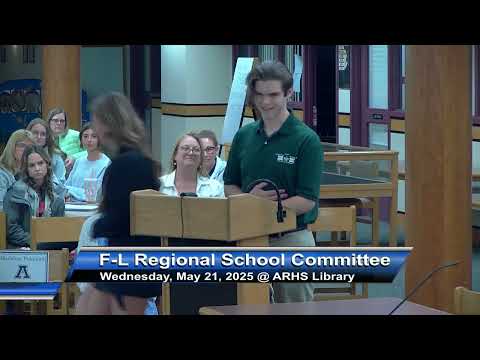
The Freetown‑Lakeville school committee on May 20 received a facilities update reporting completion of the Asawompsett Elementary School generator installation and progress on HVAC control upgrades at Freetown Elementary School. District staff also described a likely cause and planned remediation for recent late‑afternoon smoke‑alarm activations at the high school and summarized how the district conducts special‑education evaluations.
Facilities and safety updates The district's director of finance and facilities reported that the AES whole‑building generator installation was completed during April vacation and that final asphalt patching was scheduled for the week of the meeting. The director said the generator can support the building in an emergency and could also be useful to the Town of Lakeville.
At Freetown Elementary School, the district completed a multi‑month HVAC control project intended to bring a modern control system into the building so occupants can see and manage temperature, ventilation and occupancy controls. The director said the new controls bring exhaust fans fully online, improve air circulation across the campus and allow automatic adjustments based on classroom occupancy and measured CO2 levels.
Smoke‑alarm activations: staff reported three smoke‑alarm incidents in recent weeks and said vendor inspection found the HVAC and alarm systems operating correctly. Staff told the committee the most likely cause is pollen and particulates obstructing the laser smoke sensors; the district will schedule a full cleaning of smoke alarms and continue monitoring.
Special education and evaluations Kelly Steele, a district staff member reporting on special education, told the committee the district currently has 82 families participating in its homeschool program and that DESE regulations govern progress reporting and homeschool intent notifications.
Steele clarified the district's evaluation model: school psychologists conduct cognitive and academic achievement testing, classroom observations, rating scales and initial and re‑evaluation work (reevaluations occur at least every three years). The district uses one full‑time BCBA and additional contracted BCBA days to perform functional behavioral assessments (FBAs) and to write behavior intervention plans; Steele said the district recorded 34 FBAs this school year. Steele also explained the district's decision to retain school psychologists rather than shift testing to special‑education teachers, noting that outsourcing evaluations previously cost the district tens of thousands of dollars and that in‑house staff have reduced those external costs.
Why it matters: The generator and HVAC control upgrades improve building resilience and indoor air quality; clarifying who performs evaluations and how FBAs are handled affects special‑education service delivery and budgeting.
Next steps: The district will schedule smoke‑alarm cleaning with the service company, continue HVAC monitoring and maintain the current staffing model for evaluations while monitoring costs and service capacity.