Get Full Government Meeting Transcripts, Videos, & Alerts Forever!
Get email alerts on the Public‑safety topic
No spam. Unsubscribe anytime.
Harris County court votes to pursue pay parity with HPD, forms negotiation committee and directs budget reviews
Summary
After sustained public comment from deputies and a prolonged court debate, commissioners voted to pursue pay parity with the Houston Police Department beginning in fiscal 2026 and created a negotiation committee to identify options and a first‑year funding target of at least $142 million.
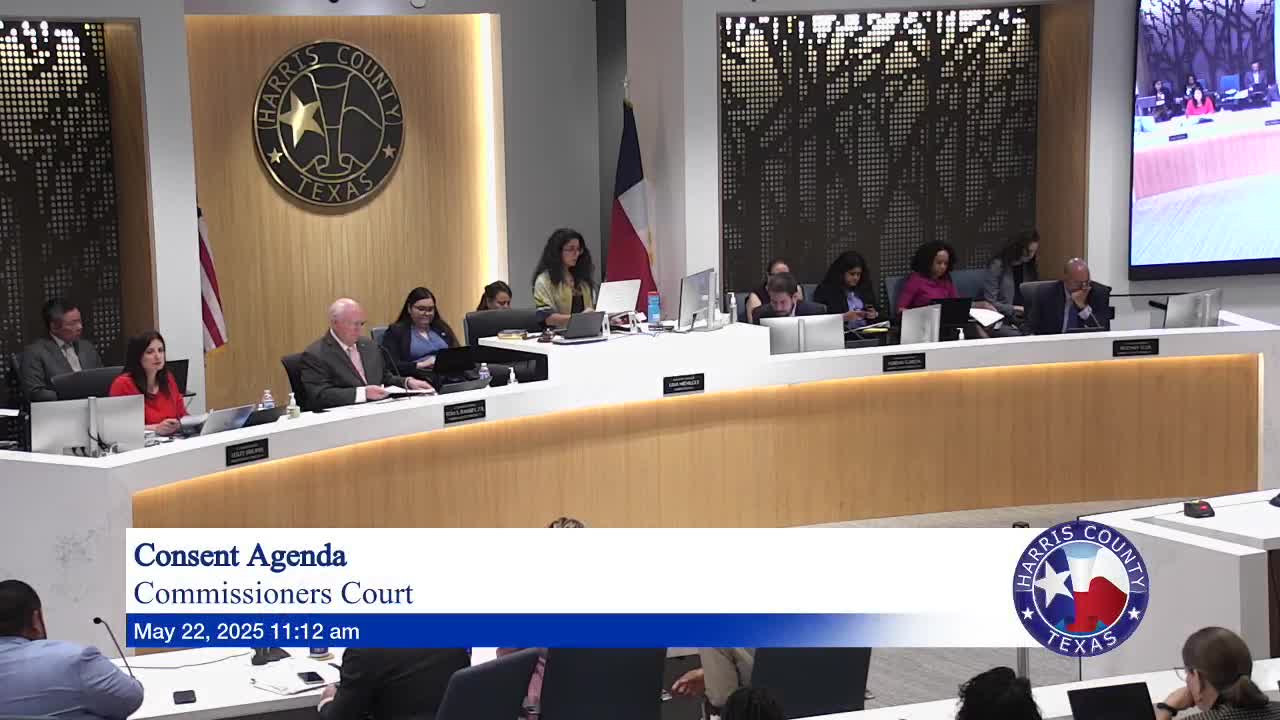
Commissioners in Harris County voted on May 22 to pursue pay parity for county law enforcement with the Houston Police Department beginning in fiscal year 2026 and to form a negotiation committee to develop a concrete implementation plan.
The court split over the immediate funding path. Commissioner Ramsey’s motion to secure pay parity for sheriff’s deputies and constables beginning in fiscal 2026 carried on a 3–2 vote; a separate, unanimously approved motion from Commissioner Briones created an action‑oriented negotiation committee charged with presenting options to achieve parity over five years, with the committee to report at each Commissioners Court meeting and to prioritize securing at least $142 million for year one.
Why it matters: County staff and commissioners said the court faces a structural budget gap that makes the decision difficult. Office of Management and Budget Director Daniel Ramos presented a multi‑year cost estimate for matching HPD’s five‑year contract. Ramos said the first‑year cost to move current county salaries to HPD’s initial raise schedule would be roughly $142 million (a $96.5 million base gap plus a $45 million initial step), with subsequent annual incremental costs and a five‑year cumulative cash outlay of about $1.07 billion. Ramos also described a recurring annual incremental cost of roughly $289 million once the five‑year pay schedule is fully implemented.
The court debated two pathways: (a) ordering the budget office and departments to assemble cuts and other revenue options to pay for raises without a tax election, and (b) placing a revenue measure before voters. Judge Lina Hidalgo and at least one commissioner said they would not approve a plan without clearer funding offsets and urged transparency with the public about where cuts would fall; other commissioners pressed that failing to act would accelerate an exodus of deputies to HPD and other agencies.
Public comment: Multiple current deputies and law enforcement associations told the court that HPD’s pay changes are already drawing county deputies away. Jose Lopez, president of the Harris County Deputies organization, told the court his members were “behind” and warned of degrading public safety if county pay did not keep pace. Byron Garrett Jr. and other deputies said they had fielded numerous calls from colleagues planning to leave; Sydney DeBond, a frontline supervisor, said she had been approached by roughly 60 employees who intend to depart for higher pay elsewhere.
What the court directed: The unanimously approved negotiation committee — composed of representatives from human resources and talent, OMB, county administration, the sheriff’s office, constable offices, deputies’ associations and chiefs of staff or designees from each court office — will meet immediately, identify options, and brief commissioners at every court meeting. Commissioners also directed OMB to request departmental budget submissions showing a 90% current‑level‑of‑service baseline (a change from the previously requested 93%) to surface savings and offsets for consideration in the FY2026 budget process.
What remains unsettled: Commissioners approved the goal of achieving parity and the negotiating committee, but the court did not approve a specific funding package beyond the direction to assemble options. Commissioners signaled significant disagreement about whether to protect existing programs from cuts or to ask voters for new revenue.
Ending: The court’s votes set a political and budgetary timeline: the committee must produce options and regular updates over the summer, feeding the tax‑roll and budget deadlines in July so the court can decide whether to fund pay parity through reallocated spending, internal offsets, or a voter‑approved revenue measure.