Get Full Government Meeting Transcripts, Videos, & Alerts Forever!
Get email alerts on the City Budget topic
No spam. Unsubscribe anytime.
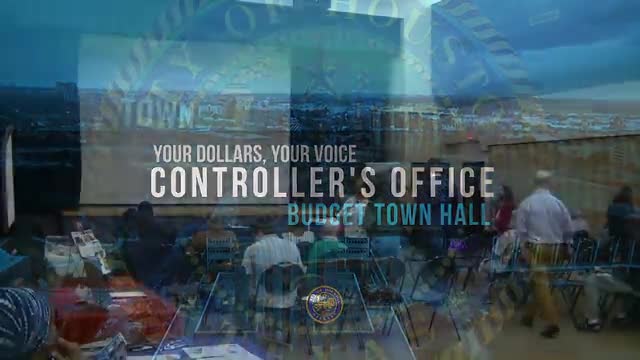
Houston controller outlines $100M‑plus budget gap, urges residents to speak at May 21 public hearing
Summary
City Controller Chris Hollins told a packed Acres Homes town hall that Houston faces a structural budget deficit, detailed where most general‑fund dollars go, and urged residents to attend a May 21 public hearing and contact council members before May 28 to propose amendments.
Houston City Controller Chris Hollins told residents at an Acres Homes town hall on May 20 that the city faces a significant structural budget shortfall and invited attendees to make their priorities known at a public hearing scheduled for May 21 and to contact council members before May 28.
Hollins, the city’s independently elected chief financial officer, said the city’s proposed fiscal 2026 budget is roughly $7 billion in total — about $3 billion in the general fund and $4 billion in enterprise funds — and that the controller’s office projects a structural deficit of about $134 million for the coming year (the mayor’s office projection in Hollins’s presentation was about $107 million). He stressed the city is still awaiting a judge’s decision on a legal settlement that could reduce next year’s costs by about $91 million.
The controller said his office’s priorities are accountability, transparency and innovation, and he outlined how the budget is funded and where money goes. “A structurally balanced budget means that your recurring revenue … pays for those recurring expenses,” Hollins said. “If that recurring revenue does not pay for those recurring expenses then you got a problem.”
Hollins emphasized that a majority of general‑fund spending goes to public safety and debt service: the presentation showed police at about $1.1 billion and fire at about $660 million, together roughly 60 percent of general‑fund expenditures, with debt service the third‑largest line item. He also noted that many other services — parks, libraries, public health and trash collection — each represent only small percentages of the general fund.
The town hall included a participatory exercise in which attendees placed marbles to indicate local priorities; organizers later summarized the results as favoring solid waste, libraries, neighborhood services and parks. Jennifer Pierce, deputy controller who leads the audit division, presented the exercise results and cautioned the vote sampling had some error but reflected those neighborhood preferences.
Hollins described a series of proposed adjustments in the mayor’s budget that together reduce overall spending: a $73 million reduction in the overtime budget (the controller’s office reported that the city budgeted about $65 million for overtime in the current year but spent north of $130 million), savings of about $29 million from a voluntary retirement program, and other department reductions totaling roughly $16 million. Offsetting increases include roughly $51 million set aside for across‑the‑city pay raises (Hollins said firefighters previously received a 10 percent raise and are budgeted for a 3 percent raise next year; police are proposed to receive a 10 percent raise subject to council approval; municipal workers have a contract for a 3.5 percent raise).
Hollins warned that relying on one‑time federal or state grants is not a long‑term solution for core services such as 911 response or police and fire staffing. He gave the example of a federally funded youth program that recently lost federal dollars and said the city would have to decide whether to fund it locally. “For our core operations … we can’t rely on Washington D.C. to do that for us,” he said.
On legal constraints, Hollins said state law prevents local governments from unilaterally reducing police budgets without corresponding reductions across the rest of the budget; he described the restriction as enacted about two years earlier and observed that Houston’s practice has been to increase or hold police funding rather than cut it. He urged residents to engage with state lawmakers if they want to change statutory limits.
Hollins outlined how residents can engage: attend the City Hall public hearing on May 21, contact their district or at‑large council members before May 28 to request amendments, watch budget workshops online via HTV, and send targeted, solution‑oriented comments. “Be specific about your concerns,” he said, and suggested callers identify particular line items, propose remedies, and connect local problems to broader community needs.
Panel members at the event included Rayne Eatman, executive director of the Acres Homes Community Advocacy Group, who opened the program; Jennifer Pierce, deputy controller; Melissa Dubowsky, the city’s finance director, who Hollins acknowledged; and others from partner organizations tabling at the event (Houston Financial Empowerment Center, Bank on Houston/Bank of America, Houston Public Libraries, League of Women Voters, Houston Tejano Center and Women’s Resource Center). State Representative Lauren Simmons also attended and was recognized. Hollins left contact information for the controller’s office (controller@HoustonTX.gov) and repeated that his office does not vote on the budget but certifies fund availability and advises council and the public.
The presentation included figures Hollins said residents should consider: a proposed general‑fund budget of about $3 billion, proposed total budget near $7 billion, current fund balance declining from a record $567 million at the end of fiscal 2024 to a projected $354 million at the end of fiscal 2025 and $220 million a year later if the proposed budget is adopted. Hollins characterized 2025 as the largest one‑year decline in the city’s fund balance and 2026 as the second largest in the city’s history.
Hollins closed by asking residents to attend budget hearings and to contact council members, reminding the audience that the mayor proposes the budget and the 17 members of City Council (including the mayor) vote to approve or amend it. The town hall was billed as part of a series intended to make budget information accessible in neighborhoods and to encourage public participation.
Ending: Hollins and local organizers urged residents to use the immediate opportunity of the May 21 hearing to influence budget amendments and to continue engaging with council and state representatives on longer‑term budget and policy changes.