Get Full Government Meeting Transcripts, Videos, & Alerts Forever!
Get email alerts on the City Budget topic
No spam. Unsubscribe anytime.
Corona proposes $523.3 million fiscal 2026 budget; Measure X plan allocates $44.8 million
Summary
City staff presented the Fiscal Year 2026 proposed budget including $523.3 million in total funds, a $241.3 million general fund inflow estimate, and a Measure X investment plan totaling $44.8 million. Councilmembers asked clarifying questions; no votes were taken.
City of Corona staff presented the Fiscal Year 2026 proposed budget to the City Council, outlining $523,300,000 in estimated total revenue and $456,300,000 in estimated total expenditures for the coming year. The presentation included fund-by-fund breakdowns, changes since the spring financial workshop and a Measure X investment plan that would allocate $44,800,000 to one-time and recurring items.
Julie, deputy finance director, told the council the $523.3 million revenue estimate represents an increase of about $7.9 million from the spring financial workshop figure of $515.4 million and that expenditures for all funds are projected at $456.3 million, a decrease of roughly $25.3 million from the previously presented $481.6 million. She said the general fund increased to account for the sale of surplus property and internal service charge adjustments and that capital projects decreased overall after moving four projects into fiscal year 2027.
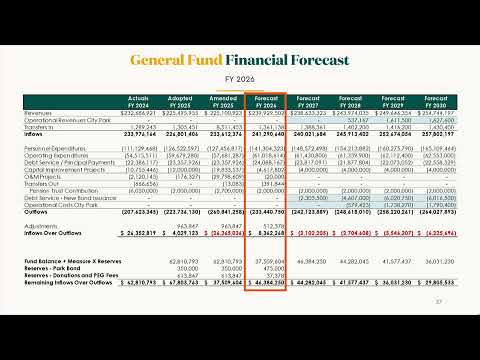
The proposed general fund inflows—taxes and transfers—were estimated at $241.3 million, with a general fund operating budget shown at about $231.0 million. Julie said sales tax and property tax together account for roughly 72.4% of general fund revenues, and the five largest general-fund revenue categories make up 89.5% of estimated inflows.
The presentation broke out special revenue, enterprise and internal service funds. Highlights included: road-related special revenue and district funds that make up most of that category; gas tax revenue estimated at $4.6 million with $4.0 million in project expenditures; and refuse and recycling funds left with only bulky-item and SB 1383-related programs after billing was transferred back to Waste Management, producing a planned transfer of about $400,000 from the general fund to balance refuse/recycling in FY2026. Julie said enterprise funds such as water (revenues estimated at $71.1 million) and sewer (revenues estimated at $39.9 million, with expenditures exceeding revenues and balanced by fund balance) include multiple capital projects, and that a one-time $19 million settlement skews the water fund’s recent-year revenue comparisons.
Internal service funds drew attention for adjustments to charges. Julie said the IT internal service fund had been under-collecting in prior years and that department charges were increased for FY2026 to avoid a negative fund balance. The warehouse internal service fund currently has a projected fund balance of about $900,000 and will not be charging departmental allocations for a short period because of that balance. Fleet replacement is being funded as an exception to the break-even guideline to accumulate replacement reserves.
Councilmembers asked clarifying questions during and after the presentation. Wes, a councilmember, said his earlier questions were answered and expressed concern about slowing the drawdown of Measure X funds. Jackie, a councilmember, thanked staff for the fund-balance slides and the “what changed” slide that compared the spring workshop to the current proposal.
Julie said four capital projects were shifted into FY2027 (the transcript lists them as the water storage tank Old to Mescal Road reclaimed water line; items referenced as “P fuss 1, 2, 3,” TCP remediation; and Water Reclamation Facility No. 2 equalization basin replacement). She said those project shifts are reflected in the enterprise and CIP totals and do not appear in the FY2026 figures presented. Julie also said staff will monitor projected shortfalls shown in the longer-term forecast and will present quarterly updates; the official proposed budget document will be brought back to council for consideration and approval at the June 4 meeting and the fiscal year begins July 1.
No formal motions or votes were recorded during this presentation portion of the meeting.