Get Full Government Meeting Transcripts, Videos, & Alerts Forever!
Get email alerts on the Special Education topic
No spam. Unsubscribe anytime.
Bremen District 228 outlines how federal IDEA funds are used to support special education services
Summary
A district presenter reviewed federal IDEA funding, its legal limits, and specific uses in Bremen CHSD 228, saying the largest share pays staff and that funds supplement — not supplant — district services.
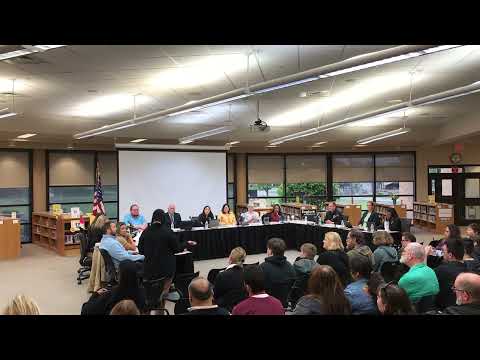
A staff member presenting the district's special education report told the Bremen CHSD 228 Board of Education on May 21 that federal IDEA funds are intended to supplement local services for students with disabilities and laid out how the district spends the money.
The presenter said IDEA “is a federal commitment to equity in education,” and described the program’s three core legal requirements: free and appropriate public education, least restrictive environment and procedural safeguards for families.
Board context: The presenter said Illinois received approximately $604,000,000 from the federal government in fiscal 2024 that flows to districts by formula. “It’s important that we supplement the district funds, not supplant them,” the presenter said, describing the district’s obligation to maintain state and local spending levels while using IDEA funds for excess costs tied to students’ Individualized Education Programs (IEPs).
How funds are used: The presenter said the district’s largest IDEA expenditures are salaries for special-education staff, including paraprofessionals used for individualized supports and one-to-one nurses for students with complex medical needs. The district also pays for an occupational therapist, a special education administrative team, extended-year summer programming (referred to as Excel programming at Bremer High School), and stipends for staff who support student clubs tied to social communication practice.
Contracted services and equipment: The presentation listed contracted services purchased with IDEA funds, including software for special-education instruction, counseling and social-worker services provided through Sertoma, contracted bilingual speech-language pathologists and psychologists for evaluations, and a certified rehabilitation specialist program called Strive for Independence that offers driver-readiness evaluations.
Other items funded, the presenter said, include interpreters (foreign-language and American Sign Language) for family participation in IEP meetings, supplemental instructional materials, a pool lift previously purchased to enable students with mobility issues to access aquatics, incentives for student participation, and a leased minibus for transporting students to job sites and community outings.
Program impact and district priorities: The presenter described summer Excel programming staffed by roughly six teachers and six paraprofessionals and said those programs and contracted services are intended to provide students “real life practice” in social communication and other skills outside of tightly scripted therapy settings. The presenter emphasized ongoing documentation requirements for audit purposes and said the district will seek continuing grant-funded supports.
Clarifying details recorded in the meeting included that the district purchases paraprofessionals and one-to-one nursing when required by a student’s IEP, that some contracts fund additional nurses and counselors, and that bilingual and ASL interpreter services are procured so families can participate in IEP meetings.
Ending: Board members did not vote on funding policy in this session; the presentation served to inform the board about current uses of IDEA allocations and to explain compliance and audit expectations going forward.