Get Full Government Meeting Transcripts, Videos, & Alerts Forever!
Get email alerts on the Higher Education Funding topic
No spam. Unsubscribe anytime.
Michigan public university leaders urge higher education investment, detail federal grant disruptions
Summary
Presidents from Wayne State, Michigan Tech, Western Michigan, Ferris State and Grand Valley State told a House appropriations subcommittee that state support is essential for student success, research and workforce development and reported a range of federal grant cancellations or freezes affecting campus projects and research.
LANSING — Presidents from five Michigan public universities told the House Appropriations Subcommittee on Higher Education and Community Colleges on May 7 that continued state investment is critical to sustain student success, research and regional economic development — and several reported federal grant cancellations or freezes that are disrupting research and programs.
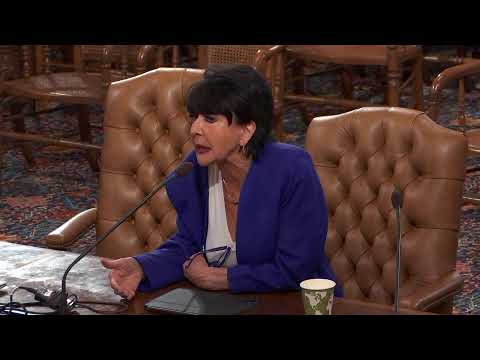
Kimberly Espie, president of Wayne State University, said Wayne State serves roughly 24,000 students and that research and development activity at the Detroit campus totaled about $290 million last year. "The research we do doesn't just sit on shelves. It's translated into new medicines, new technologies, and new devices," Espie said.
Espie told the committee Wayne State has experienced cancellations or terminations on roughly 32 to 33 federal grants, representing a net value of about $17 million. She said about 80 percent of Wayne State's research funding comes from the National Institutes of Health and that lost awards affect students, staff and Michigan suppliers tied to the research programs.
Michigan Technological University’s president (name not specified in the transcript) highlighted the university's recent R1 Carnegie Classification and growing research portfolio, saying external research awards rose 18 percent year over year and that defense-related work accounts for about 36 percent of Michigan Tech's research. The president told members that about 3 percent of the university's federal grant funding — roughly $20 million — has been canceled or frozen to date.
Western Michigan University’s president (name not specified in the transcript) described steady enrollment gains, research growth (about $60 million in external grants this year) and partnerships with industry. When Representative Zoe Rogers asked about federal grant impacts, the president said the most recent figures showed between $8 million and $9 million in grant dollars lost and that the university would provide precise updated numbers.
Bill Pink, president of Ferris State University, described Ferris as an "opportunity university" under recent Carnegie designations and highlighted workforce-focused programs spanning certificates to doctoral degrees. He said the university would provide exact figures on federal grant impacts to the committee on request.
Grand Valley State University’s president (name not specified in the transcript) said GVSU serves more than 22,000 students, offers 150 degree programs and has expanded health- and computing-related capacity after recent state capital investments. The president told the committee Grand Valley has seen about $3 million in federal grants impacted so far and said the university is using institutional resources in some cases to bridge early gaps in grant cycles.
Committee members asked each presenter whether they could quantify federal grant cancellations, freezes or clawbacks. The universities provided differing totals during the hearing and offered to provide updated, precise figures through the committee chair where necessary.
The presidents emphasized state appropriations' role in keeping tuition affordable for lower-income and first-generation students, funding maintenance and capital needs, and enabling applied learning that connects students to Michigan employers. Espie said 81 percent of Wayne State graduates remain in Michigan after earning degrees; Michigan Tech reported 95 percent of graduates employed within six months and a median starting salary of about $82,400; Grand Valley said about 86 percent of its graduates remain employed in Michigan.
Members of the subcommittee acknowledged the presentations and asked follow-up questions, primarily focused on the size and cadence of federal grant disruptions and on workforce pipelines such as aviation and health professions. The committee accepted minutes from prior meetings by unanimous consent at the start of the session.
The session concluded with the presidents asking lawmakers to view FY 2026 appropriations as investments in the state's talent pipeline, research capacity and economic competitiveness. Several presidents said that maintaining or growing state support would preserve access for low-income and first-generation students and help translate university research into Michigan jobs and businesses.