Get Full Government Meeting Transcripts, Videos, & Alerts Forever!
Get email alerts on the Governance topic
No spam. Unsubscribe anytime.
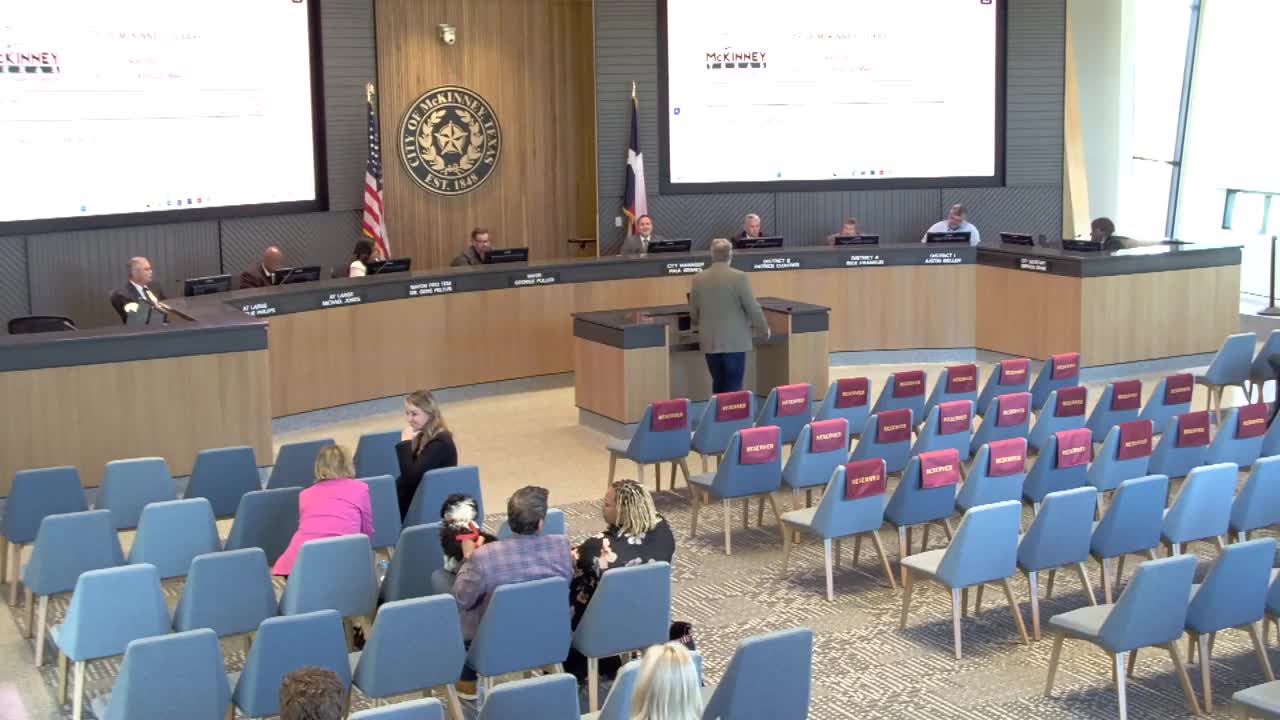
McKinney council to study changing council composition and districts; charter corrections from 2024 election to be codified
Summary
City legal staff presented final text from last year's charter election and outlined options and timeline for any future charter proposition to change the council's district composition; staff and a consultant recommended further study and public engagement with next legal opportunity in November 2026.
City legal staff told the council on May 20 that the charter amendments approved in the November 2024 election will be finalized in ordinance form and become the city’s updated charter text. The presentation also revisited work by a citizen commission last year that examined whether McKinney should alter its council composition and districting as the city grows.
City attorney (name not specified) reviewed the commission’s process and its recommendation that the council defer a ballot measure on district composition at that time, and he summarized options if the council wants to pursue a charter proposition to change the number or type of council districts. A consultant who worked with the commission, Gunnar Seacquist (consultant), was referenced as available to help the council prepare mapping and analyses.
Why it matters: McKinney’s population growth has prompted discussion about whether four district seats plus at‑large members still provide the representation residents want. The commission considered alternatives such as increasing the number of single‑member districts (for example, to six) and other models used by comparable cities. Legal staff noted procedural constraints: the charter limits the frequency of charter elections and the next practical ballot opportunity for a charter change of this type would be November 2026.
Council members stressed the need for public education and more time for analysis. Staff proposed briefing newly elected council members as part of orientation and bringing the consultant back in the summer to walk through mapping and options. Council members raised issues including staggered implementation, whether the mayor serves as an at‑large voting member or as a tie‑breaker in other cities, and the target population per district if the council increases the number of members.
Ending: Staff will coordinate consultant availability and schedule workshops, brief new council members during orientation, and present alternatives and public‑engagement plans ahead of any decision about a charter proposition for the November 2026 election window.