Get Full Government Meeting Transcripts, Videos, & Alerts Forever!
Get email alerts on the Fleet Management topic
No spam. Unsubscribe anytime.
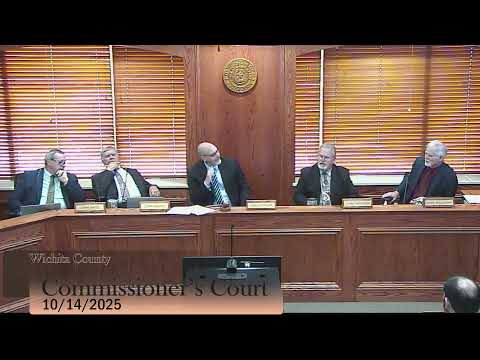
Wichita County commissioners debate leasing vs. buying to restore sheriff—s fleet rotation
Summary
After months of study, Wichita County commissioners and sheriff—s office leaders spent an hour-plus debating whether to lease 10 patrol vehicles through Enterprise Fleet Management or purchase vehicles outright; no decision was made and no action was taken.
Wichita County Commissioners Court on Tuesday discussed whether to lease or purchase patrol vehicles to restore a routine rotation in the sheriff—s fleet, with some commissioners urging a trial of Enterprise Fleet Management's leasing program and others stressing the county could borrow or use fund balance to buy vehicles outright.
The discussion, which the court opened as general business, centered on whether to reserve an initial allotment of 2026 Chevrolet Tahoes offered through Enterprise. County Judge led the conversation and asked the sheriff's office for its recommendation. Sheriff Patrick, speaking for the sheriff's office, said leasing would allow the county to get more vehicles now and reduce maintenance costs on older units. "We do the lease and we can get 10 vehicles and spend that $600,000 on [the lease]," the sheriff's office representative said.
The sheriff's office told commissioners that Enterprise's proposal would run roughly $1,033 per vehicle per month in one example and that 10 leased vehicles would cost about $124,000 a year. Upfitting costs were cited as roughly $35,000 per vehicle plus radio equipment; commissioners and staff stressed those figures were working estimates from vendor materials. The Enterprise quote also included an estimated annual mileage of 25,000 miles and an over-mileage charge of $0.055 per mile; court discussion noted the quote form shows an estimated mileage but that participants said there was no contractual mileage cap for the particular GLO vehicles discussed.
Commissioner Buchanan and other court members raised financing concerns. "Today, you could walk in the judge, walk into a bank and ... probably get 4% money. We're gonna pay 7% to Enterprise for this service," Commissioner Buchanan said, commenting that the interest embedded in the lease proposal was high compared with direct borrowing. Several commissioners worried about long-term compounding costs if the court leased additional vehicles in future years rather than buying outright.
Supporters of leasing said a four-year rotation would preserve resale value and reduce maintenance costs that grow as vehicles age. "If we move those cars quicker, it's possible to see a lot larger return on those we purchased instead of putting that tremendous mileage on them and get them wore out," the sheriff's office representative said. Commissioners also discussed resale markets and whether an outside vendor could market rigged police vehicles to municipalities and volunteer fire departments.
County staff noted budget constraints for fiscal 2026: the county currently has about $600,000 identified for vehicles, which would buy six or seven cars outright but would stretch further if used to lease. Staff said vehicles ordered now likely would arrive in Q2 2026 and be outfitted after they arrive.
After extended discussion of mileage, interest, resale markets and internal capacity for fleet management, Commissioner Beecham withdrew a motion to accept Enterprise's quote. County Judge summarized the court's near-term plan: staff will solicit quotes for up to 10 vehicles and return with specific purchase options and cost details in the coming weeks. "There'll be no action taken on this item," County Judge said; the court set the item for further discussion on a future agenda.
The debate laid out two clear tracks for the court to weigh: pursue a lease to maximize the number of newer vehicles for the sheriff's office now, accepting higher financing and service fees; or amend the budget and use fund balance or other county funds to buy more vehicles outright and manage resale and upfitting internally.
Next steps noted by staff include returning to the court with firm dealer quotes, availability for factory allotments versus dealer purchases (staff said factory-order vehicles could be roughly $2,000 cheaper than dealer stock), clearer amortization examples, and a plan for data collection if the court chooses a trial leasing approach. Commissioners also discussed using opioid funds and other budget sources to cover vehicle purchases if the court decides to amend the 2026 budget.
No formal motion to commit to leasing or purchasing passed; the court asked staff to present vendor quotes and updated budget options at a later meeting.