Get Full Government Meeting Transcripts, Videos, & Alerts Forever!
Get email alerts on the Budget And Nonprofits topic
No spam. Unsubscribe anytime.
Lauderhill hears pitches from about 30 nonprofits in pre‑budget workshop; city outlines $10,000 cap and scoring criteria
Summary
At a May 19 pre‑budget workshop the city heard three‑minute pitches from roughly 30 nonprofits seeking program support. Finance staff described scoring criteria and a $10,000 maximum per applicant (with limited exceptions); the city manager said the proposed budget will increase allocations to nonprofits and community services.
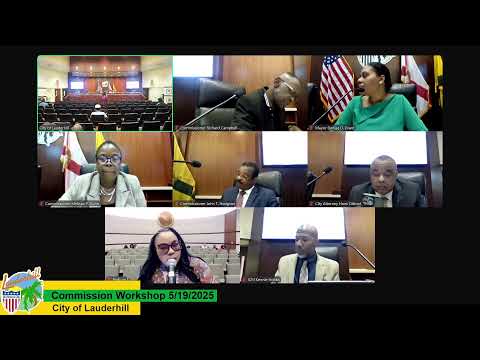
Lauderhill held a pre‑budget workshop May 19 in which about 30 nonprofit groups gave brief, three‑minute presentations asking for funding to support programs that serve city residents. The session was structured for public presentations, questions from commissioners and an outline of scoring and timeline from the finance department.
Why it matters: the presentation period precedes the city manager’s proposed budget, which will be released July 1; staff said the workshop is intended to surface community priorities and to produce project information that can be scored, prioritized and incorporated into the manager’s recommendation. Finance Director Sean Henderson said applicants are evaluated on objective criteria — number of Lauderhill residents served, cost per Lauderhill resident, organizational contributions, local office location and alignment with city strategic goals — and that the maximum award per applicant under the nonprofit eligibility process is $10,000 (the commission may treat a small number of organizations as exceptions, historically the Chamber of Commerce has been funded outside this pool).
City priorities and timeline: Interim City Manager Kenny Hobbs told the commission the manager’s proposed budget will increase funding for nonprofits, resident assistance programs (housing repairs, down payment assistance and senior services) and business supports while the commission pursues tax reductions. He asked the commission to provide feedback on the applicants; staff plans to use the workshop input to finalize scoring and bring the manager’s proposed budget to the commission on July 1. Each presenting organization had up to three minutes and commissioners limited to one question per presentation.
Examples from the workshop
- Goodman Jewish Family Services asked for $10,000 to support the Random Acts of Compassion clothing closet (RACPAC) in Sunrise; the group said it serves about 100 unduplicated Lauderhill residents per year. - Warm Hearts Mentorship (representation by Felicity Swanson) described an ongoing mentoring program that serves Parkway Middle School students and requested the maximum allocation to sustain mentorship activities, Thanksgiving basket giveaways and a mentorship breakfast. - Women in Distress (Susan Evans, grants manager) requested $6,000 to support shelter and advocacy services; the group told commissioners it provided nearly 3,500 nights of shelter to 44 Lauderhill residents in the prior year and is piloting a mobile advocacy unit to respond with advocates to domestic‑violence scenes. - Early Learning Coalition (Ansel Pratt III) asked for continued city support for School Readiness subsidies; ELC reported $8.8 million in subsidies served to Lauderhill families in the most recent reported year and noted that city contributions are matched by federal funds. - Feeding South Florida (Gabby Gomes) described home‑delivered senior meals for housebound older adults in Lauderhill and asked to expand deliveries; that program is a countywide operation but includes Lauderhill seniors. - Local groups such as Uplift Lauderhill and Only The Beginning Inc. asked for funding to support neighborhood beautification, economic‑development linkage, school incentive programs and youth engagement.
Process notes and staff guidance
Finance staff said each application will be scored on the published matrix and the department will recommend funding levels to the city manager for inclusion in the proposed budget. The city manager and finance staff warned that timing matters: many discretionary funding opportunities require shovel‑ready projects; staff encouraged organizations to present projects with defined scopes and lower per‑unit costs when possible. The manager also said staff will continue to work with applicants and department directors to fold successful projects into the capital and operating budgets where feasible.
Public and commission reaction
Commissioners repeatedly asked applicants to be practical and align requests with demonstrated capacity and measurable impact. Commissioner Campbell encouraged presenters to focus proposals on achievable, cost‑effective work and to avoid requesting amounts that appear unrealistic given the city’s fiscal priorities. Some commissioners said they would support locally headquartered organizations and those that demonstrate clear Lauderhill impact.
What happened next: staff will score applications, prepare the manager’s proposed budget on July 1 and return recommendations to the commission during the budget process. No votes were taken at the workshop; applicants were advised that final awards will be determined as part of the budget adoption process.