Get Full Government Meeting Transcripts, Videos, & Alerts Forever!
Get email alerts on the Transportation Safety topic
No spam. Unsubscribe anytime.
Lauderhill reviews Broward MPO transportation master plan, spotlights safety fixes on six corridors
Summary
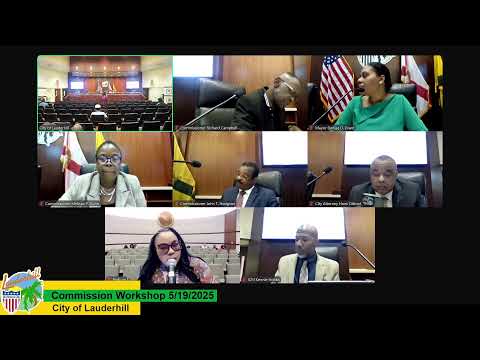
Lauderhill City Commission on May 19 heard a technical presentation from the Broward Metropolitan Planning Organization outlining safety and active‑transportation improvements for six city corridors, including lane repurposing on Inverry Boulevard, protected bike lanes and two proposed pedestrian bridges to Central Broward Regional Park.
Lauderhill City Commission on May 19 heard a technical presentation from the Broward Metropolitan Planning Organization outlining a transportation master plan that focuses on safety, walking and bicycling improvements on six city streets.
The MPO presentation, led by Karen Friedman, senior planner for the Broward MPO, and supported by city staff, described a nine‑month technical assistance effort and recommended a package of “toolkit” solutions — lane repurposing, protected and raised bike lanes, roundabouts, raised crossings and quick‑build pilot treatments — targeted at six corridors selected by city staff: NW 80 Second Avenue (Commercial Boulevard to NW 40th Street); NW 40th Street (University Drive to Rock Island Road, within Lauderhill); Inverry Boulevard (end‑to‑end, University Drive to Oakland Park Boulevard); NW 50th/6th Avenue (Oakland Park Boulevard to Sunrise Boulevard); an east‑west connector from NW 19th Street toward Central Broward Park; and Sunrise Boulevard (441 to NW 30th Avenue).
Friedman described the MPO role as technical assistance, not a funding commitment: “We are a government agency and we are a federally funded agency responsible for the regional and long range transportation planning here in Broward County,” and later, “I do want to clarify that this is not a funding commitment from the Broward MPO.” She said the MPO will refine solutions after the commission’s feedback, produce scopes and planning‑level cost estimates, and continue community engagement before returning recommendations to staff in August.
Why it matters: the MPO cited demographic and crash data used to prioritize streets. Lauderhill has a higher share of households with no vehicle (about 12 percent), a relatively young population alongside numerous age‑55+ developments, and localized five‑year injury crash trends on several corridors. In the MPO’s field observations and speed studies, Inverry Boulevard showed 85th‑percentile speeds in the mid‑50s mph and occasional extreme speeds; the plan proposes lane repurposing there to reduce design speed, fill sidewalk gaps and add separated bike lanes.
Key recommendations and examples
- NW 80 Second Avenue: widen the east sidewalk to a shared‑use path near Piper High School, add crosswalks on all legs at the school intersection, and consider roundabouts or speed tables at neighborhood entry points and four‑way stops. - NW 40th Street: in western segments the MPO proposes converting four travel lanes to two with a center turn lane to make space for protected bike facilities; in other segments, quick‑build roundabouts, raised intersections and right‑in/right‑out conversions were suggested to reduce turning conflicts and improve pedestrian safety. The MPO recommended rectangular rapid flashing beacons and signal alternatives that can be activated without a push button for some crossings to accommodate Orthodox Jewish users. - Inverry Boulevard: the plan calls the corridor “transformative,” proposing lane repurposing along much of its length to allow continuous sidewalks, 8‑foot raised/protected bike lanes and a mix of roundabouts, raised intersections and elongated (“peanut”) roundabouts at multi‑access points. - Sunrise Boulevard and the east‑west route: the MPO recommended two pedestrian bridges to connect Broward Estates and the West side to Central Broward Regional Park, improvements to the Turnpike pedestrian bridge approaches, a proposed shared‑use path connection to FDOT’s Sunrise Canal path, and signalized mid‑block crossings near major destinations and the swap shop transit stops.
Commissioners and staff: commissioners asked about phasing, how quickly projects could move to construction, impacts on traffic and future development, and funding pathways. Interim City Manager Kenny Hobbs and staff described the next steps as gathering commission feedback, refining the MPO recommendations, and using the resulting scopes and cost estimates to seek grants, surtax funding and other discretionary dollars; the city manager emphasized the goal of producing shovel‑ready projects ahead of upcoming budget cycles. Staff noted some intersections fall under FDOT or Broward County jurisdiction; the MPO said it is coordinating with those agencies but that improvements at those intersections will require agency approval.
Public comments: neighborhood residents and community leaders generally urged quicker action on pedestrian and school‑area safety. Rabbi Heim, speaking for Orthodox Jewish residents, cited repeated near‑misses near synagogue routes and asked for urgent fixes: “The number of near crashes and what could have been fatalities that I personally have witnessed is scary.” Others from Broward Estates, West Kenlark and Inverry pressed for immediate smaller fixes (lighting, crosswalks and sidewalk repairs) while supporting the MPO’s longer term repurposing proposals.
What was decided and next steps: the commission did not take any formal votes. Commissioners asked staff to work with the MPO to refine recommendations, return with a final document in August and pursue funding options (penny sales tax, federal discretionary grants such as Safe Streets for All, and MPO discretionary programs). Staff and the MPO agreed to publish the full slide deck, crash maps and a project website with backup analysis for public review. Staff also flagged that some projects could be split into smaller quick‑build pilots to demonstrate benefits and improve competitiveness for funding.
Ending: the commission directed staff to collect the feedback heard at the workshop, continue coordination with FDOT and Broward County on jurisdictional intersections, and bring a refined set of recommendations and planning‑level cost estimates back to the commission and to the public later this summer.