Get Full Government Meeting Transcripts, Videos, & Alerts Forever!
Get email alerts on the Business Regulation topic
No spam. Unsubscribe anytime.
North Port to consider relaxing 1990-era 800-foot rule for alcohol near churches and schools
Summary
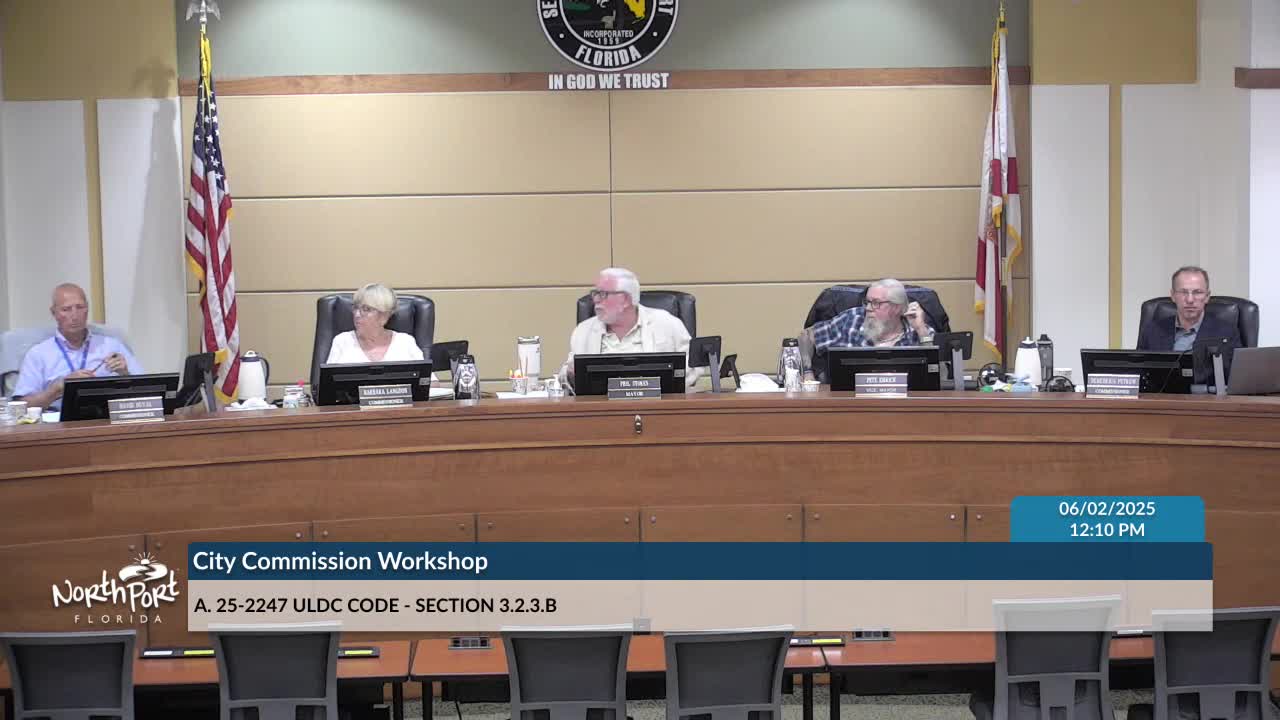
City staff told commissioners at a June 2 workshop that North Port’s code requires 800 feet of separation between alcohol sellers and churches or schools, and recommended narrowing that restriction to apply primarily to stand-alone bars and nightclubs while exempting restaurants and some strip-center configurations.
Laurie Barnes, deputy director of development services, told the commission at the June 2 workshop the city’s code requires establishments that sell alcoholic beverages to be a minimum of 800 feet from churches or schools — a standard the department has not revisited since 1990. Barnes said the current rule is significantly more restrictive than neighboring jurisdictions and can block otherwise compatible businesses from locating near college campuses or in commercially zoned areas.
Barnes presented four staff-recommended changes: limit the distance requirement to stand-alone bars and nightclubs (exclude restaurants and entertainment venues that provide food as a primary use); do not apply the prohibition when a church occupies a unit within a commercial strip center; clarify that “school” refers to state-accredited preschool through high school (excluding some adult-education facilities that are not K–12); and consider a shorter separation distance. Staff provided examples from Sarasota County and the City of Venice to show alternative approaches.
Commissioners asked how community events are handled; Barnes and staff said state law and existing temporary-permit rules allow nonprofit organizations to obtain one- to three-day permits for beer/wine at festivals and special events, and that those permits would not be affected by the proposed city-code amendments.
Commissioner Langdon suggested reducing the 800-foot distance to 600 feet as one possible alternative. The commission provided consensus direction for staff to prepare ordinance language reflecting the staff recommendations and to bring the item back on a regular meeting agenda for formal action.
Next steps: staff will draft code amendments (including proposed distance and refined definitions), circulate comparative jurisdiction examples and return the ordinance and supporting analysis to the commission for a future vote.