Get Full Government Meeting Transcripts, Videos, & Alerts Forever!
Get email alerts on the Environment topic
No spam. Unsubscribe anytime.
North Port plans annual environmental scorecard to track water, air, tree canopy and invasive species
Summary
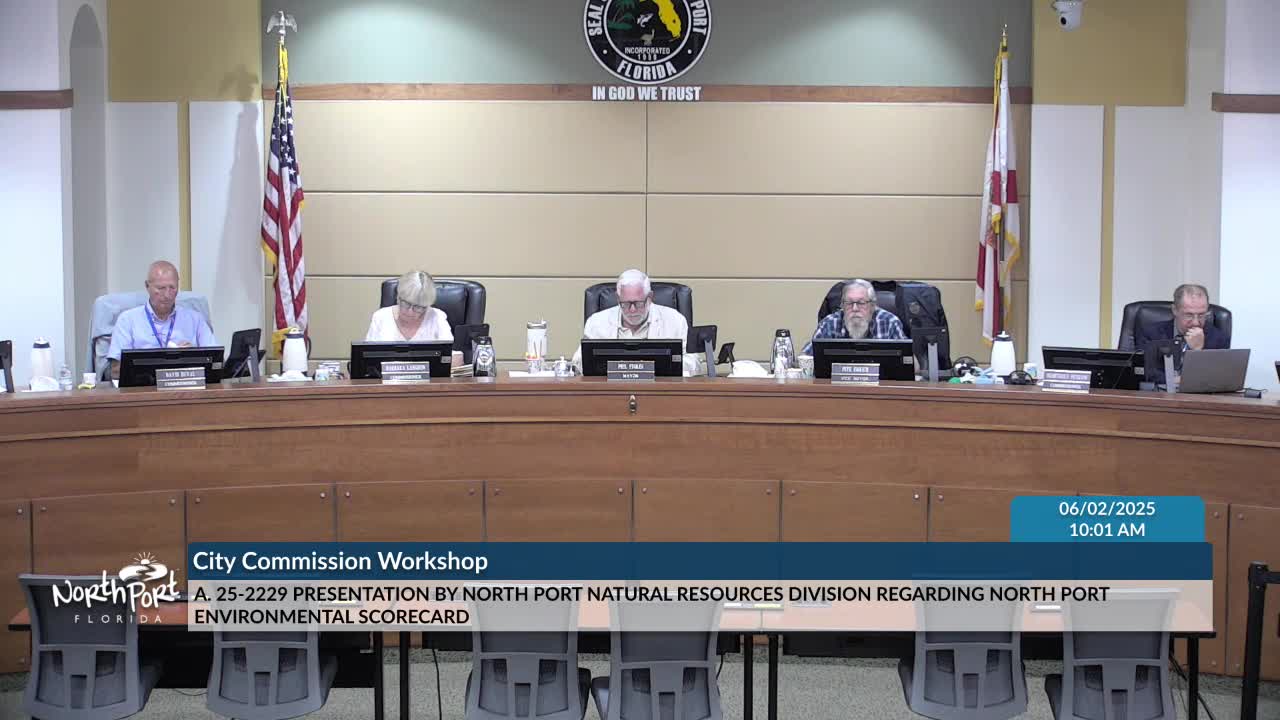
Stefan Califf, North Port’s natural resources manager, told the City Commission at a June 2 workshop that the city will develop an annual environmental scorecard to present water quality, air quality, tree canopy, wildlife and floodplain parameters in a publicly accessible format.
Stefan Califf, North Port’s natural resources manager, told the City Commission at a June 2 workshop that the city will develop an annual environmental scorecard to present water quality, air quality, tree canopy, wildlife and floodplain parameters in a publicly accessible format.
Califf said the scorecard will include measures already monitored by other agencies and by city departments and will synthesize them into visuals that are “simple, yet informative.” He told commissioners the surface-water monitoring program currently measures 11 parameters at seven locations and that the division will incorporate external data sources such as the Florida Department of Environmental Protection and the Southwest Florida Water Management District where possible.
The scorecard’s nut graf is that the city intends to combine multiple existing datasets and a limited amount of new monitoring into a single annual report so residents can see trends — for example, changes in tree canopy or recurring water-quality issues — and to help staff prioritize planting, invasive-species work and stormwater projects.
Califf described components the scorecard will show: percent tree-canopy coverage and change over time, results from an internal air-quality monitor (particulate matter and common gaseous pollutants), a summary of wildlife and invasive-species reports, and floodplain and stormwater vulnerability findings tied to ongoing watershed planning efforts. “So our city is a vibrant and beautiful growing city that’s known for its unique natural resources,” Califf said while introducing the initiative.
Commissioners asked about scope and staff time. Califf estimated the first consolidated scorecard would take about 60–80 staff hours because much of the data is publicly available and already collected by utilities or regional partners. Commissioner Duvall suggested recruiting and training volunteers to collect some samples; several commissioners supported citizen involvement to reduce staff burden. “I love that idea of citizen community involvement,” said Mr. Layman.
Elena Ray, the city’s director of development services, told the commission the city has allocated “a little over a million dollars” toward tree-planting projects now in procurement and design; staff said those projects will be shown on the scorecard once planting begins. Califf also said the scorecard will document outreach and the number of citizens engaged by the natural-resources team each year.
Staff flagged dependencies: the watershed master plan the city is pursuing by grant would both inform the floodplain and stormwater measures and improve eligibility for future stormwater grants. Laurie Barnes, deputy director of development services, said the division will bring planting projects and any proposed land-acquisition funding forward as part of the budget process and will seek matching grants where possible.
The presentation closed with a request for commissioner feedback; commissioners expressed support for the concept and asked staff to return with implementation details, outreach plans and how the scorecard would be published online. Califf said the team is open to feedback and will produce the scorecard annually.
Next steps: staff will finalize scorecard parameters, continue grant efforts for the watershed master plan, include tree-planting projects in the next budget cycle and return to the commission with a schedule and examples of the proposed visuals.