Get Full Government Meeting Transcripts, Videos, & Alerts Forever!
Get email alerts on the Short Term Rentals topic
No spam. Unsubscribe anytime.
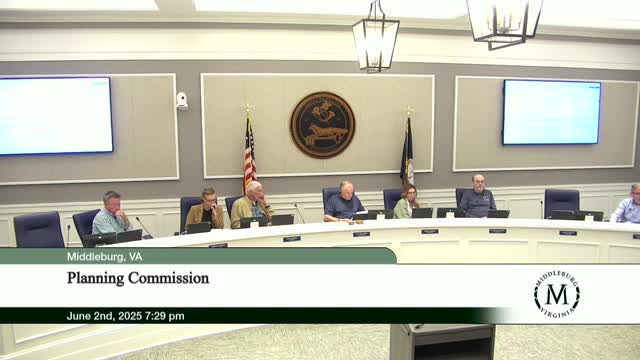
Middleburg commissioners consider caps, nights limits for short‑term rentals
Summary
Commissioners reviewed proposed caps on short‑term rentals by neighborhood and annual night limits to protect neighborhood character; staff said the town’s ordinance may be constrained by state legislation and recommended adding guidance to the comprehensive plan.
Middleburg commissioners discussed adding explicit limits to the comprehensive plan and adopting evaluation guidance for short‑term rentals after hearing staff recommendations and a proposal from an absent commissioner.
Commissioners debated setting a percentage cap on permitted short‑term rentals in any neighborhood and an annual cap on nights rented. They also discussed legal constraints from recently passed legislation that staff said could affect the town’s existing ordinance.
Why it matters: Short‑term rentals can change neighborhood character, affect rental housing supply and generate code‑enforcement or nuisance complaints. The commission is considering plan language and evaluation criteria that would give reviewers guidance when granting special‑use permits and imposing conditions.
Staff reviewed the plan’s existing short‑term rental section, adopted in February 2022, and suggested adding a stronger statement at the chapter’s front about preserving stable residential neighborhoods if short‑term rental activity becomes concentrated. At 35:41:725 in the transcript, Will told commissioners he had inserted a suggested strategy: “limit short term rentals to no more than 30% of the eligible occupied homes in any given neighborhood,” and additionally to “limit all new short term rentals to no more than 60 nights per calendar year.” Will attributed that suggestion to Commissioner Mike Racony in the transcript: “This comes directly from Mike Racony.”
Commissioners debated the proposed numbers. Some favored a lower percentage (a commissioner said she mentally favored 25%) or tying the cap to the town’s current long‑term rental share to create a rationale for a specific percentage. Others cautioned that tying a short‑term cap to long‑term rental percentages could be problematic because motivations and legal treatments differ between long‑term rentals and short‑term rentals. Commissioners noted the commission has imposed conditions in special‑use permits to limit impacts even though the ordinance’s calendar‑night cap is higher.
Legal constraints: Will told the commission staff attorneys had read recent state legislation and concluded the town could not easily change its existing ordinance without risking invalidation; the ordinance currently includes a calendar‑night maximum of 180 nights for permits, which the commission said it never intended to use at that upper limit. Commissioners said they could use the comprehensive plan to provide evaluation guidance and to recommend conditions (for example, a lower‑night cap) at the special‑use permit stage, but they asked staff to seek formal legal counsel before finalizing plan language.
Ending: Staff will circulate proposed revised plan language and the existing short‑term rental paragraph to commissioners by email and asked commissioners to return suggested edits and rationale for any percentage or nights cap; staff recommended attorney review before formal adoption of plan language.