Get Full Government Meeting Transcripts, Videos, & Alerts Forever!
Get email alerts on the Comprehensive Plan topic
No spam. Unsubscribe anytime.
Middleburg planners flag data anomalies, keep Salamander proffers on the books
Summary
Planning staff presented updated population and housing data and recommended editorial changes to the comprehensive plan; commissioners debated whether to retain the Salamander mixed‑use village proffers and noted large margins of error in American Community Survey estimates.
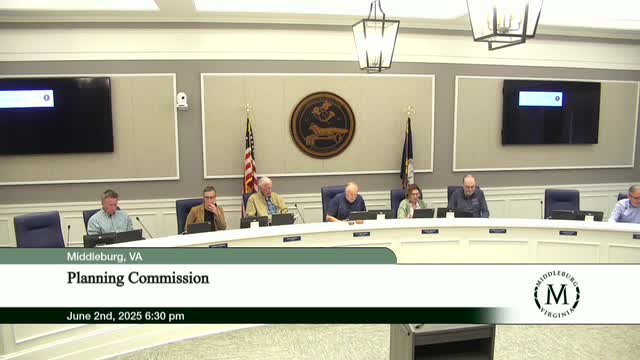
Middleburg Planning Commission staff presented updated population and housing data and proposed wording changes to the town’s comprehensive plan during a work session, and commissioners discussed whether to continue listing 60 potential mixed‑use village units from the Salamander proffers as “approved but unbuilt.”
Commissioners and staff said the American Community Survey (ACS) and 2020 decennial census produce inconsistent measures for the town; staff recommended keeping the proffered units in the plan while noting Salamander representatives have said they do not currently intend to build the mixed‑use village as proffered.
Why it matters: The comprehensive plan shapes future land‑use expectations, informs grant eligibility and public investments, and signals to developers what the town considers likely or allowable. How the plan treats the Salamander proffers and which population datasets the commission cites could affect later zoning, permit review and funding applications.
Will, planning staff, told the commission he updated the chapter with 2020 census figures and 2019 plan text and recommended commissioners consider wording rather than wholesale replacement. He noted the ACS uses five‑year aggregates for places with populations under 20,000, which raises margins of error for small towns. “We often believe the census count in the town to be a little shy of what our actual population might be,” he said, summarizing the methodological issues in the transcript.
Staff highlighted several surprising shifts in the 2016–2023 ACS comparisons, most notably a rise in the town’s median household income from roughly $43,000 in 2016 to over $115,000 in the 2023 ACS. Will said he would investigate margins of error and underlying measures before the commission finalizes wording. Commissioners suggested that small population samples and a few high‑income households moving in could explain sharp changes.
On the Salamander development, staff said the 2019 plan included a proffered mixed‑use village (MUV) with roughly 60 workforce units (48 multifamily and 12 homes) and substantial commercial space; he noted Salamander representatives publicly told the planning commission they do not intend to pursue that proffered mix. Will recommended the plan acknowledge the zoning/proffers remain in place (so the units could be built if proffer conditions are met) but that the town also note the developer’s stated current intent not to pursue the MUV as proffered. Commissioner Jacobs asked that staff cite the planning‑commission minutes where Salamander representatives made the statement.
Commissioners also discussed how to count approved but unbuilt units in summary tables. Staff proposed showing two numbers parenthetically (for example, “32 (92)”), where 32 represents remaining single‑family units left to build and 92 would add the 60 potential MUV units; several commissioners supported retaining both figures with an asterisk and explanatory note.
Other data notes: Staff walked through charts on age distribution, household size, housing type and age of housing stock and flagged inconsistent values (for example, changes in the reported number of housing units and the age cohorts). Commissioners agreed the town should add a short paragraph in the plan acknowledging known discrepancies in federal data sources, and staff said he would draft concise language for the next meeting.
Ending: The commission asked staff to refine the draft language, validate claims against planning‑commission minutes where possible, and return with edits next month. The commission also scheduled the next meeting for June 30 to maintain momentum on the update.
Votes at a glance: The commission approved the minutes from April 28, 2025 by voice vote; no roll‑call tally was recorded in the transcript.