Get Full Government Meeting Transcripts, Videos, & Alerts Forever!
Get email alerts on the College And Career Readiness topic
No spam. Unsubscribe anytime.
Laredo ISD updates dual‑enrollment and career‑ready specialty schools; district reports increases in college credentials
Summary
District staff presented Texas College and Career Readiness School Model (CCRSM) updates at a Curriculum & Instruction Committee meeting, reporting growth in dual‑enrollment participation, increases in certificates and associate degrees, and campus‑level progress at early college and P‑TECH sites.
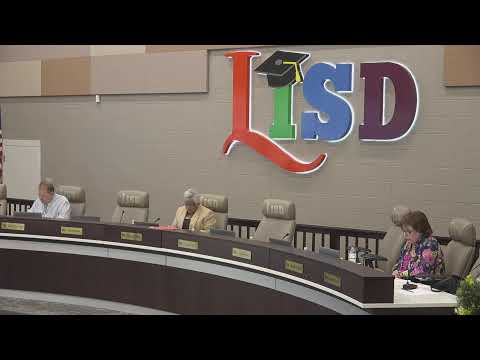
Laredo ISD presented an update on its Texas College and Career Readiness School Model programs during the Curriculum and Instruction Committee meeting in the Amber Urie Boardroom in June. District staff and campus directors described dual‑enrollment participation, outcomes for the class of 2025, and progress toward TEA CCRSM benchmarks.
The presentation, delivered by Monica Calles of the CCMR office, and campus directors from Salas Perez Early College High School, Sigaroa/Sierra P‑TECH, Dennis Cantu Early College High School and other specialty programs, outlined how CCRSM campuses must offer open enrollment, provide college credit at no cost to students, and maintain memoranda of understanding with an institution of higher education (Laredo College). "Empowering minds, shaping futures, and strengthening communities," Calles said while introducing the district's partnership with Laredo College.
The update said dual‑enrollment participation across ninth through 12th grades totaled 3,667 individual students in fiscal year 2024–25, with 8,757 course enrollments districtwide. Presenters said members of the graduating class of 2025 included 104 students who earned Level 1 or Level 2 certificates (an increase of 33 from the prior year) and 146 students who earned associate degrees from Laredo College (an increase of 34). Calles summarized those totals as 250 students who were eligible to "cross the Laredo College graduation stage," which she described as roughly 18 percent of LISD seniors.
At Salas Perez Early College High School, Director Dr. Rocio Lopez said the campus is in its second operational year under the CCRSM designation and reported a current enrollment of 170 students. "We are currently right now in operational year 2. We are in a provisional status," Lopez said, noting the campus meets several access and achievement indicators used by TEA but remains within the multi‑year designation timeline. Lopez provided cohort performance: algebra I approaches at 96 percent and English II approaches at 100 percent for the ninth/tenth grade cohort included in the lagging data. She said the campus was slightly below the TSI/TSIA‑related college‑readiness math criterion for the ninth/tenth cohort (53 percent versus a 60 percent benchmark) but expects that percentage to rise as the cohort advances.
Pedro Medellin, administrator for the P‑TECH program at Sierra High School, described the P‑TECH campus as a designated program in its seventh operational year. "We are already a designated campus," Medellin said, and reported high marks in several outcome measures: 99 percent high school graduation rate reported for the campus, algebra I approaches at 96 percent, and career‑technical completion rates (73 percent by end of 11th grade and 91 percent by graduation) with industry‑based certifications and new associate degree options. Medellin also described an expansion of skilled‑trades pathways including HVAC (with two state‑level certificates), diesel technology (including an occupational skills award and CDL training), and a new construction management associate degree pathway.
Gerri Arredondo, presenting for Dennis Cantu Early College High School, said the campus is in operational year nine and reported 471 students. She said 64 students graduated with an associate of science degree in 2025 (about 74 percent of that graduating cohort) and the school expects a larger number in the following year. Arredondo described the return of an EMT program (17 students completed the program this year and 16 had passed the national registry exam at the time of the presentation) and multiple health‑career certificates (PCT, dental assistant) with placements at ambulance providers and local clinics.
Other specialty offerings discussed included Agriculture, Food and Natural Resources (AFNR) programs that can yield up to 54 college hours over high school; the district‑wide dual‑enrollment option for non‑specialty students (House Bill 1 dual enrollment); and an ongoing effort to track how many credentialed students are employed while still in high school. Calles said staff are working to create systems to better track student employment tied to earned credentials.
Board members pressed district staff for additional and more granular data. Trustee Ordono asked for the dual‑enrollment numbers by grade level and for course‑level grades; Calles agreed to provide that breakdown. Trustee Ramirez urged a programmatic push to identify and support students who have not yet passed the TSI, recommending summer tutoring and focused boot camps; Lopez and district curriculum staff described current boot camp and college‑transition course efforts and said additional targeted instruction and scheduling changes are being implemented to increase TSI performance.
District staff said some CCRSM indicators are reflected in lagging state data and that their internal projections anticipate additional improvements in upcoming public reporting. Calles said the district would receive more recent TEA data within the month and planned local trainings with Laredo College (noted dates provided to board in presentation materials) to align degree plans and address issues raised by trustees.
Committee members and presenters emphasized that the CCRSM model allows varied outcomes for students—industry certification, associate degrees, or both—and that campus pathways differ (for example, technical trade pathways vs. an early college emphasis on credit accumulation). Board members asked for clearer breakdowns where state datapoints showed large counts of students not meeting a given hours‑earned threshold; staff said those aggregates sometimes reflect students in alternate career pathways rather than a failure to meet requirements.
The district did not take any formal votes on the CCRSM materials at the committee meeting; staff said the item was informational and that some related agreements and training items would appear on the board's consent or action agenda at later meetings.