Get Full Government Meeting Transcripts, Videos, & Alerts Forever!
Get email alerts on the Police Operations topic
No spam. Unsubscribe anytime.
Belmont Police announce BHRS-funded dual-response pilot, clarify drone and ALPR transparency
Summary
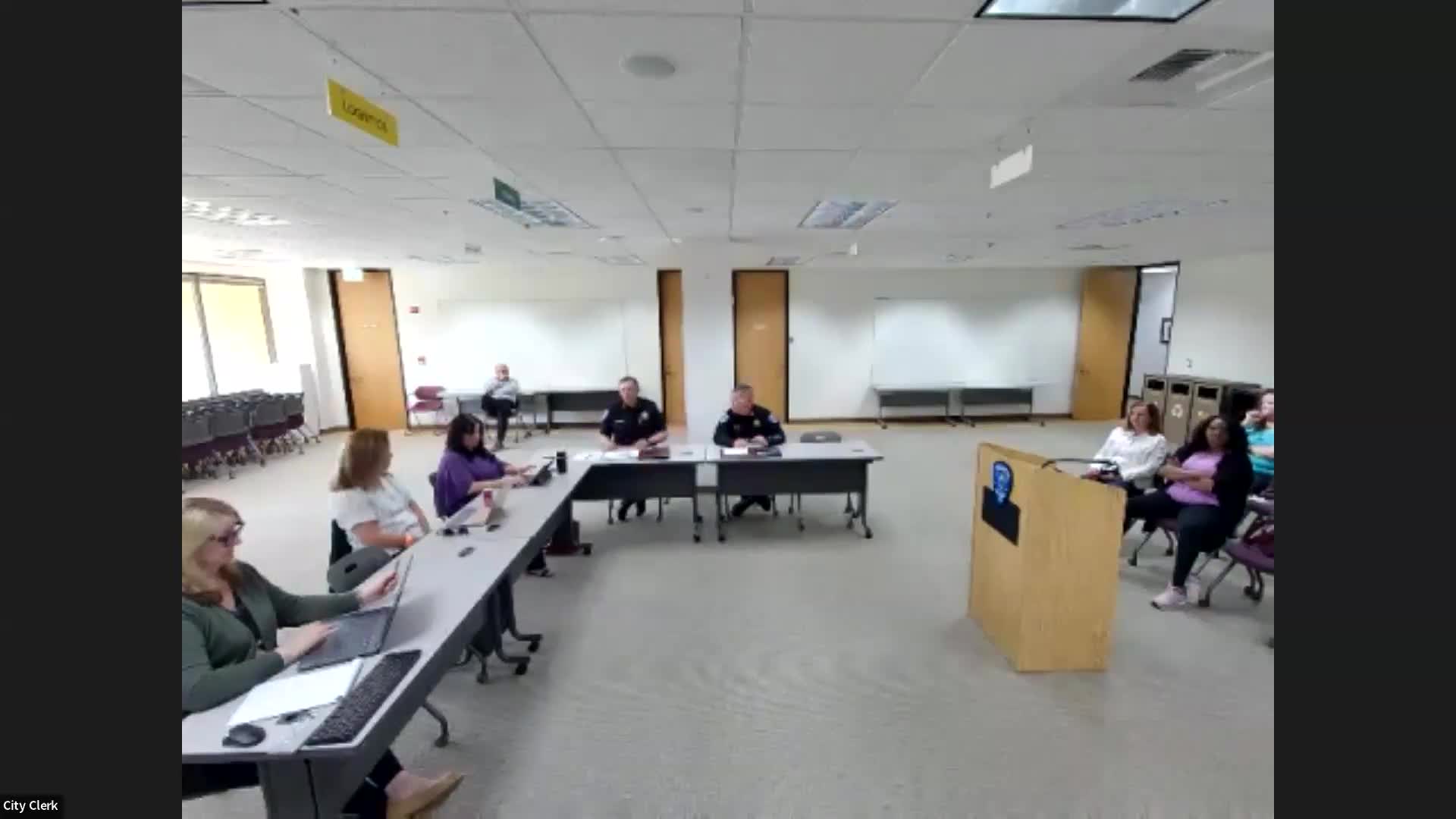
Belmont Police Department leaders told the Public Safety Committee on Monday, June 16 that the department has been awarded a Behavioral Health San Mateo (BHRS) grant to pilot a dual-response model pairing a clinician with an officer in the field.
Belmont Police Department leaders told the Public Safety Committee on Monday, June 16 that the department has been awarded a Behavioral Health San Mateo (BHRS) grant to pilot a dual-response model pairing a clinician with an officer in the field.
Chiefs and staff said the grant is fully funded for one year starting July 1. The chief said department leaders prefer a fully licensed clinician rather than an intern and that they are actively recruiting; the department hopes to have a clinician on board by mid- to late July but said hiring remains a challenge. The chief said the grant period is one year from July 1 and that the city will evaluate next steps after that period.
Why it matters: the dual-response model is designed to bring clinical expertise to certain mental-health calls and reduce reliance on traditional enforcement responses by having a clinician respond alongside officers.
In the same report, department leadership reviewed transparency and public-audit measures for the department’s automated license-plate reader (ALPR) searches and unmanned aircraft systems (UAS/drones). The chief said the public-facing portal sometimes displays brief reasons such as “investigation” or a short text entry that can look vague; however, the internal audit view stores associated case and incident numbers that permit verification. The department said it will follow up with outside agencies that misuse access and that it can revoke external access if concerns are validated.
The police also described how drone flights are recorded in vendor logs (the department cited Skydio as the system used) and gave examples of recent deployments: graduation monitoring at Carlmont, an Easter egg‑hunt where the drone assisted locating briefly-missing children, and other public-safety or training flights. The chief said drones were not deployed at a recent large protest (referred to in the meeting as a “no kings” protest) and that the department would not routinely use UAS for first‑amendment activity unless a situation escalated to present a safety threat.
The chief’s report included brief case updates and staff recognition: the department announced three employees recognized during National Police Week (Dolores Quigg as volunteer of the year; Sekope Tongilala as officer of the year; Jennifer Festerham as professional staff of the year), noted the recent retirement of Sergeant Scott Fadeling after decades of service, and reported that a defendant identified as Ian Crowe was convicted on multiple felony counts and sentenced to a term described in the meeting record as 334 years.
Ending: Committee members asked follow-up questions about hiring for the clinician role and the public audit portal. The department said it will return with additional information as hiring and onboarding progress.