Get Full Government Meeting Transcripts, Videos, & Alerts Forever!
Get email alerts on the City Budget topic
No spam. Unsubscribe anytime.
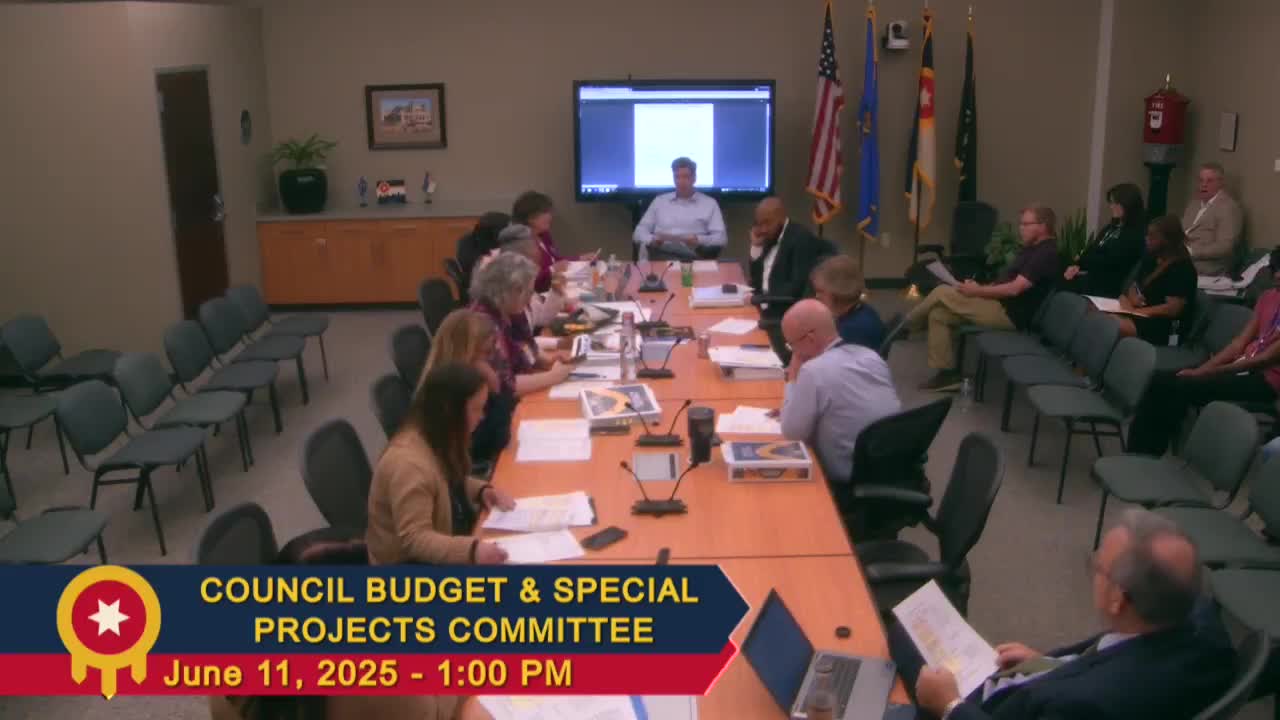
Tulsa small-budget committee outlines midyear budget changes and one-time funding priorities
Summary
Tulsa’s small-budget committee presented technical budget adjustments and prioritized one-time allocations Tuesday, including added funding for River Parks, a $50,000 code-enforcement boost, expanded graffiti abatement, and targeted spending for animal-welfare and housing-decommissioning efforts.
The Tulsa City Council’s small-budget committee on Tuesday presented a set of technical adjustments and one-time funding recommendations intended to finalize the City’s fiscal 2026 budget posture and prioritize immediate needs.
Councilors described the package as a mix of carryover appropriations, reclassifications and targeted one-time additions that the committee agreed on after a morning meeting. The group did not take final votes Tuesday; staff will bring formal appropriation language back to the council during the coming budget meetings and at second readings.
Key items discussed:
- River Parks: The committee added roughly $52,000 to the city’s allocation so that Tulsa’s annual contribution would match the county’s. Staff said River Parks is experiencing increased maintenance expenses — including expanded Turkey Mountain acreage — and reported about a five-month reserve. Councilors urged continued review and asked staff to identify additional savings to close remaining gaps.
- Code enforcement: The committee recommended a one-time $50,000 allocation for overtime and enforcement efforts to address a backlog of cases; staff noted longstanding vacancies had contributed to elevated open-case counts and said the money would permit targeted enforcement sweeps while hiring continues.
- Mowing cycles and parks maintenance: The committee fully restored a $186,000 line item to preserve park mowing schedules, citing equity concerns about enforcing yard maintenance rules when city properties are not being maintained to the same standard.
- Early Settlement (mediation program): The committee proposed a one-time $24,000 allocation, with some councilors arguing for the full $48,000 request for fiscal 2026 and asking county and other municipalities to contribute going forward. Councilors described the program as providing eviction-prevention mediation and noted Tulsa currently is the only municipality contributing despite substantial use by residents from other cities. Several councilors asked municipal staff to produce a concise annual report on program costs, utilization and the geographic origin of clients.
- Graffiti abatement: The committee recommended $100,000 in fiscal 2026 with $150,000 planned for fiscal 2027 to expand crews and equipment; staff said a second crew probably could not be added until late in the year. Councilors discussed pairing abatement with targeted murals or other public-art strategies in persistently tagged areas.
- Animal welfare staffing and clinic: The committee supported adding a part-time veterinarian position (the department’s request was $85,000) to help meet surgical demand as a new, larger facility opens. Staff reported animal-welfare vacancies have declined from prior years but remain, and councilors asked the animal-welfare working group to recommend a responsible staffing target ahead of the budget retreat.
- Grant writing and technical support: The committee recommended funding for a grant-writing capacity (contracted or partial-year hire) to pursue federal and other competitive grants the city has historically left on the table, with a staged approach to control cost.
- Non-sworn stipends / retention: Councilors discussed a conditional stipend-into-salary trigger for non-sworn employees tied to budget performance and federal reimbursements; staff said a 1% stipend across non-sworn roles would cost about $982,000 to the general fund and $756,000 to other funds if fully applied.
- Housing / encampment decommissioning: Councilors discussed earmarking about $230,000 in coronavirus-relief/CRF funds for rapid-rehousing and encampment decommissioning support (hotel rooms, temporary shelter and site-security costs), but asked staff to return with a more detailed, multi-source financing plan before final appropriation. Staff said permanent decommissioning (preventing a site from reestablishing) requires housing exits and site investments beyond sweep-style clearings.
- Technical adjustments: Staff circulated a technical memo that reallocated several grant-funded positions, carried forward uncompleted projects, and adjusted internal charge allocations; the memorandum will be updated to reflect committee edits and brought back with the formal budget papers.
Councilors urged staff to prepare clear one-page summaries — particularly for early-settlement mediation and animal-welfare staffing — that identify the program cost, the city share, and whether other municipalities or outside partners contribute. The committee also scheduled additional review at the next budget meetings and agreed to solicit public comment on items that will affect outside stakeholders.