Get AI Briefings, Transcripts & Alerts on Local & National Government Meetings — Forever.
Space Weather Presentation: SWPC warns geomagnetic storms can disrupt power, GPS and communications
Summary
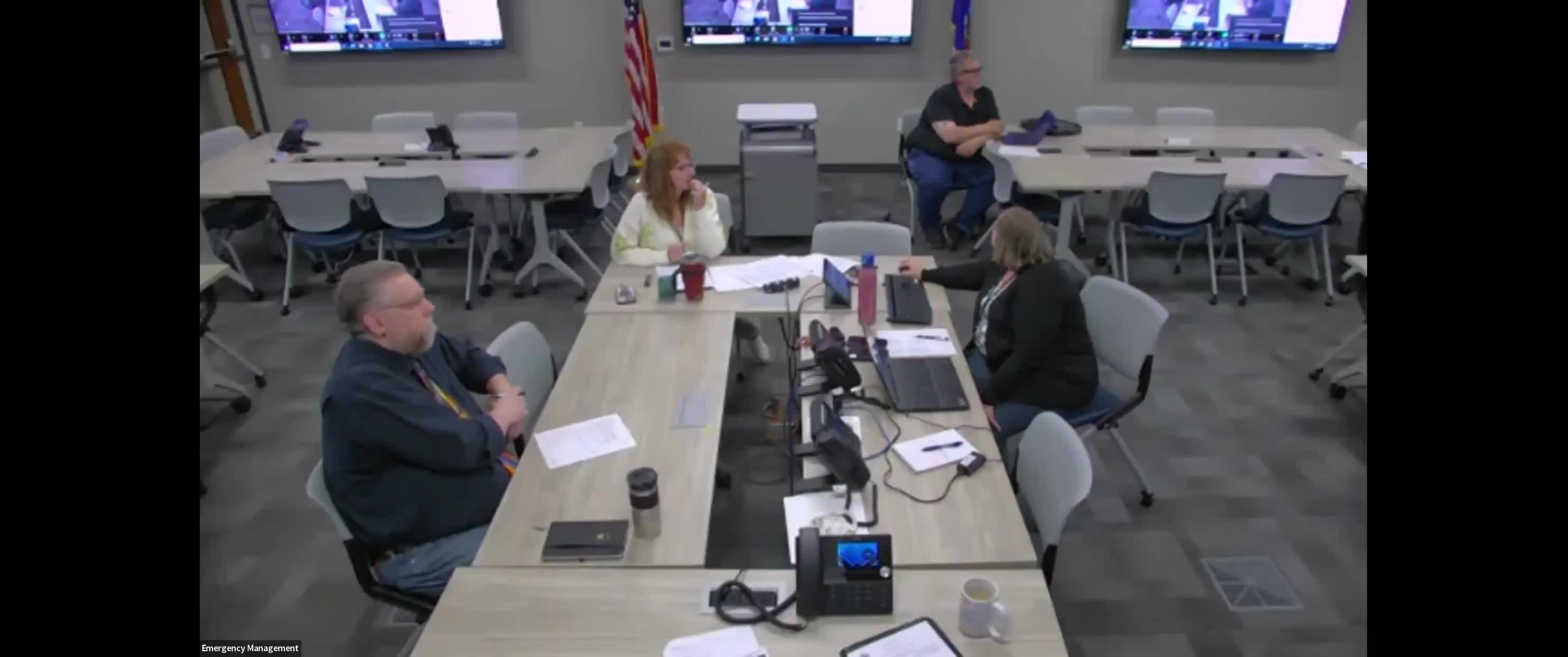
At the Dane County Local Emergency Planning Committee meeting on June 9, a Space Weather Prediction Center forecaster briefed members on solar activity, warning protocols and local risks to power systems, GPS, satellites and emergency communications.
At the Dane County Local Emergency Planning Committee meeting on June 9, a Space Weather Prediction Center (SWPC) service coordinator briefed committee members on how solar activity can affect power systems, satellite operations, GPS precision, aviation communications and emergency radio systems.
Sean (last name not specified), service coordinator and senior space weather forecaster at the SWPC, National Weather Service, told the committee that space weather originates on the sun and can reach Earth in minutes (for electromagnetic radiation) to hours or days (for particles and coronal mass ejections). He said SWPC’s mission is “safeguarding society with actionable space weather information.”
Sean emphasized three phenomena emergency managers should understand: solar radiation storms (S scale), high‑frequency (HF) radio blackouts caused by solar flares (R scale) and geomagnetic storms driven by coronal mass ejections (G scale). He explained that solar flares can immediately degrade HF radio on the sunlit side of Earth, sometimes within minutes; energetic radio bursts can temporarily jam VHF/UHF air‑traffic communications; and coronal mass ejections (CMEs) can drive geomagnetic storms that induce currents on long high‑voltage transmission lines.
Why it matters: The presenter said the Upper Midwest, including Wisconsin, sits at a geomagnetic latitude that can make some parts of the region more susceptible to geomagnetically induced currents (GICs) on long transmission lines, which can stress transformers and other grid equipment. SWPC uses a geoelectric field model to estimate volts‑per‑kilometer on transmission lines; Sean noted thresholds in that model used by grid operators (for example, 1 V/km is detectable, 10 V/km causes noticeable operational issues, and values near 14 V/km are associated with major historical impacts such as the 1989 Hydro‑Québec outage).
He reviewed how SWPC notifies partners: SWPC issues watches/warnings and, at G3 (strong) on the G scale and higher, is required to notify North American electric reliability coordinators and will spin up a geomagnetic disturbance (GMD) hotline call. Sean said the reliability coordinator for Wisconsin is MICEL (as identified in his briefing), and noted that after SWPC begins those calls they repeat them as conditions change. He also described how FEMA, the National Security Council/the White House Situation Room and other federal partners are kept informed for high‑end events.
Sean discussed recent notable events to illustrate impacts. He described a May storm (the previous year) that prompted G4/G5 watches and required large, coordinated decision support: advance hotline calls gave the power industry hours of notice, enabling precautionary measures. He said that the May event produced widespread satellite maneuvers (thousands of satellites burning fuel to avoid collisions) and degraded precision GPS so that some agricultural GPS guidance shifted from centimeter‑level accuracy to errors measured in feet; a Kansas State researcher estimate cited by the presenter put agricultural losses in the hundreds of millions for corn planting disruption. He also described a February 2024 event in which radio interference briefly impeded aviation communications nationwide for minutes and that SWPC informed aviation partners when the event was identified as space weather.
On forecasting and operations, Sean said SWPC produces a three‑day forecast twice daily and that some products are issued at 00:30 and 12:30 UTC. He noted limits in current capability: CMEs’ magnetic strength and orientation are uncertain until they are measured by a satellite roughly 1,000,000 miles from Earth, so multi‑hour to multi‑day forecasts carry uncertainty and are refined as observations arrive. For rapid phenomena such as radio bursts and sudden solar flares, he said forecasters can issue alerts but cannot provide long lead times.
Recommendations and resources: Sean urged emergency managers to consider space weather in hazard and mitigation planning, subscribe to SWPC alert products (including via NOAA’s Integrated Public Alert and Warning system/INWS products he recommended), and coordinate with power and communications partners about how they will receive and act on G‑scale notifications. He also said SWPC is piloting more decision‑support products that translate scientific indicators into brief, operationally relevant guidance (duration, risk level, likely impacts) and hoped to expand that capability.
Committee members thanked the presenter and asked how notifications propagate through FEMA and to counties; Sean said FEMA regions receive messages and that states often subscribe to distribute to local watch centers, but he did not have detailed county‑level distribution steps. He offered his contact information and noted SWPC planned more presentations for Wisconsin agencies later in the summer.
Ending: The committee moved on after a brief Q&A. Sean told the group he was available for follow‑up requests and to help members subscribe to SWPC products.