Lifetime Citizen Portal Access — AI Briefings, Alerts & Unlimited Follows
Inspector General outlines FY26 program needs, support fund use and body‑worn camera proposal
Loading...
Summary
Inspector General Daniel W. Lucas told the committee the OIG’s FY26 proposal is $23.5 million, described use of an OIG support fund funded by recoveries, and said the office is seeking to operationalize a body‑worn camera program and add staff to Medicaid fraud, audit, investigations and planning units.
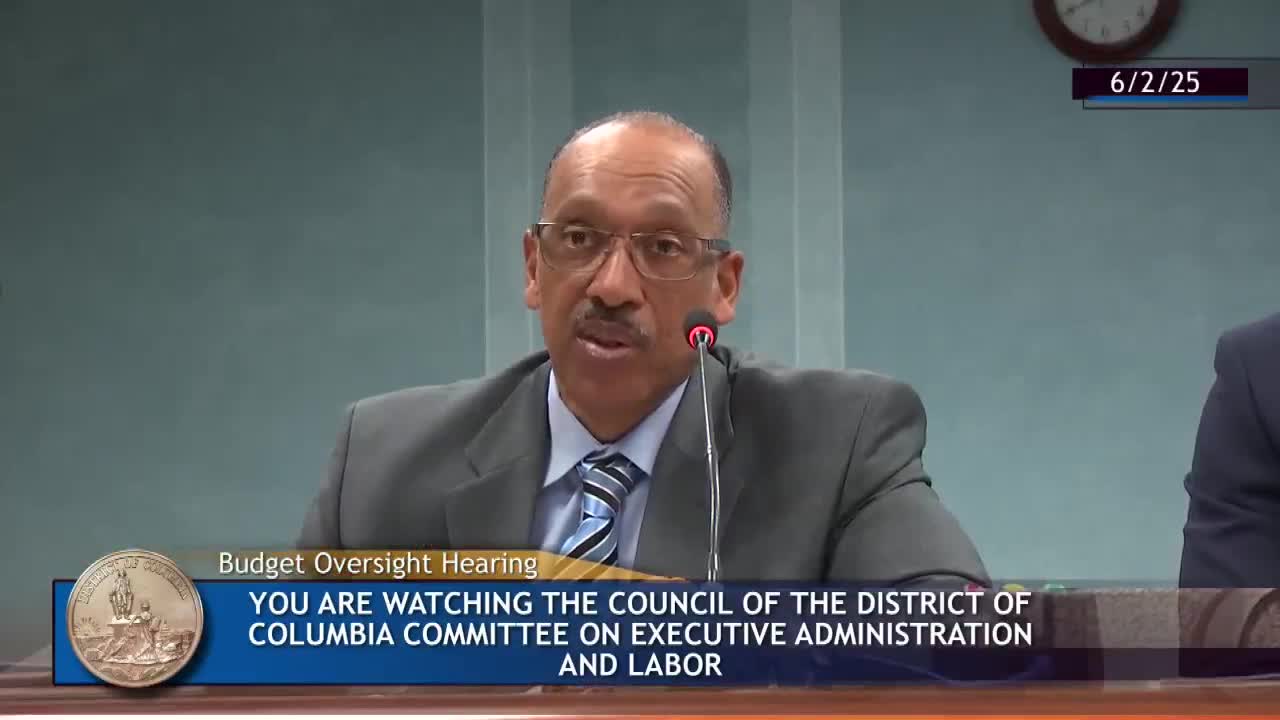
Daniel W. Lucas, Inspector General for the District of Columbia, told the Committee on Executive Administration and Labor that the Office of Inspector General’s FY26 gross budget proposal is $23,500,000 and described the OIG support fund, recent budget returns and planned uses of funds.
Lucas said the OIG support fund receives 25% of criminal restitution and recoupments from OIG investigations and 25% of recoveries from audits and inspections; the office uses estimated deposits to plan emergent oversight work. Lucas said OIG adjusted its forecasts because monetary judgments have been slow to collect and that the office returned funds in FY25 and froze 14 vacant positions to help the district’s budget shortfall.
OIG staff said planned FY26 activities include awarding a contract for an independent audit of the Office of Tax and Revenue's commercial real property assessment process (mandated following a prior tax refund fraud scheme), a triennial procurement risk assessment, operationalizing a body‑worn camera program for special agents (Lucas estimated annual costs just over $300,000), consolidating case management systems, and adding 12 FTEs across audits, investigations, inspections, risk assessment and the Medicaid Fraud Control Unit (including requests for additional Special Assistant U.S. Attorneys to support prosecutions).
Why this matters: OIG conducts oversight intended to detect waste, fraud and abuse across a roughly $21.8 billion budget; resourcing decisions affect the office’s capacity to investigate and audit high‑risk programs.
What the committee recorded: Lucas described steps the OIG took to reduce FY25 spending, including returning personnel surplus and NPS funds and adopting voluntary spending restrictions. The OIG noted that reductions and frozen positions will reduce the number of engagements and lengthen completion times. Committee members pressed for details on the body‑worn camera budget, confidential fund proposal, and the use and timing of support fund deposits.
Ending: Lucas said the mayor’s FY26 proposal is consistent with the OIG’s request and that the office will prioritize high‑risk work as resources allow; he warned the committee that the risk of fraud and abuse grows when oversight resources shrink.