Get Full Government Meeting Transcripts, Videos, & Alerts Forever!
Get email alerts on the Charter Reform topic
No spam. Unsubscribe anytime.
Grove City council begins line-by-line charter read to shape possible shift in government form
Summary
Council held a special session to read the city charter aloud, flagging gendered language, veto thresholds, start-of-term timing and other items for research as it evaluates a possible move to a council–manager form of government.
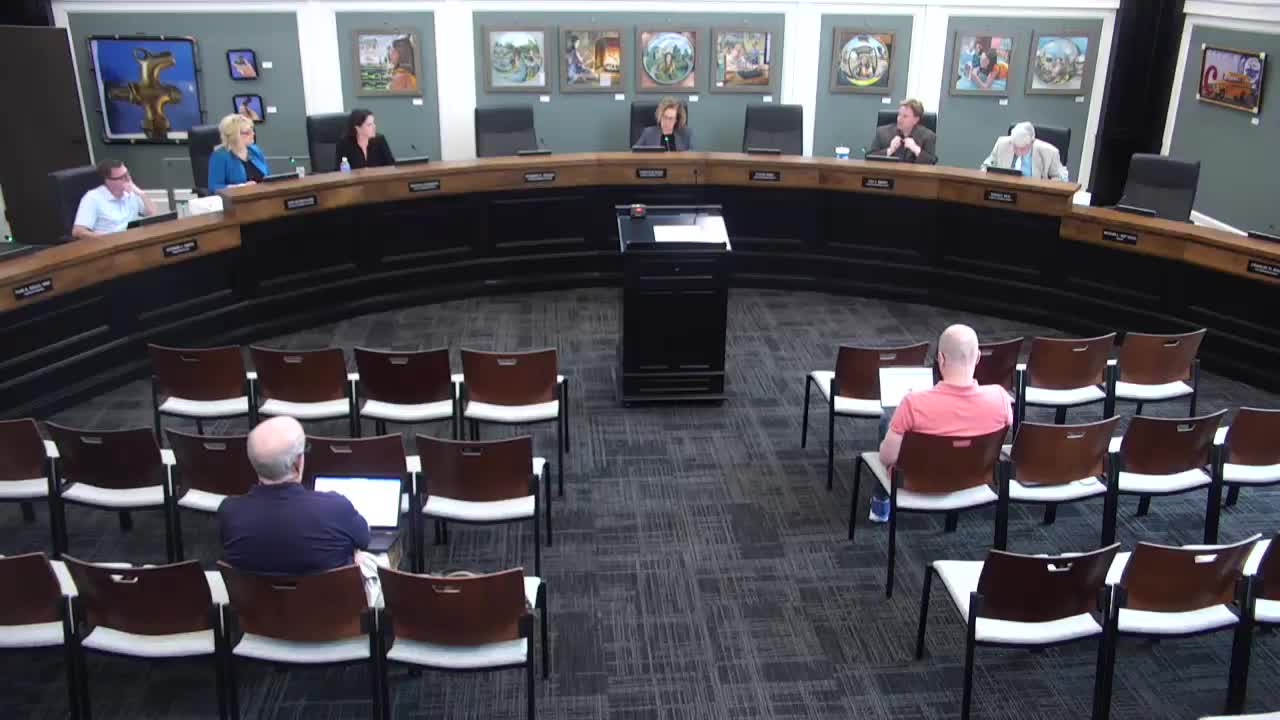
Grove City Council convened a special meeting June 16 to begin a line-by-line read-through of the city charter, aiming to develop a working draft that could form the basis of future legislation to change the city’s form of government.
Council President Christine Hauck opened the session and said the effort is intended to generate local solutions while drawing “inspiration” from other cities’ charters: “It’s not about imitation, it’s about inspiration,” she said. The council distributed example charters from Westerville, Hilliard and Dublin as reference documents.
The read-through reviewed Articles 1 and 2 and underlying administrative provisions, with council members and staff pausing to flag items that may require revision or research. Council members identified recurring issues that staff will research and that the group will revisit at future meetings: gendered and outdated terms (“his,” “councilman”), inconsistent veto and emergency-vote language, timing for assuming office and taking the oath, vacancy procedures, and which offices are legally “incompatible” with council service.
Council member Burrows read aloud several charter passages, including the clause that currently describes Grove City’s “strong mayor council administrative assistant plan.” Members marked that section for revision if the council ultimately pursues a council–manager model. The group also noted a number of cross-references to the Ohio Revised Code and to the city’s administrative code that would require alignment with any structural change.
During the session council and the law director identified specific items for research. They flagged an inconsistency between printed and online charter materials over the supermajority required to waive ordinance waiting periods (some copies reference a two-thirds threshold; others list four-fifths). Council also discussed that appropriation ordinances are currently exempt from mayoral veto under the charter, while emergency ordinances invoke a different supermajority standard.
Members discussed start-of-term timing: the charter says newly elected officials “take office” in January following an election; council debated whether the oath should be required before Jan. 2 or occur on the first business day of the year. The group also noted the impact that shifting the start of terms could have on budget timing when a new mayor or council majority takes office.
Council asked staff to research the definition and municipal use of terms such as “morals” that appear in sections describing zoning authority. The city law director said state law and municipal code precedent guide such authority and that prior state action had altered local controls in some zoning areas.
The read-through included procedural sections (ordinance introduction, publication, readings and emergency procedures), the administrative-code delegation of rulemaking to the mayor and administrative assistant, and the charter’s vacancy and election-contest provisions. Council members made line edits on paper copies and agreed to circulate additional charter examples — including from cities with both strong-mayor and council–manager systems — for comparison.
President Hauck said the council will proceed in short sessions (roughly 60 minutes) and begin each meeting by revisiting outstanding questions. The council did not vote on charter language during the session; members instead identified items for staff research and follow-up. The read-through will continue at a later special meeting, and council also plans parallel work on ordinance-level reforms that could be pursued whether or not a charter change goes to voters.
The special meeting adjourned to caucus before the regular June 16 council meeting; council scheduled further charter review work prior to any formal proposal to voters or to adopt ordinance-based changes.