Recycle Utah and Summit County negotiate short‑ and long‑term plan as nonprofit faces relocation deadline
Loading...
Summary
Representatives of Recycle Utah told the Summit County Council the nonprofit is committed to continuing services but must vacate its Park City site by mid‑2026; council and staff discussed parcel offers, grant history and possible interim 'hub and spoke' drop sites while asking Recycle Utah for a concrete relocation plan within 30 days.
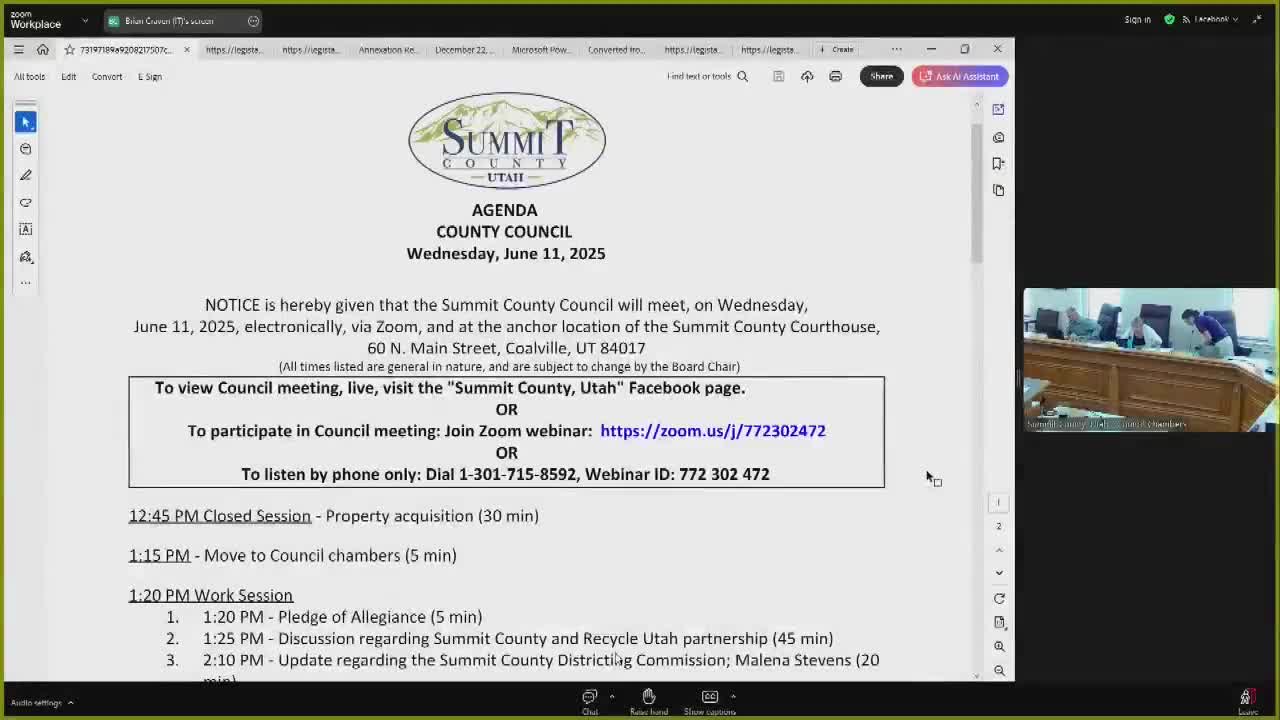
Recycle Utah representatives told the Summit County Council on June 11 that the nonprofit intends to continue operating and is seeking a place to relocate after receiving notice from the city that it must leave its current Park City property by next summer.
The discussion focused on whether the county remains a partner in Recycle Utah’s multi‑million‑dollar diversion plan, what short‑term steps are possible while a larger hub‑and‑spoke system is pursued, and how to avoid a service gap before Recycle Utah’s machines and staff must vacate the site.
Why it matters: Recycle Utah has operated local recycling services since 1995 and provides curbside and drop‑off collection used by Summit County residents. Without an agreed relocation strategy, the nonprofit says equipment and operations could be displaced by mid‑2026, leaving a potential interruption in recycling services and creating additional costs for the county if landfill diversion falls.
Recycle Utah officials — including board chair Ken Barfield and general manager Jim Bedell — described two prior grant efforts that involved Summit County. Barfield said the county participated as a partner on an EPA infrastructure application and that county staff had helped tailor a separate EPA program (referred to in the meeting as the SWIFFR grant) that also might fund the proposed hub facility. County manager Shane (last name not specified in transcript) and deputy county manager Jana (last name not specified) replied that the county’s support had been limited to letters of support and to submitting a grant application, and that no binding county commitment to the larger $20–25 million facility had been approved by the council as an executed, ongoing obligation.
Key points from the exchange
• Relocation timeline: Recycle Utah said the city has asked the nonprofit to vacate by Sept. 1, 2026, and the nonprofit is planning internally to be off site by June 30, 2026, to allow time to clear equipment and prepare the property. (Neil Hafer, treasurer, and Jim Bedell provided those dates during discussion.)
• County property offer: Council members confirmed the county had offered a 4‑acre parcel (referred to as "Lot 4") as a potential site. County staff said Lot 4 could function as a satellite/drop‑off site or partial replacement for the current facility, but staff expressed doubts that Lot 4 is large or well‑located enough for the full $20–25 million hub the nonprofit’s consultants proposed.
• Grants and partnership history: Recycle Utah said it and the county submitted an EPA grant application jointly and later discussed another EPA program. Recycle Utah characterized prior letters and draft partnership agreements as evidence the county initially supported the hub plan; county staff said a letter of support and some grant submissions were made but that those did not constitute county approval of a final facility plan or a construction commitment.
• Interim options: Several council members and staff proposed a short‑term strategy of satellite “spokes” (drop sites) around the county while a long‑term regional hub is planned and funded. Council members emphasized the need for an actionable interim plan that can be implemented within roughly 12 months.
• Financial and operational constraints: Recycle Utah representatives said the nonprofit lacks capital to construct a large new facility and that any county land donation would not by itself pay for construction. They stressed they do have equipment, staff and operational experience they want to preserve and bring into any solution.
What council members asked Recycle Utah to do
Council members asked Recycle Utah to deliver a clear short‑ and mid‑term plan within 30 days. Council member Roger (last name not specified) explicitly asked the nonprofit to produce “a firm plan” within 30 days detailing whether it would accept Lot 4, interim relocation options (temporary sites or use of existing facilities), estimated costs to move and operate in the short term, and what operations they can sustain if a long‑term hub is delayed.
Next steps and uncertainty
County staff said they must continue planning for satellite collection sites and short‑term operations whether Recycle Utah participates or not, because the county faces a fixed timeframe. Several council members also asked staff to investigate whether recent state legislation or new severance‑tax revenue (referenced in the meeting as a Senate bill) could be used in whole or part to offset costs for the local service area; staff said they would look into available funding and legal limits.
Quotes
"We are 100% committed to building that robust infrastructure," said Ken Barfield, board chair, describing Recycle Utah's long‑term goals. "If that is not a possibility for whatever reasons...we're not going away."
"We don't want you to have to shut doors," Council member Chris said, pressing Recycle Utah for an interim plan. "In a year's time, we could build some spokes."
Ending
Council members and Recycle Utah agreed to continue meetings; county staff said it will pursue satellite collection planning while Recycle Utah searches for temporary and permanent relocation options. Recycle Utah committed to returning with a relocation plan and cost estimates; council members asked staff to prepare contingency options and to evaluate state revenue opportunities that could help cover short‑term or long‑term costs.