Get Full Government Meeting Transcripts, Videos, & Alerts Forever!
Get email alerts on the Sb330 And School Impacts topic
No spam. Unsubscribe anytime.
LAFCO staff outlines SB 330 effects; school superintendent warns builder’s-remedy projects could add hundreds of students
Summary
Staff summarized SB 330 limits on local actions and how the law factors into LAFCO decisions. San Benito High School District Superintendent Dr. Sean Tenenbaum told the commission builders' remedy projects in the pipeline could generate roughly 333 additional students, with one proposed 983-unit project alone producing more than 200 students.
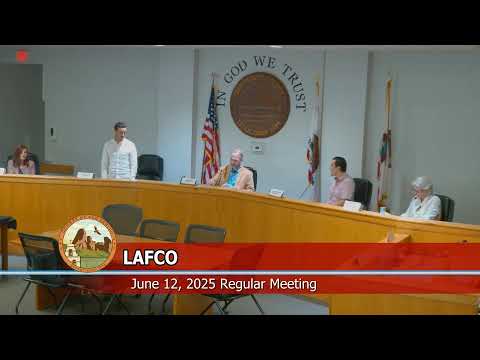
Executive Officer Jennifer Stevenson briefed the San Benito Local Agency Formation Commission on SB 330 and how the state law affects landowner rights and LAFCO decision-making processes. Stevenson said SB 330 limits local governments’ ability to downzone or impose moratoria that would reduce housing capacity, requires permit-streamlining and a development “freeze” that preserves the rules in effect at the time of application, establishes replacement and tenant-protection requirements for demolished units, and limits public hearings on a housing project to five in some circumstances.
“Cities and counties, except charter cities, cannot down zone properties to reduce the density or intensity of land use, if such changes would reduce housing capacity,” Stevenson said while reviewing the memorandum provided to commissioners.
Stevenson said LAFCO must consider factors such as alignment with other government policies and plans — including how an agency plans to meet its RHNA (Regional Housing Needs Allocation) numbers — when reviewing applications like annexations. She added that SB 330 influences but does not mandate LAFCO outcomes: “there is nothing in the law that creates a requirement on LAFCO to move forward with any particular decision,” Stevenson said.
During public comment, Dr. Sean Tenenbaum, superintendent of the local high school district, said the district has identified roughly 10 projects in the county and city under builders’ remedy or similar fast-track processes (six in the county and four in the city) and estimated a conservative student generation of about 333 additional students for the district from those county projects. “We’re currently looking at somewhere in the neighborhood of an additional 333 students for our school district alone,” Tenenbaum said, adding he used the district’s lowest student-generation rate for the estimate.
Tenenbaum told commissioners projects on file range from about 21 units up to a proposed 983-unit development in South County (referred to in the meeting as the Lands of Lima). He said the 983-unit project would generate over 200 students and that, with expedited timelines, those students could be in the district’s pipeline within 2.5 to 5 years if projects are approved. The district said it owns land in the northwest and South County and is discussing locations for a potential new high school as growth continues.
Commissioners and staff discussed housing density and student generation. One commissioner noted that multifamily units tend to generate more students in the district because of affordability and concentration in certain neighborhoods, and the commission expressed willingness to continue coordination with the district about school siting and workforce housing.
No formal action or vote was taken on SB 330; the item was presented for information and to clarify how the statute should be considered in future LAFCO deliberations.
Dr. Tenenbaum also said the district is exploring workforce housing for teachers, citing teacher affordability concerns and migration patterns that are outpacing local wages. He closed by asking the commission to continue dialogue with the district as projects move through planning and approval processes.