
OPLC tells oversight committee most audit findings are substantially resolved; license portability marked complete
Get AI-powered insights, summaries, and transcripts
Subscribe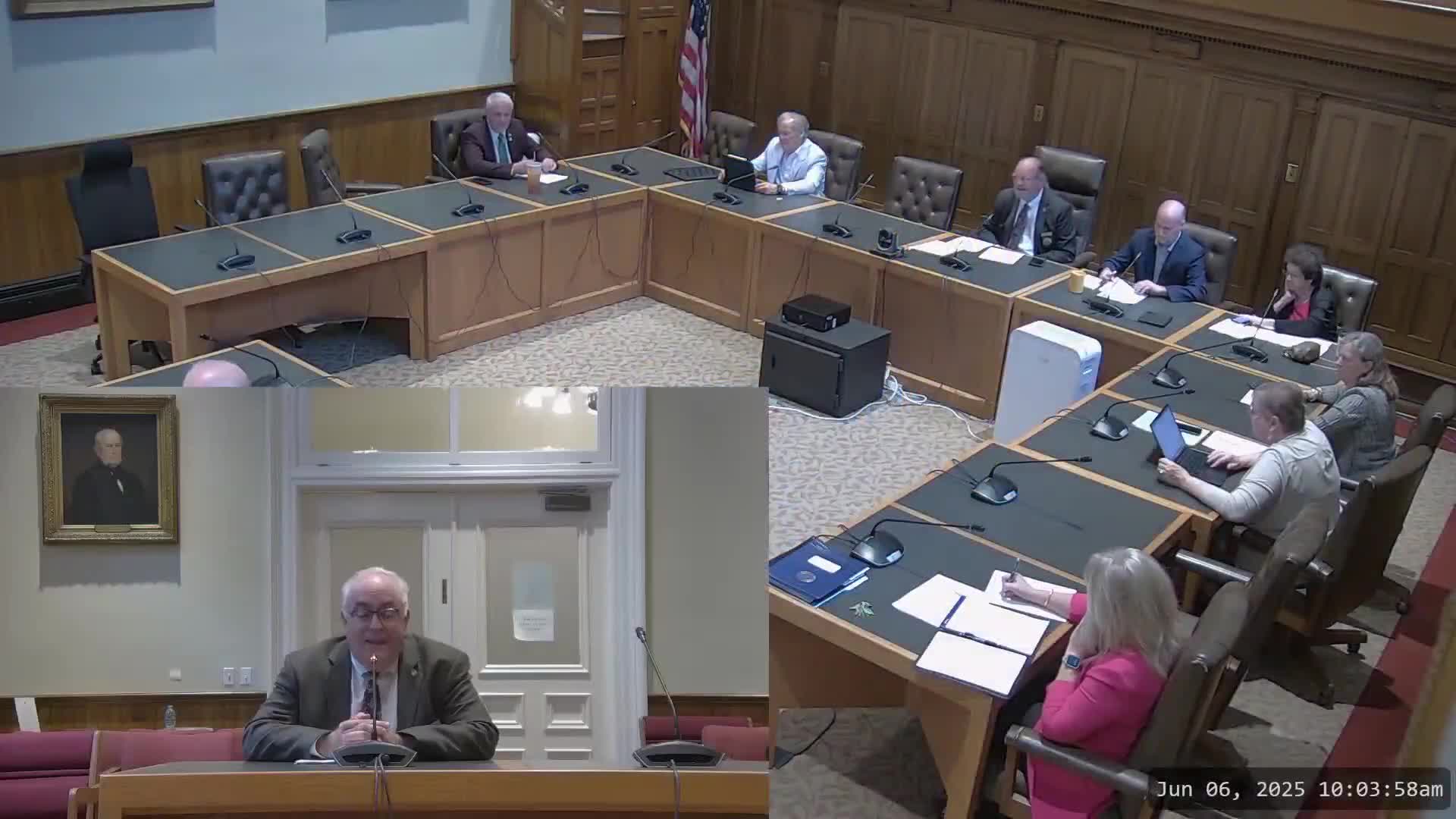
Summary
The Office of Professional Licensure and Certification told the Performance Audit and Oversight Committee it has substantively resolved most audit findings on licensure processes, with license portability marked complete but other reforms still in progress.
CONCORD — The Office of Professional Licensure and Certification (OPLC) told the Performance Audit and Oversight Committee on Wednesday that it has substantively progressed on most recommendations from a recent audit of the mental-health workforce and related licensure practices.
OPLC Executive Director Dee Juris said 10 of 12 findings are “in the substantially resolved section,” one finding is fully resolved and one remains partially resolved. Juris told committee members the office is in the middle of rulemaking and policy work to implement statutory changes adopted in recent legislative sessions.
The update focused on several reforms the office is implementing: license portability (endorsement) rules enacted last year, expedited review for some applications, standard timelines for processing, changes to criminal-history review procedures, conversion of some essay licensing exams to multiple-choice and a planned replacement of the agency’s licensing IT system.
Juris described the workload and timeline for rulemaking as substantial. “The rulemaking process ... is about 13 months from when we start to when it is actually, the final proposal is adopted,” she said, adding that OPLC handles roughly a quarter of the state’s rulemaking. She told the committee that legislative changes occurring during the rule-drafting process have required frequent midstream adjustments across roughly 57 boards and about 61 regulated professions.
On the audit’s top recommendation — improving license portability for the mental-health professions and others — Juris said the agency has implemented the endorsement statute and the work to identify “substantially similar” jurisdictions for more than 200 professions. “This finding observation 1 portability is completely done,” she said.
Committee members pressed OPLC for details about how portability is implemented. Juris said some professions have broad interstate alignment (for example, nursing compacts), but many mental-health and related fields show wide regulatory variation by state, which makes a single, fast conversion harder. Where a profession’s equivalency hadn’t been predetermined, she said, OPLC now evaluates individual applications and tracks those rulings to avoid repeating legal analysis.
The committee also heard that expedited licensing has been improved but that several operational bottlenecks remain. Juris said many complete reciprocity applications are issued the same day, but background-check requirements can delay issuance. “One of the delays ... is waiting for a criminal record check or FBI fingerprints to be processed,” she said, noting the federal role and that statute currently requires applicants to submit a release to OPLC, which then forwards it to the Department of Safety. That handoff, she said, creates potential back-and-forth if the submission is incomplete.
Several legislators suggested statutory or procedural fixes to let applicants submit certain releases directly to the Department of Safety to reduce handoffs; Juris said she could not unilaterally change law because FBI rules require specific statutory language and federal approval for processing the checks.
Juris described several other items the committee flagged in the audit and OPLC’s response: - Temporary licensure rules: OPLC said it is coordinating with boards to eliminate rules that no longer conform to current statute and to clarify which temporary licenses remain appropriate under the office’s authority. - Military crosswalks and fee waivers (RSA 3:10-17): Juris said boards are reviewing military occupational specialties against license requirements; boards such as cosmetology have assigned members to review branches of service for crosswalks. - Criminal-history standards: OPLC said it has moved toward objective procedures that limit denials to convictions that have a “substantial and direct relationship” to the licensed activity and preserves hearing rights for applicants. - Exam revisions: The boards for psychology and mental-health practice have worked to replace subjective essay jurisprudence questions with multiple-choice formats to improve standardization. - IT modernization: Juris said the office is developing a new licensing portal and system of record supported by a multi‑million dollar appropriation; she estimated the project’s budget and timeline as a major IT effort and expects to have all boards on the new system within about a year, subject to typical IT risks.
OPLC also reported constraints: Juris said her operations staff includes one full-time and two part-time rules drafters and that the office is operating under a hiring freeze in some areas, limiting capacity to draft policies and to complete systems work more quickly.
Committee members asked for follow-up. Juris said she will provide written updates and additional documentation for the outstanding audits. “I’m hoping to have reports to you by the end of the summer on the 5 pending audits that you have so that you’ll get an update on all of those,” she told the committee.
The committee agreed to send targeted letters to several agencies that had not responded to audits and to schedule follow-up briefings in the fall. No formal votes on policy were taken at the meeting.
The committee’s exchange highlighted the gap between recent statutory reforms and the administrative work required to make rules, policies and systems align with those reforms. Juris told members OPLC is working to standardize timelines and to reduce unnecessary board-level review when objective criteria allow the office to act without full board consideration.
Committee members recommended that OPLC and related agencies continue to pursue procedural changes to reduce handoffs for fingerprint and background-check processing and to report back with concrete timelines and, where relevant, proposed statutory fixes.
Juris closed by noting staffing and resource constraints but emphasized progress and a commitment to follow up in writing. “We’re making good progress,” she said.