Get Full Government Meeting Transcripts, Videos, & Alerts Forever!
Get email alerts on the Transportation Traffic Calming topic
No spam. Unsubscribe anytime.
Council directs overhaul of speed-hump policy, raises petition threshold and orders prioritization process
Summary
After an extended debate, the council unanimously approved a motion to raise the petition threshold for traffic-calming requests to 60%, create a rolling application period with a prioritized list and direct staff to return with a combined traffic-calming policy; active petitions already in process will be grandfathered.
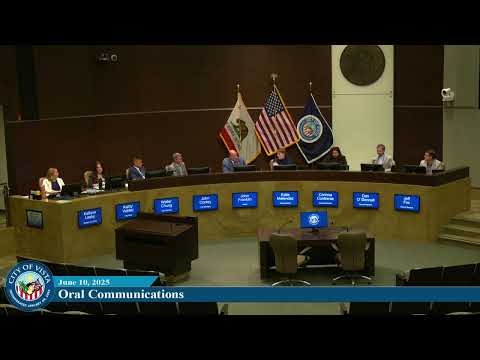
The Vista City Council voted unanimously June 10 to revise its process for neighborhood traffic-calming requests, raising the petition-signature threshold to 60 percent, directing staff to create a rolling application period with a set budget and a prioritized list for implementation, and returning to council with a single, combined traffic-calming policy.
Council members debated threshold levels, petition procedures and prioritization. Council Member Fox proposed consolidating the speed-hump petition and the traffic-calming petition processes so residents could request a street-level traffic-calming review rather than petitioning for a single device. After discussion and a friendly amendment from Council Member O'Donnell, council members settled on a 60% threshold and approved a motion that directs staff to return with a combined policy and a prioritization framework. The council expressly excluded existing active petitions from the new threshold requirement so in-process requests will not be forced to re-petition.
City traffic staff (Sam, traffic engineering) provided technical clarifications during the discussion: typical speed-hump profiles are just above 3 inches in height, spacing minimums are generally 200 feet, and installation costs vary with street width (staff reported rough per-hump costs from about $5,000 to $12,500 depending on circumstances). Staff said roughly 30 requests are active in the pipeline: 17 are actively in the department's review (fire-department consultation underway) and 13 petitions have been sent to petitioners but not yet returned.
Council members and public speakers raised concerns about emergency response times, resident outreach and petition validity. Deputy Mayor Melendez asked staff to incorporate prioritization metrics so the city builds projects addressing the most urgent safety needs first. Council Member Contreras asked staff to present a clear application and outreach process when the consolidated policy returns to council for approval.
The final motion, as amended, directed staff to: (1) raise the petition threshold to 60% for new petitions going forward, (2) establish a rolling application window with a set budget that is applied to the top-scoring requests in each cycle, (3) develop and return with a combined traffic-calming policy (covering speed humps, speed tables and stop-sign requests) and (4) grandfather existing active petitions already in the review or petition stage so they are not required to restart the process. The motion passed unanimously.
Why it matters: The changes are intended to improve transparency and prioritization, ensure engineering input determines appropriate treatments for specific streets, and limit surprise or piecemeal installations by handling requests in prioritized batches.