Get Full Government Meeting Transcripts, Videos, & Alerts Forever!
Get email alerts on the School Meals topic
No spam. Unsubscribe anytime.
Lawrence Public Schools staff propose 10¢ paid-meal increase as food service fund nears deficit
Summary
District nutrition staff proposed a 10-cent increase to paid student meal prices to reduce an emerging deficit in the food service fund and meet federal paid-lunch-equity guidance; board members pressed staff on alternatives, donation programs and potential general-fund impacts. A formal vote is scheduled for a future meeting.
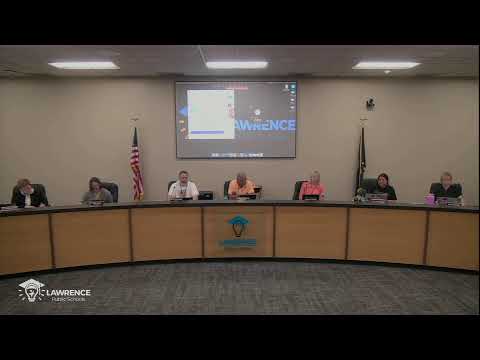
Lawrence Public Schools nutrition officials told the board Monday that a modest 10-cent increase to paid student meal prices is being proposed for 2025–26 to reduce an operating shortfall in the district’s food service fund.
The rise would apply only to paid meal prices (not free or reduced-price meals) and is intended to raise the district’s weighted average paid lunch price from about $3.08 to $3.18, director of nutrition and wellness Julie Henry said. Henry said the weighted average is still below the federal target her team was shown but that the smaller, incremental approach is intended to be less disruptive for families.
Why it matters: Henry said the district is losing about $0.82 on every paid lunch under current prices after accounting for federal and state reimbursements and that sustained losses would eventually require a transfer from the district general fund. "When paid meals are not high enough to cover paid meals plus the reimbursement... then we are losing money on those meals," Henry said. She described the increase as part of the district’s annual paid-lunch-equity review under federal guidance tied to the Healthy, Hunger-Free Kids Act.
Board context and federal rules: Henry and CFO Cindy Frick explained the federal paid-lunch-equity (PLE) requirement, which asks districts annually to evaluate paid meal prices and adjust if needed. The USDA provided a suggested weighted average paid-lunch price of $4.01 for the next year; Lawrence’s proposed adjustment does not meet that full federal benchmark but moves the district in the direction of higher paid prices while limiting the immediate impact on families.
Alternatives discussed: Board members pressed staff about other ways to stabilize the food service fund. Henry listed several levers under review: menu and entrée pricing, a la carte sales expansion, operational efficiencies (shift and staffing adjustments), continued encouragement that eligible families complete the free-and-reduced application, and pursuing grants or donations. She noted a short-term windfall when federal pandemic-era universal-meal programs temporarily improved food-service balances, but that those funding sources have ended.
Donations and targeted supports: Henry described an existing meal-support fund that accepts donor contributions and is used twice yearly to clear negative meal balances for qualifying families; donations may be districtwide or designated for particular schools. She said donors can give through the Lawrence Schools Foundation and that the district’s website link for donations will be refreshed for the upcoming school year. Board members named local retailer donation options as additional community avenues.
Local sourcing and cost pressures: Staff said the district values purchases from local farmers but that locally sourced products typically cost more. Henry described a separate USDA local-foods grant that had supported local beef purchases but was not continued; the loss of that program has pushed the district back to mainline distributor pricing for some items.
Timing and next steps: The board heard the presentation as an informational item; staff said a formal motion and vote are expected at a subsequent meeting once USDA reimbursement rates are published (mid-July) and the board has time to review final numbers. Henry asked board members and the public to encourage families who may qualify to file free- and reduced-price meal applications; she also explained that families must separately sign a consent-for-disclosure form to allow the district to share eligibility with the finance office for fee waivers.
Board questions and process concerns: Several board members said they understood the limited choices—raise paid meal prices, accept a future transfer from general-fund dollars, or identify other revenue/levers—and asked staff to continue reviewing options including central kitchen models, menu changes, and nonfederal revenue. Henry said the staff goal is to keep the food service fund self-sustaining and to avoid asking general-fund dollars to subsidize meal operations if possible.
What’s next: Staff will return with a formal proposal for board action at a future meeting; USDA final reimbursement rates for 2025–26 will inform the final pricing recommendation. The board has not yet voted on the price change.