Get Full Government Meeting Transcripts, Videos, & Alerts Forever!
Get email alerts on the Public Safety topic
No spam. Unsubscribe anytime.
Woonsocket reviews police-detail billing, collection rates and retiree pay practices
Summary
At a June 9 workshop the council reviewed the police department's memorandum-of-agreement draft, billing software (DTS), collection performance and payroll treatment of retired officers; administration recommended codifying rates and correcting payroll treatment for retirees.
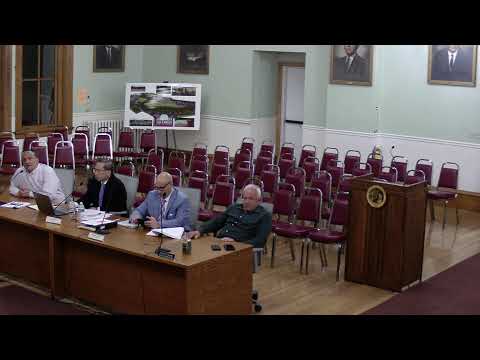
The Woonsocket City Council at a June 9 workshop discussed police-detail procedures, vendor billing rates and a memorandum of agreement the administration wants the council to ratify.
Director Gillette and Sergeant Phil Kammer described a multi-year effort to standardize and digitize how private vendors and contractors pay for police details. Kammer said the department moved to a digital detail-tracking system (DTS) that has improved invoicing and collections and, because of his early involvement, the city is currently not paying subscription fees for the software. "Since we switched over to that system, we have a 95% collection rate," Kammer said. He told the council the department recorded 4,711 details and about 30,000 detail hours in the last fiscal year and that the city has received $234,003.27 in net revenue on details for the current fiscal year.
Administration representatives asked the council to codify the detail rates and the memorandum of agreement so the city has an approved, auditable process for setting rates and billing vendors. Solicitor Alan Fung and the administration said rates are calculated from a base that the department described as a patrol-sergeant rate at time-and-a-half; the city's administrative share is 10% of the billed officer rate and an additional small per-hour administrative fee is collected in the processing model described to the council. The administration proposed presenting the MOA and a rate letter to the council as a resolution or ordinance for formal approval.
Council members and department staff discussed operational details. Sergeant Kammer outlined a five-tier bidding and assignment system for details: (1) a core list of full-time officers required to take assigned details; (2) other active officers who may bid; (3) command officers; (4) retirees; and (5) civilian traffic-certified staff. Kammer said retirees do substantial detail work and currently are being paid through biweekly payroll; the administration acknowledged that many retirees should be treated as independent contractors (Form 1099) rather than paid through payroll and that the city has been incurring employer-side FICA Medicare costs for retiree payments. "Before everything is finalized, we need to fix that payroll process," an administration official told the council.
Safety and operational concerns were emphasized. Multiple speakers noted that police details protect construction crews and the traveling public; the council heard that reputable contractors know when a police detail is required by MUTCD standards for work in the public right-of-way. Chief and director representatives said the city should not undercut safety by moving details off law-enforcement control.
No formal action was taken at the workshop. The administration said it will return with a memorandum of agreement or resolution that lays out the detail rates, billing procedures, and a plan to correct retiree payroll treatment and to memorialize the DTS-based invoicing process for council ratification.