Get Full Government Meeting Transcripts, Videos, & Alerts Forever!
Get email alerts on the School Capacity Calendar Conversions topic
No spam. Unsubscribe anytime.
Board hears district plan for calendar conversions and crowding relief as CIP projects roll forward
Summary
District staff outlined criteria for identifying overcrowded and cap schools that could be candidates for calendar conversion or reassignments, discussed Oak View Elementary as a crowding concern for 2025–26, and described outreach plans for potential changes that would take effect in the 2027–28 school year.
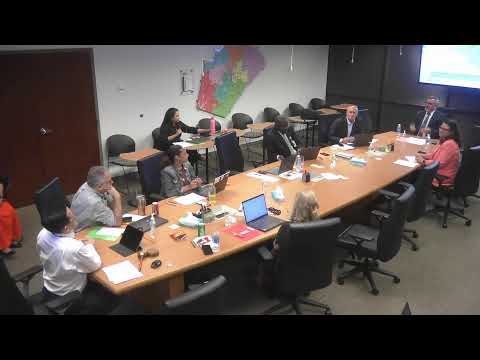
District staff briefed the Wake County Schools board on June 18 about the process the district uses to identify long‑term crowding concerns, align calendars and consider multitrack year‑round conversions as the capital improvement program (CIP) progresses.
Staff described a multi‑step analytic process that reviews capped schools, overcrowding percentages (the district uses thresholds; for example, Oak View Elementary was projected at about 117% utilization for 2025–26) and whether nearby schools have proximate capacity. The analysis flags schools currently impacted by recent enrollment changes, those expected to be impacted by CIP projects, and those where projections indicate a natural enrollment reduction that could resolve crowding without reassignment.
Oak View Elementary was highlighted as a school projected to be 117% crowded for 2025–26 with continued base growth projected over a 10‑year forecast and no immediate CIP relief anticipated. Staff said proximate schools that might otherwise relieve Oak View’s crowding do not have long‑term seats available; as a result, staff suggested Oak View could be a candidate for a calendar conversion or other assignment strategies and asked for the board’s guidance to begin community engagement.
Staff also reviewed multitrack year‑round schools that feed traditional middle and high schools, noting calendar misalignment can create family disruption. The district said it will prioritize families’ stability and limit reassignments where possible; converting a multitrack school to traditional typically increases utilization and may require additional reassignment if nearby capacity is limited. Staff said they will evaluate feeder patterns, projected enrollments and magnet and transfer impacts before bringing formal recommendations.
Staff described planned outreach steps: meet with area superintendents and principals, hold staff briefings, provide thought‑exchange and virtual public engagement for affected base attendance areas, and hold in‑person community sessions. Staff recommended giving affected employees and families ample lead time — roughly two years — so staff pay schedules, family planning and application cycles for magnet/transfers can be accommodated. Staff proposed a timeline that could lead to recommendations for the 2027–28 school year while allowing families two application cycles to respond.
Board members and staff discussed several specific corridors and schools for consideration in future conversations, including North Raleigh feeder patterns, Parkside Middle School (future CIP project) impacts on nearby schools, Durant Road and Willow Springs concerns about trailers and renovation needs, and the possibility of using Parkside as swing space during renovations. Staff also noted that renovation and addition projects in the CIP can change the long‑term capacity picture and that the district is balancing new construction with renovation priorities.
Staff said they will begin targeted engagement for candidate schools and return to the board with formal reassignment or conversion proposals after community input. The district also noted that on June 24 it will bring a proposed minor update to the memorandum of understanding (MOU) with Wake County to formalize existing interagency work, including conversations about surplus property and potential affordable housing partnerships.
Ending: Staff asked for the board’s direction on which schools to prioritize for outreach, reiterated the intent to preserve family stability where possible, and said formal recommendations will follow public engagement and CIP coordination.