Get Full Government Meeting Transcripts, Videos, & Alerts Forever!
Get email alerts on the Housing Infill Rhid topic
No spam. Unsubscribe anytime.
Developers outline 44-home Manhattan infill project and seek 15-year RHID support
Summary
Frontier Development Group and partners presented a three-site, 44-home infill housing project for Manhattan and requested a 15-year Rural Housing Incentive District (RHID) allocation for one site. Developers and county commissioners debated costs, projected tax revenues and program terms; no county decision was recorded at the meeting.
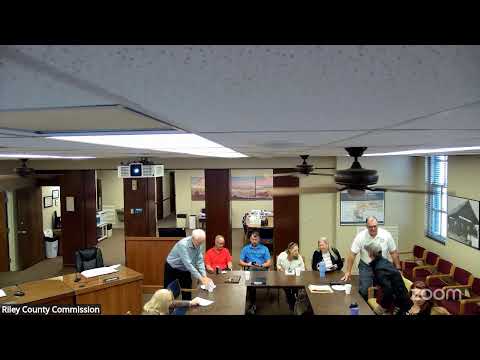
Tyler Holloman, president of Frontier Development Group, and a development partner, Gavin, told the Riley County Commission on June 9 that their Manhattan Infill Housing project would deliver 44 new homes across three infill sites in Manhattan, including 40 designated as workforce housing and four market-rate units. Holloman said the three-site project will use local contractors and is supported by grants and tax-credit awards from Kansas Housing Resources Corporation (KHRC).
KHRC awarded a $650,000 Moderate Income Housing grant and about $1.2 million in housing investor tax credits to the project, Holloman said. Gavin said the RHID request before the county applies to the Little Kitten Flats site in northwest Manhattan — a 26-unit duplex component with a total budget about $8.8 million and an RHID request of $1,950,000 spread over 15 years.
Gavin walked commissioners through the project pro forma, including a per-unit breakdown the developers had prepared. He said construction cost estimates put a finished single unit at about $344,000 before grant subsidy; after roughly $44,000 in subsidy per unit the build cost would be about $300,000. The developers estimated a likely sale price of about $318,000 and net proceeds after closing and interest of roughly $280,000, leaving a financing gap the RHID would help close. “We're here today … to use this RHID program to help bridge that gap and help make this project financially feasible,” Gavin said.
The developers also presented a fiscal-impact analysis by municipal consultant Steve Robb estimating construction sales taxes, household sales-tax revenue and net county revenues over multi-decade horizons. Gavin noted the three undeveloped lots had produced only about $240,000 in property tax over the prior 37 years and estimated the site could produce many times that amount if developed.
Commissioners pressed developers on several points: lot purchase prices (commissioners noted the existing lots had not been developed for decades and questioned a roughly $40,000-per-lot purchase price), infrastructure readiness and utility tap costs, contingency allowances for rock or other subsurface issues, and whether workforce-income definitions matched recent market analyses. Commissioner Ford and others said they were concerned about the county’s near-term revenues versus the long-term nature of RHID agreements; Commissioner McKinley asked about turnover and whether homes might be resold (and thus return to full taxation) in a few years. Developers said KHRC-imposed land-use restriction agreements and buyer income certification would limit speculative or ineligible sales for the KHRC-funded units.
No formal county vote on the RHID request occurred during the June 9 meeting. County staff said the commission would revisit the item at a future meeting (the developers were told the county had 30 days after the public hearing to act). Commissioners asked staff to arrange additional time and public comment at an upcoming meeting; the board scheduled further consideration for its next meeting cycle.
Why it matters: Riley County and Manhattan officials said the county faces a local shortage of for-sale workforce housing. Developers and the city argue the RHID plus KHRC funding are necessary to make a for-sale product feasible in these infill locations. Commissioners said they need more time and clearer numbers to weigh a long-term RHID pledge against county revenue needs.
Looking ahead: The commission will hear the RHID request again during the upcoming meeting cycle; the county also expects public comment opportunities to be scheduled at that meeting.