Get Full Government Meeting Transcripts, Videos, & Alerts Forever!
Get email alerts on the Entry Signs Land Use Training topic
No spam. Unsubscribe anytime.
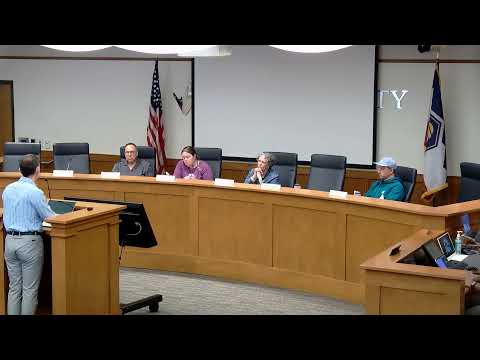
Midvale planning staff outlines entry-sign project, consultant ranking and land-use training on exactions
Summary
Midvale planning staff presented prioritized locations and designs for new entry signs and provided a land-use training session on exactions and takings, citing Nolan v. California Coastal Commission and Dolan v. City of Tigard.
Planning department staff updated the Midvale Planning Commission on a proposed program of new city entry signs, described the top three locations identified in a consultant study and outlined two sign designs, and provided a land-use training overview on exactions and takings jurisprudence.
Planning staff (Randall, planning director/lead presenter) showed a map of recommended sign locations along major corridors into Midvale and described two design concepts: a horizontal monument for locations with more space and a vertical monument for constrained locations. The three highest-scoring, prioritized locations were: the Jordan River Boulevard approach from West Jordan (near 70th/72nd), a State Street North location (near the Su Casa restaurant landscape area; staff said an easement would be required), and the area off I-215 at South Union Park (where staff said they would work with UDOT). Randall said the top three sites "scored the highest" in the consultant analysis and that the city currently has funding to construct those highest-ranked signs, though procurement (RFP or direct contract) and detailed design remain to be determined. He said the signs would be lit at night and that the project is expected to progress over multiple years.
Following the signage presentation, Randall conducted a land-use training segment focused on exactions and constitutional takings, discussing the U.S. Supreme Court decisions Nolan v. California Coastal Commission and Dolan v. City of Tigard. He explained the two-part tests that generally require (1) a nexus between the development impact and the mitigation condition, and (2) rough proportionality showing that an exaction is proportional to the project's impact. Randall also referenced state code section cited in the presentation (spoken as "10 9 a 5 0 8") and federal laws and preemption matters relevant to planning, including the Religious Land Use and Institutionalized Persons Act (RLUIPA), the Fair Housing Act and the Federal Telecommunications Act as they relate to certain land uses and communications facilities.
Staff also gave brief updates: the Jordan Bluffs master development agreement and a related tax-increment agreement were on the city council agenda and approved there, which staff said should enable progress on the parcel immediately south of Ivy Drive; parks and open-space and the Porter Rockwell feasibility studies are ongoing with a steering committee meeting expected in July. Staff noted the next planning commission meeting was canceled because several members would be out of the office.
Commissioners expressed general support for the signage concepts, noting visibility and nighttime lighting as positives; one commissioner said they expected momentum to complete additional signs once the first installations are done. No formal action was taken on the signage study during this meeting; the presentation served as an informational update.