Get Full Government Meeting Transcripts, Videos, & Alerts Forever!
Get email alerts on the Public Safety topic
No spam. Unsubscribe anytime.
Maricopa County staff warn stronger monsoon could raise heat and flash-flood risks
Summary
A Maricopa County staff member warned that an anticipated stronger monsoon may bring higher humidity and heavier rains, increasing heat-related health risks and the likelihood of fast-onset flooding at low-water crossings; officials urged residents not to drive through flooded roadways.
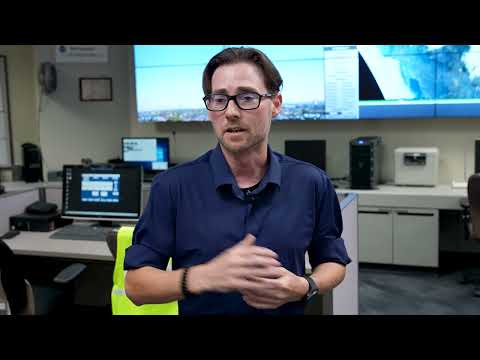
A staff member said Maricopa County is anticipating a wetter-than-normal monsoon beginning around early July and continuing through the summer, and warned that the combination of added moisture and high heat could create both health hazards and a greater risk of flash flooding.
The staff member said the county had a very dry winter and spring, which can set the stage for a stronger monsoon circulation that taps moisture sources around the United States and brings thunderstorms to the region. "We're actually anticipating a wetter monsoon than we've had in the past," the staff member said.
County emergency staff described how higher atmospheric moisture raises dew points and reduces the effectiveness of evaporation, making conditions feel "sweltery" and increasing the risk of heat-related illness when heat and humidity coincide. The speaker warned that stronger monsoon circulation "can bring strong heat potential," creating a combined threat of heat stress and flooding.
Officials said heavy rains during monsoon storms can fall quickly—about 1 to 3 inches per hour—and that is often enough to send fast flows into desert washes and across low-water roadway crossings. The staff member repeated standard safety guidance: do not attempt to cross a flooded roadway. "It takes 6 inches to knock you off your feet just standing in the water," the speaker said, and a foot or more of moving water can float a vehicle.
The county said it is operating 24/7 to monitor conditions and respond to incidents during monsoon storms. No specific evacuation orders or road closures were announced in the remarks.
Practical takeaways offered during the briefing: anticipate localized heavy downpours, avoid driving through standing or moving floodwaters, and be aware that simultaneous heat and humidity can increase risk of heat-related illness. The staff member concluded the advisory by emphasizing personal safety: "It's not worth the risk."