Get Full Government Meeting Transcripts, Videos, & Alerts Forever!
Get email alerts on the Senior Services topic
No spam. Unsubscribe anytime.
Cambridge committee hears warnings on shrinking funds, rising senior needs; calls for embedded services
Summary
City officials and nonprofit partners told the Civic Unity Committee that demographic shifts, lost federal and state prevention grants and rising housing instability threaten seniors’ ability to age in place, and they urged more coordinated, embedded services and volunteer supports.
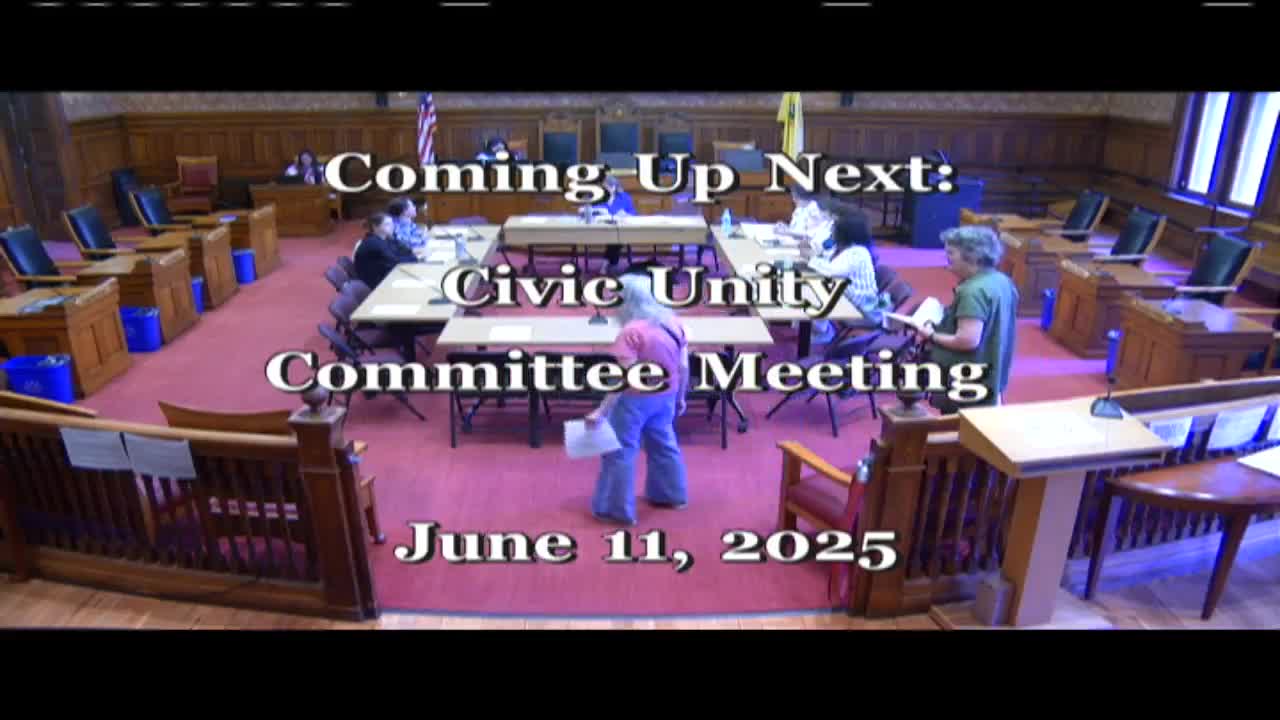
Cambridge City officials and providers told the Civic Unity Committee on a public hearing that the city faces a growing mismatch between seniors’ needs and available resources, as federal and state prevention funds end and demand for home-based supports and housing assistance rises.
"The call of today's meeting is to discuss how Cambridge can proactively prepare for the growing challenges associated with elder care," said Kathy Zoussier at the meeting opening, describing the session as a planning and fact-finding hearing convened by the committee.
The hearing focused on senior housing, eviction prevention and rental assistance, food insecurity, mental-health and caregiver supports, and workforce shortages in home- and clinical-care. Mayor Denise Simmons said the point was not merely to catalog services but to “look at all of this with a sort of reality check of what we're going to be able to do” as thousands of residents age in place.
Why it matters: presenters warned that several grant streams that previously paid for eviction prevention and other stabilization services have ended, while population and housing pressures are increasing. Without replacement funding or new service models, speakers said more seniors will face housing instability, unmet health needs and isolation that can lead to higher hospital use and institutional care.
Numbers and funding changes. Maria Mello, director of the city’s MultiService Center, reviewed recent prevention awards and funding that have ended: "From 2020 through 2024, the Housing Stabilization Program provided forward funding stabilization funds for 108 elders, totaling $535,959," she said. She added that ARPA-funded prevention awards supported 76 elder-headed households from 2023–2024 totaling $377,538. The city’s ongoing rental assistance program, funded by city allocations, assisted 189 elder-headed households from FY24 through the present at a cost of $265,067; of that amount, she reported $83,039 for relocation and security deposits and $10,758 for utility arrears.
Housing and homelessness. Presenters described multiple displacement pathways for older residents: building sales, owner death or family decisions that force long-term tenants to move; health decline; and aging while unhoused. The city’s coordinated access system (CCAN) and recent permanent-supportive housing projects housed dozens of formerly homeless people in the last year, including units at 116 Norfolk Street and Wendell Street. Somerville Cambridge Elder Services reported that of the 141 individuals housed from July 2024 through June 2025, 59 were age 55 or older.
Service models and gaps. Speakers praised the Cambridge Housing Authority’s service coordination team and recommended expanding embedded stabilization services in housing developments. Somerville Cambridge Elder Services and Council on Aging staff urged a shift to upstream, population-health approaches (nutrition, outreach, and caregiver supports) and noted that volunteer programs require staff coordination and funding to scale safely.
Food, isolation and mental health. Providers said food insecurity and social isolation are rising concerns for older adults: home-delivered meal capacity was reduced after earlier funding ended and many older adults face language or mobility barriers to accessing SNAP or other benefits. Tina Olu of CEOC described longer waits for Social Security appointments and increasing requests for help with benefits and interpretation.
Workforce and care levels. Multiple speakers highlighted workforce shortages in home care and the lack of affordable assisted-living options for low-income older adults. Brenda Snowden Downing of the Cambridge Housing Authority described expanded on-site wellness and community programs at public housing properties and said some residents now need a higher level of daily care that is not readily available outside nursing homes.
Next steps and city actions. City staff and nonprofit leaders recommended convening a cross-sector practitioners’ working group to prioritize two to three interventions to pilot over 2–3 years, including testing an embedded-services model in CHA buildings, expanding navigator supports for complex cases, and scaling targeted food and volunteer outreach. City staff noted the FY25 city budget included a $300,000 increase in tax‑funded rental assistance to partly offset lost ARPA and stabilization funds.
Public comments. Two residents who identified themselves as long-time Cambridge seniors urged attention to federal proposals that could reduce rental assistance and to volunteer and intergenerational programs to reduce isolation. Sandra Foster said she was ‘‘very concerned’’ about proposed federal cuts to rental assistance.
Meeting close and formal action. The committee adjourned by voice/roll call vote at the meeting’s close.
Ending note: Panelists and elected officials repeatedly framed their recommendations around preserving seniors’ dignity and independence while preparing for tighter resources, and several asked the council to support coordinated, preventive investments rather than reactive crisis responses.