Get Full Government Meeting Transcripts, Videos, & Alerts Forever!
Get email alerts on the Infrastructure Permits topic
No spam. Unsubscribe anytime.
City staff proposes minor IDP permit to speed smaller infrastructure work
Summary
City Development Services introduced an ordinance to add a ‘minor IDP’ permit category to Tulsa’s infrastructure development permit process intended to shorten review times for projects that meet standard specifications.
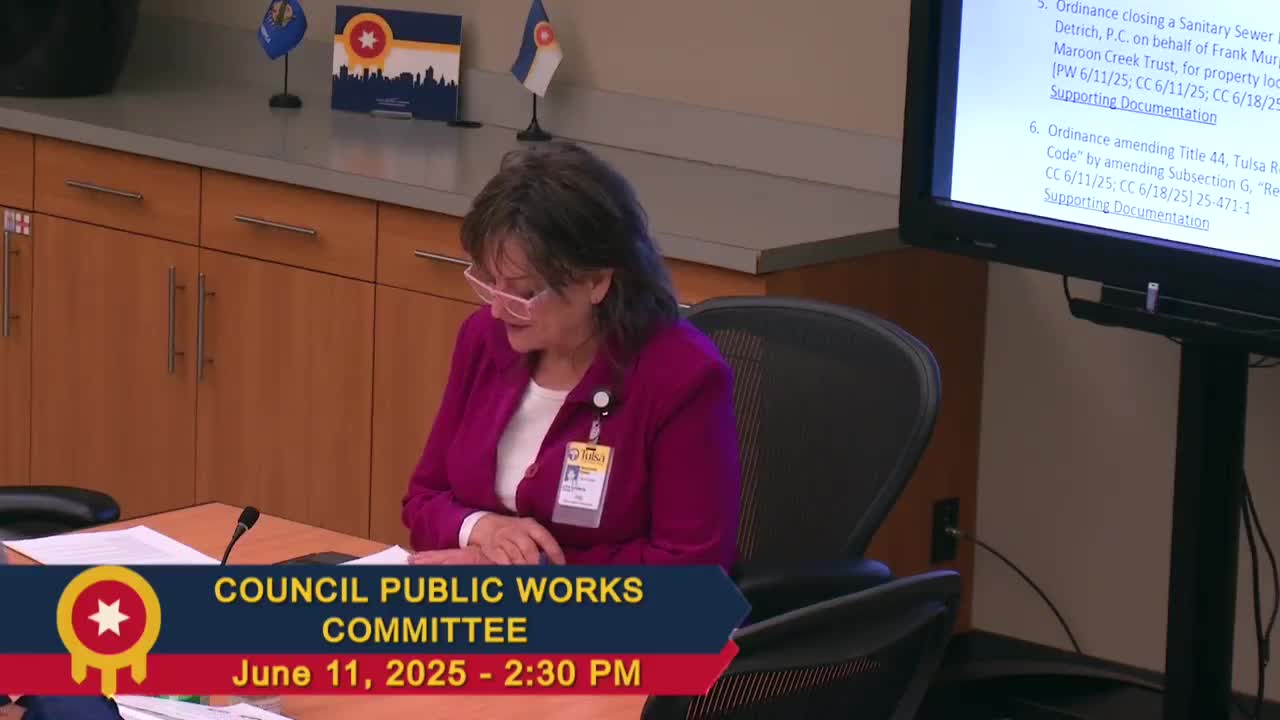
City of Tulsa Development Services staff presented an ordinance to amend Title 35 (Infrastructure Development) to add a minor Infrastructure Development Permit (IDP) category aimed at speeding review for smaller projects that conform to standard specifications.
Michael Lane, Development Services, told the commission the new minor IDP would let contractors “bring in a specification or a standard that they can build to and get a faster permit.” Lane said the full IDP process is longer because it coordinates multiple disciplines including water, sewer and streets.
The ordinance text shown in the meeting packet amends Chapter 2 (Infrastructure development permits) and Chapter 3 (Major construction process) by adding a minor IDP category, refining permit categories, and including provisions on permit duration and revocation. Lane said the change is intended to “make construction a lot easier for the community” by shortening processing for work that meets city standards.
Commission discussion at the time was limited to clarifying that the minor IDP would not cover items such as escrowed sewer caps, which a commissioner asked about in relation to a constituent’s permit requiring a $10,000 escrow for a sewer cap.
No formal vote was recorded in the transcript; staff recommended approval and the item was scheduled for a future vote (the transcript indicates the item will be voted on “on the eighteenth”).
Ending: The proposal moves forward to the council agenda for a formal vote on the date noted in the agenda; staff said it is intended to reduce review times for routine, standards-based projects while retaining multi-discipline review for larger work.