Get Full Government Meeting Transcripts, Videos, & Alerts Forever!
Get email alerts on the Capital Improvement Plan topic
No spam. Unsubscribe anytime.
Planning commission finds Redding’s 2024–2030 capital improvement plan consistent with general plan
Summary
The Redding Planning Commission voted to find the city’s 2024–2029/30 Capital Improvement Plan (CIP) consistent with the general plan after a presentation from city staff outlining $718 million in five‑year projects, funding sources and priority questions for utilities, streets, parks and public safety.
The Redding Planning Commission voted to find the City of Redding’s 2024–2025 through 2029–2030 Capital Improvement Plan (CIP) consistent with the city’s general plan and will forward the CIP to city council for a public hearing and adoption by resolution.
Joshua Anthony, planning staff presenter, told the commission the CIP is a five‑year program that summarizes capital projects across nine city divisions and is “not a budget document, but rather a metric to gauge the amount of budget necessary to maintain or improve the infrastructure for the city.” He said the document groups about 165 capital investments funded by 45 different funding sources and totaling roughly $718,000,000 over the five‑year window.
The CIP, Anthony said, is prepared in conformance with the Mitigation Fee Act and related Government Code provisions and is brought to planning commission so the commission can make the required consistency findings before the plan goes to council. He noted that projects scheduled in fiscal years 2024–25 and 2025–26 are fully funded, while projects in years three through five are partially funded or awaiting additional funding sources.
Major projects and funding examples in the CIP include: the Runway 16/34 and taxiway connectors rehabilitation at Redding Regional Airport (engineer’s estimate about $27,000,000); an Old Oregon Trail widening contract awarded to Tula Inc. (engineer’s estimate $2,300,000); a protected left‑turn project and ADA corner upgrades at about 10 downtown intersections (engineer’s estimate about $1,100,000, funded by a Highway Safety Improvement Program grant); the Trinity Bikeway (about $1,600,000); the Caldwell Park expansion including a new pump track/bike park (estimated $5,000,000 using state grants and park fees); a material recovery facility (MRF) expansion (rough estimate $3,200,000); a West Side interceptor sewer replacement (approximately $5,300,000 funded by wastewater rates); and a North Willis area water main replacement (engineer’s estimate about $5,000,000 funded by water rates). Anthony also identified use of the Drinking Water State Revolving Fund (SRF) as a new loan source for the Pump House 1 project.
Commissioners questioned prioritization, funding clarity and program details. Commissioner Godert asked whether projects listed within a division are prioritized; Anthony explained that project naming conventions vary by division and that the CIP’s year columns represent schedule priority (years 1–2 are current, years 3–5 are longer‑term). Commissioner Minor asked whether the first two years are fully funded; Anthony confirmed years 1 and 2 projects reflected in the CIP are fully funded, while years 3–5 need additional funding. Commissioners also flagged a typographical inconsistency in the packet that briefly suggested the fire department had no five‑year needs; staff acknowledged that projects for the fire department appear in another section and said the packet would be corrected.
On utilities and energy, commissioners pressed whether the Redding Electric Utility (REU) is planning new generation versus grid investment. Staff and other panelists said REU uses resource planning and load forecasting and has programs for substation modernization, breaker replacements and other system resiliency investments; staff noted REU is also exploring private‑developer utility‑scale solar tie‑ins and that the utility recently issued long‑term bonds that could be reflected as “system financing” in the packet. Staff advised commission members to review a recent REU quarterly update to council for more detail on load forecasting and generation planning.
Public safety and facilities were discussed. The CIP lists several fire‑related investments, including replacement of self‑contained breathing apparatuses and upgrades to existing stations; larger new station builds (including Fire Station 9 and remodels) remain in out years and are dependent on future prioritization and funding. The police division currently shows no near‑term capital investments in the CIP, a point commissioners noted as potentially surprising given facility maintenance needs; staff said smaller maintenance items are handled by building maintenance and only larger capital facility work appears on the CIP.
Commissioners also reviewed transportation and neighborhood items. Staff highlighted ongoing sidewalk and ADA ramp maintenance (roughly $250,000 and $150,000 per year, respectively), the neighborhood traffic calming program ($50,000 per year), bridge projects funded primarily through the federal Highway Bridge Program (federal grant covering about 88% with local match for the remainder) and specific projects such as Eastside Road bridge replacement (contracted to Abacus Construction, about $3,700,000) and the Alturas Bridge over Churn Creek (about $6,400,000). Commissioners raised local concerns — for example, safety and traffic at Shasta View and College View near schools and social services — and staff explained that some corridor improvements are conditioned to be built by developers at the time of entitlement while other needs may be advanced as city capital projects if funding and demonstrated operational need arise.
One member of the public, Alexander, offered brief comments during public comment, noting several small city maintenance items he observed while visiting (fountain maintenance, bus window rattles and sidewalks/bridge transitions). Staff thanked him for the observations and directed follow‑up where appropriate.
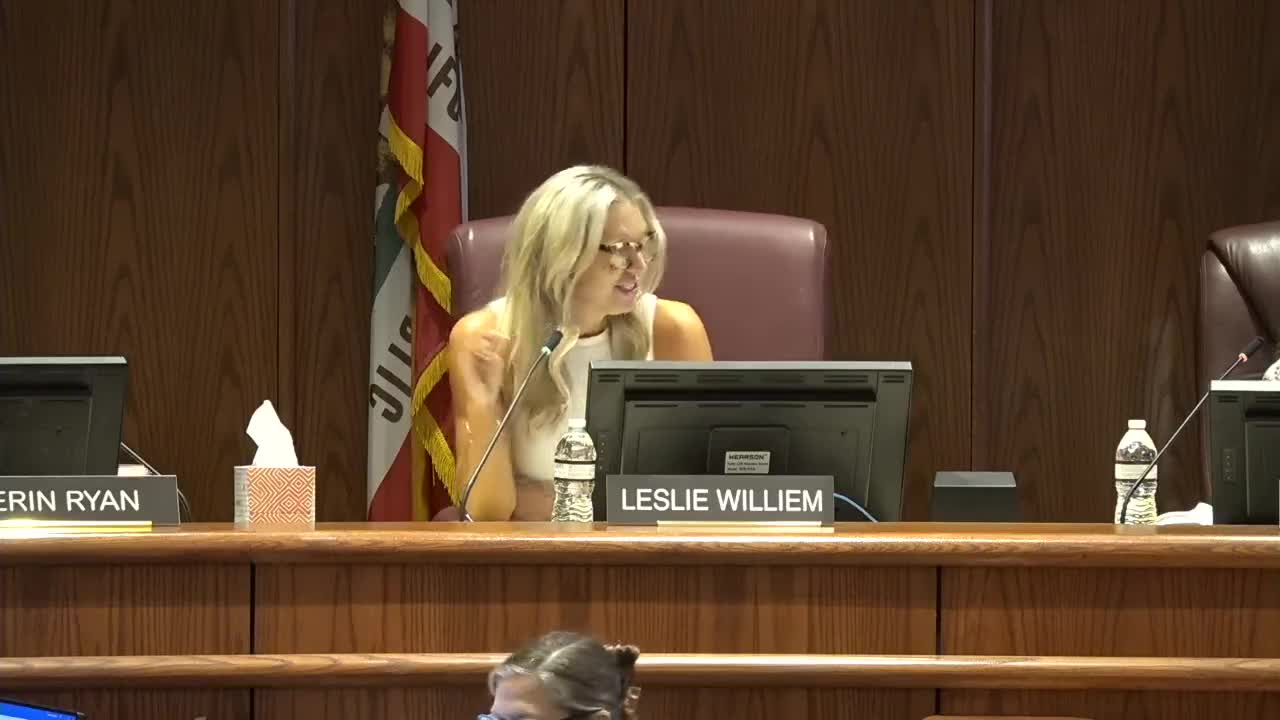
Formal action: Commissioner Michelle moved that the Planning Commission find that the City of Redding’s 2024–2025 through 2029–2030 Capital Improvement Plan is consistent with the general plan; Commissioner Erin seconded. The motion carried on an affirmative voice vote of the four commissioners present (Vice Chair Willem, Commissioner Godert, Commissioner Minor and Commissioner Ryan). Staff said the next step is for council to hold a public hearing and consider adoption of the CIP by resolution.
The commission’s discussion focused on clarifying funding status, correcting minor packet errors, ensuring the CIP reflects required statutory findings under the Mitigation Fee Act (Government Code §66000 et seq.) and identifying areas for more detailed evidence‑based prioritization in future updates. Staff said they will correct packet typos, confirm the meaning of “system financing” for RU/REU projects (likely bond proceeds), and return to council with the CIP for adoption if the commission’s finding is accepted by council.