Get Full Government Meeting Transcripts, Videos, & Alerts Forever!
Get email alerts on the Water Management topic
No spam. Unsubscribe anytime.
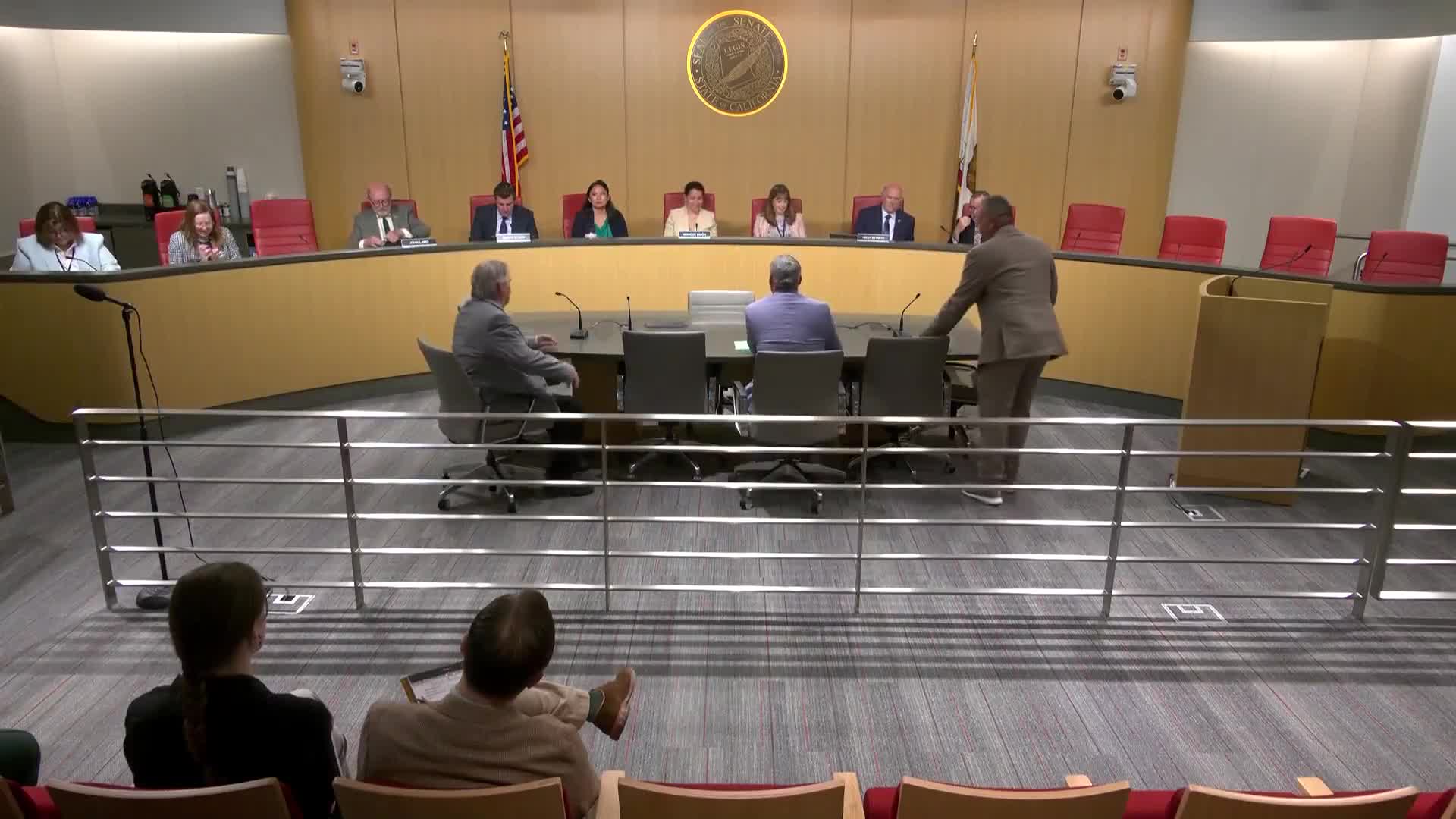
Senate committee advances bill to extend emergency minimum flows on Scott and Shasta rivers for up to five years
Summary
Assemblymember Rogers presented AB 263 to the Senate Natural Resources and Water Committee, seeking to keep existing emergency minimum‑flow regulations on the Scott and Shasta rivers in effect for five years or until the State Water Resources Control Board adopts permanent regulations.
Assemblymember Rogers presented AB 263 to the Senate Natural Resources and Water Committee, seeking to keep existing emergency minimum‑flow regulations on the Scott and Shasta rivers in effect for five years or until the State Water Resources Control Board (Water Board) finalizes permanent regulations.
The bill ‘‘creates a bridge’’ between the current emergency drought orders and the Water Board’s permanent rulemaking, Rogers told the committee, and is intended to avoid losing the minimum flows that supporters say have been critical since the 2021 emergency regulatory actions.
Supporters said the flows are essential to restoring salmon runs and tribal lifeways. Philip Williams, a member of the Yurok Tribal Council, said the Yurok have not had a commercial salmon fishery for nine years and described the cultural and economic harms to tribal communities. Russell “Buster” Atterberry, chairman of the Karuk Tribal Council, described historical die‑offs and said dam removal alone will not restore fish populations without adequate flows.
Environmental and conservation groups offered broad support. Representatives from the Environmental Defense Fund, Audubon California, Sierra Club California and multiple waterkeeper and conservation organizations registered in support and spoke at the hearing.
Opponents, including Alex Bring of the California Farm Bureau and Andrea Abrugell of the California Municipal Utilities Association, said AB 263 would effectively establish long‑term in‑stream flow conditions through legislation rather than through the Water Board’s standard rulemaking process. Bring said passage froze in place relief that had been reached through local collaborative processes and could undermine negotiations that were underway on long‑term management. He told the committee that preliminary academic work suggests significant local economic impacts from permanent curtailment scenarios and said affected communities deserve a full public process.
Committee members pressed both sides on local impacts and process. Senator John Laird, who moved the measure, said the bill is meant to preserve an ‘‘equilibrium’’ achieved under the emergency regulations until the Water Board adopts permanent rules; he noted the Water Board estimated it will take roughly two years to complete the permanent regulations. Several committee members said they were uncomfortable with using statute to carry emergency rule content but voted to advance the bill and asked the author to continue discussions with local stakeholders.
Action: The committee recorded a motion to ‘‘do pass as amended, to appropriations’’ moved by Senator Laird. The motion was placed on call during the hearing and later reported out; the chair recorded the bill as passed to appropriations (motion carried; recorded support during committee proceedings). Notes: committee members requested additional meetings between the bill author, tribal representatives and agricultural stakeholders to continue negotiating check‑in and mitigation mechanisms while permanent regulations are developed.
Background: The emergency regulations referenced were adopted by the State Water Resources Control Board beginning in 2021 to guarantee minimum flows in parts of the Scott and Shasta watersheds that feed the Klamath River. Supporters said those emergency flows helped reduce disease and improved rearing habitat following removal of Klamath River dams; opponents said long‑term changes to water supply need full public rulemaking and economic analysis.
Next steps: AB 263 was advanced by the committee to the Senate Appropriations Committee as amended; the author said he will continue convening local stakeholders to seek negotiated check‑ins or mitigation measures during the interim period while the Water Board completes permanent rulemaking.