Get Full Government Meeting Transcripts, Videos, & Alerts Forever!
Get email alerts on the Municipal Budget topic
No spam. Unsubscribe anytime.
Council adopts department work plans; Measure H revenue cited as stabilizing factor as crossing-guard funding remains unresolved
Summary
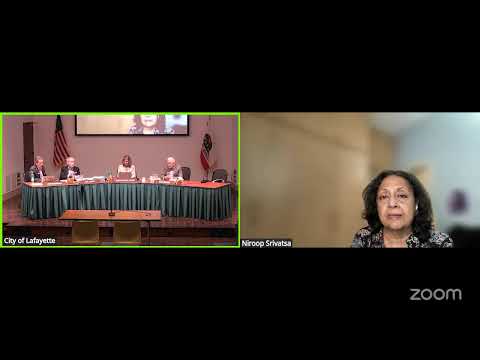
Lafayette’s City Council approved department work plans for fiscal year 2025‑26 and reviewed a draft budget built around assumed Measure H sales‑tax receipts, while deferring a decision to assume full responsibility for school crossing guards.
The Lafayette City Council on June 9 approved department work plans for fiscal year 2025‑26 and discussed the proposed budget framework, which assumes baseline receipts from the half‑cent Measure H sales tax passed by voters last fall. Councilmembers and staff emphasized fiscal discipline and recommended using any excess funds to address deferred infrastructure maintenance.
Work plans adopted: Staff told the council that departments had aligned projects to council priorities identified in a March workshop and that department heads had trimmed tasks to reflect staffing levels and mandates. The council voted to approve the multi‑department work plans as presented.
Measure H and the fiscal outlook: City staff said Measure H has stabilized the city’s near‑term finances, and the draft budget assumes $2.4 million in annual Measure H revenue (with roughly $450,000 estimated for the April‑June portion of the current fiscal year). Staff urged fiscal restraint because the five‑year model shows only a modest buffer above the city’s 60% reserve and projected increasing deficits in later years without additional revenues or spending adjustments. Staff recommended prioritizing deferred infrastructure and maintenance before committing excess funds to new ongoing programs.
Budget requests and public safety items: Staff presented several near‑term budget requests for council consideration: (1) staging school buses for red‑flag evacuation days (estimated $22,500), (2) continuing public‑works assistance for evacuation‑route vegetation clearing (estimated $30,000), (3) reclassifying a temporary staff position to regular (one‑time budget impact estimated at about $20,000 net), and (4) replenishing the traffic‑calming sinking fund (estimated $50,000). The council discussed each request and generally signaled support for evacuation route clearing and the temporary‑to‑regular staffing conversion; the traffic‑calming fund replenishment was also described as a reasonable near‑term request given pending neighborhood projects.
Crossing‑guard funding debate: Several members of the public and council discussed school crossing guards after public commenters described harassment and safety concerns near Lafayette Elementary. The Lafayette School District requested that the city assume full financial responsibility for the crossing‑guard program; the council discussed the request at length and noted operational and budgetary implications. Staff advised that the city had historically split costs with the district; staff and several councilmembers expressed reluctance to make a long‑term, open‑ended commitment without greater clarity on Measure H receipts and the results of pending infrastructure assessments. Councilmembers agreed to keep the current cost‑share structure in place for now and to consider options at the mid‑year review if more revenue clarity or a district parcel tax outcome warrants a change. The city and district agreed to continue discussions about program design and efficiencies.
Public comment and community concerns: Public speakers included parents and residents who described safety and harassment incidents near Lafayette Elementary and urged a stronger city response; other speakers urged the council to prioritize housing‑element implementation and additional public safety measures. Housing‑advocacy groups and Inclusive Lafayette spoke in support of adding housing and below‑market units in the city’s pipeline.
Next steps: Staff will finalize budget details and bring a mid‑year financial review, infrastructure‑assessment findings and final budget recommendations in subsequent meetings. The council asked staff to provide a clearer accounting of how Measure H dollars are being used and to present scenarios for allocating potential excess funds to infrastructure and one‑time needs rather than new ongoing programs.
Closing note: Councilmembers stressed fiscal restraint and said they intend to use Measure H funds to stabilize core services and address deferred maintenance while preserving flexibility to consider additional public safety investments if revenue projections improve.