Get Full Government Meeting Transcripts, Videos, & Alerts Forever!
Get email alerts on the Zoning Schools Daycare topic
No spam. Unsubscribe anytime.
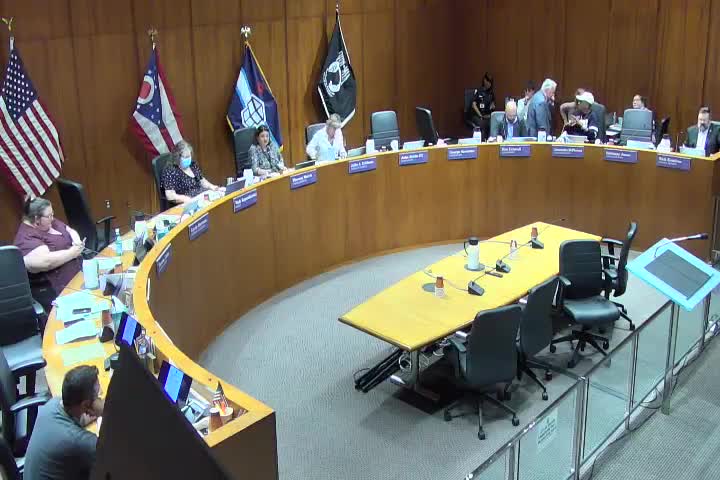
Toledo committee hears broad opposition to proposed school and daycare zoning changes in Ordinance 15,925
Summary
The Planning and Zoning Committee met in June 2025 to consider Ordinance 15,925, a proposed zoning amendment that would add use regulations and spacing rules for schools and certain early-learning programs.
TOLEDO — The Planning and Zoning Committee met in June 2025 to consider Ordinance 15,925, a proposed zoning amendment that would add use regulations for schools and certain early-learning programs and create spacing requirements between schools and businesses such as restaurants, convenience stores, automotive shops and tobacco retailers.
The hearing drew more than two dozen public commenters, many of them childcare center owners, school leaders and sector advocates who said the proposal would harm neighborhood childcare capacity and education options. Committee members and staff said the change was intended to strengthen student safety through site-plan reviews, pedestrian and traffic protections and landscaping requirements.
Council Member Komise, who introduced the measure for discussion, said the proposal grew from a long-running review after several incidents involving students. "We care about student safety and making sure that they get to and from school safely," Komise said, describing the ordinance as "a step in the process" rather than a final decision.
Deputy Director Cottrell of the planning department said staff and the plan commission performed a peer-city review and recommended focusing on pedestrian safety, traffic studies and specific use regulations. "The city of Toledo does have some of the most stringent regulations now regarding schools," Cottrell said, and staff proposed adding conditions such as traffic-study requirements to the land-use review for schools.
Many speakers representing childcare providers and charter or private schools urged the committee to pause and study the ordinancebefore moving forward. Michelle Lieber, owner/operator of two child-care centers and president of the Ohio Association of Child Care Providers, told the committee the amendment "seeks to potentially close 282 businesses" and described childcare as "the workforce behind the workforce." Lieber and other providers said the ordinance duplicates state licensing rules and would impose substantial new costs on small operators.
Councilwoman Williams, who raised detailed legal and statutory concerns during the hearing, warned the ordinance as written would render many existing schools and some public schools "nonconforming." Williams said the spacing rules in the draft cite multiple zoning sections and would subject schools to 500-foot and 1,000-foot buffers from a list of uses; she said that would affect neighborhood schools including public and parochial campuses and several well-known local schools.
"This will cause the current schools ... to be nonconforming according to this legislation," Williams said, urging colleagues to consider potential legal exposure and the practical effect on expansion and renovation.
School leaders and advocates echoed the point. Rob Koenig, director of Toledo School for the Arts, said the proposed setbacks and site-review requirements "heap more burden and, of course, more cost" on community and charter schools that already operate on tight budgets. Tom Antonini, general counsel for the Diocese of Toledo, said the lack of a grandfather clause raised constitutional takings concerns for long-established parish schools.
Representatives of system-support organizations offered impact data and policy suggestions. Suzanne Gull, director of the YWCA Childcare Resource and Referral, said the YWCA serves 282 local providers and estimated that the proposed rules would force closures and job losses among childcare staff. Gull asked the committee to "pause and initiate a study of the effects of the proposed zoning amendment" and to consider alternative compliance paths rather than blanket reclassification.
Several speakers asked for clarity about which programs the ordinance would cover. Committee members and speakers discussed differences in state licensing: the Ohio Department of Education (ODE) licenses K–12 schools while the Department of Children and Youth (DCY) licenses most birth-to-5 early-learning programs. Multiple childcare providers and advocates said the draft conflated or ambiguously referenced both agencies, and committee members asked staff to tighten the definitions.
Committee members and plan commission staff described how schools and daycares are currently reviewed. Schools typically require a special-use permit; many daycares require site-plan review depending on zoning. Cottrell and other staff said the proposed ordinance would codify some practices already applied at plan commission discretion (for example, traffic and pedestrian-safety conditions) into specific use regulations for schools.
Several commenters urged the committee to weigh safety data before changing land-use rules. Councilwoman McPherson and others requested traffic-accident mapping of school-hour incidents and a clearer statement of the specific safety problems the ordinance seeks to solve.
No formal vote or amendment was taken during the hearing. Multiple council members said they would take the testimony under advisement and pursue additional referrals and clarifications, including:
- Clarify whether the ordinance is intended to cover birth-to-5 early-learning providers licensed by DCY as well as K–12 schools licensed by ODE. - Produce and review traffic-safety data and maps for school-hour incidents and drop-off locations. - Consider grandfathering, alternative compliance paths, or limits on how nonconformity would affect expansion and renovation.
Speakers representing childcare centers and charter, parochial and dropout-recovery schools warned the committee that the draft's spacing provisions would make many existing facilities legally nonconforming and could block expansions or improvements. Other commenters, including union and teacher representatives and several educators, supported the ordinance's safety aims and urged the committee to strengthen protections for students.
Council members closed the hearing by thanking residents for their participation and saying they would continue the discussion. The committee did not schedule a final vote; several members signaled they would ask for additional data and legal review before any ordinance is advanced to the full council.
(For the record: the committee convened with nine members present for the hearing on Ordinance 15,925; public comment was limited to three minutes per speaker.)
Ending note: Committee staff said they will return with clarifications to the ordinance language, technical edits to definitions, and any requested traffic or safety analyses before the council considers further action.