Get Full Government Meeting Transcripts, Videos, & Alerts Forever!
Get email alerts on the Immigration Due Process topic
No spam. Unsubscribe anytime.
Hays County adopts resolution calling for due process, transparent treatment of immigrants in custody
Summary
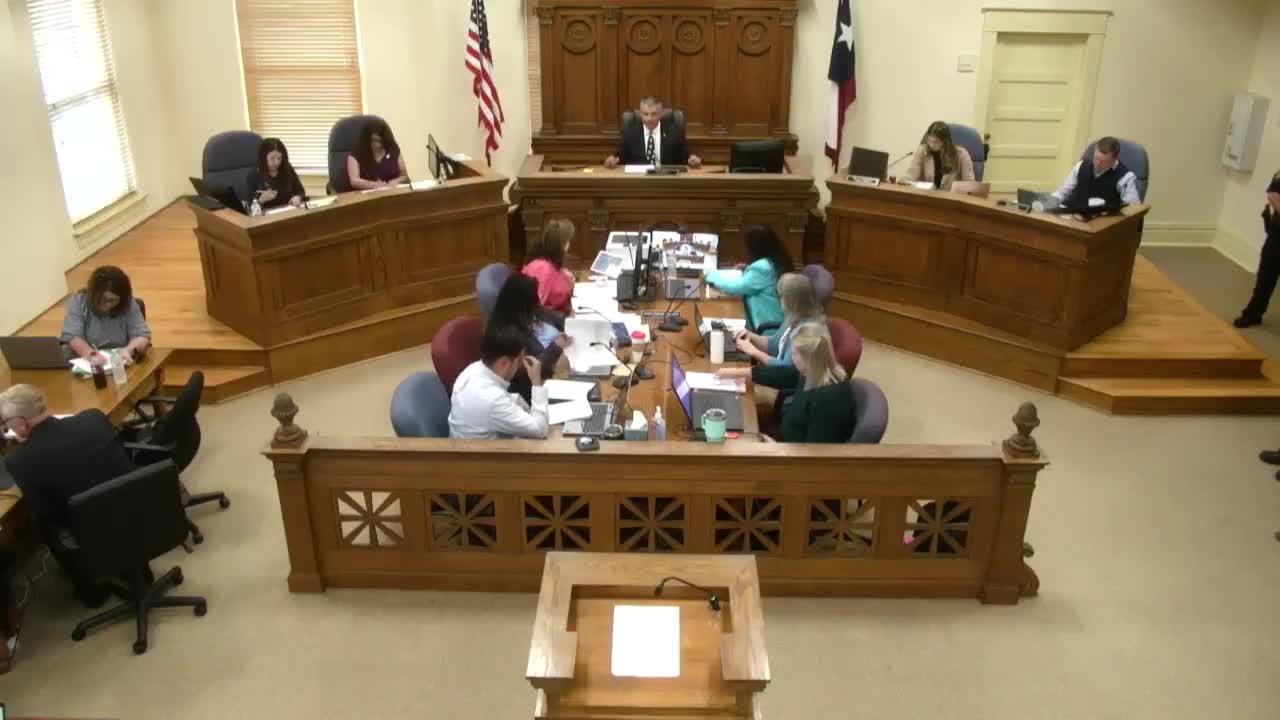
After extensive public comment, Hays County Commissioners Court voted unanimously June 10 to adopt a resolution urging timely notifications, visible identification of officers, and protections for the habeas corpus and due-process rights of immigrants taken into custody in the county's jurisdiction.
Hays County Commissioners Court on June 10 unanimously adopted a resolution affirming the county’s commitment to ensuring constitutional and humane treatment of immigrants taken into custody and calling for timely, transparent notifications about detention and transport.
The resolution, introduced by County Judge Ruben Becerra, asks that any individuals involved in custody or transport wear visible name identification and organizational insignia and that body‑worn cameras be used. It also urges notification “detailing who was taken, under what authority, where they were transported, and why such actions were undertaken.” The court voted in favor on a roll call after an extended period of public comment.
Supporters of the resolution filled the courtroom and submitted emailed comments in advance. Speakers during the public comment period described personal experiences with detention and deportation and urged the court to adopt the resolution as a statement of county values. Jonathan Steinberg, a long‑time Hays County resident, said law enforcement should identify themselves and their authority when conducting enforcement activities and said he supported the resolution as an appropriate balance between public safety and due process. Natalie Avendano, who said her father had been detained in 2018, described the fear families feel when a loved one is held in custody and urged resources for legal representation. Eric Martinez, executive director of Mano Amiga, urged the court to convert the proclamation’s intent into budgeted legal-navigation and interpreter services to help residents facing removal proceedings.
Commissioners and the judge framed the vote as an affirmation of constitutional principles and humane treatment rather than a change in federal or state law. Several commissioners noted limits on county authority over federal agents and independent law‑enforcement jurisdictions but said the county could set expectations for transparency and accountability where it has influence. Commissioner Hammer said she supported the proclamation but expressed concern about restricting face coverings in some law‑enforcement tactics when undercover safety concerns existed; Commissioners and the judge clarified the item asks only that individuals engaged in visible custody operations be identifiable and that municipalities and independent elected officials retain operational control.
The resolution text cites constitutional protections and court precedents referenced during the reading. The court adopted the measure by unanimous vote.