Get Full Government Meeting Transcripts, Videos, & Alerts Forever!
Get email alerts on the Short Term Rentals topic
No spam. Unsubscribe anytime.
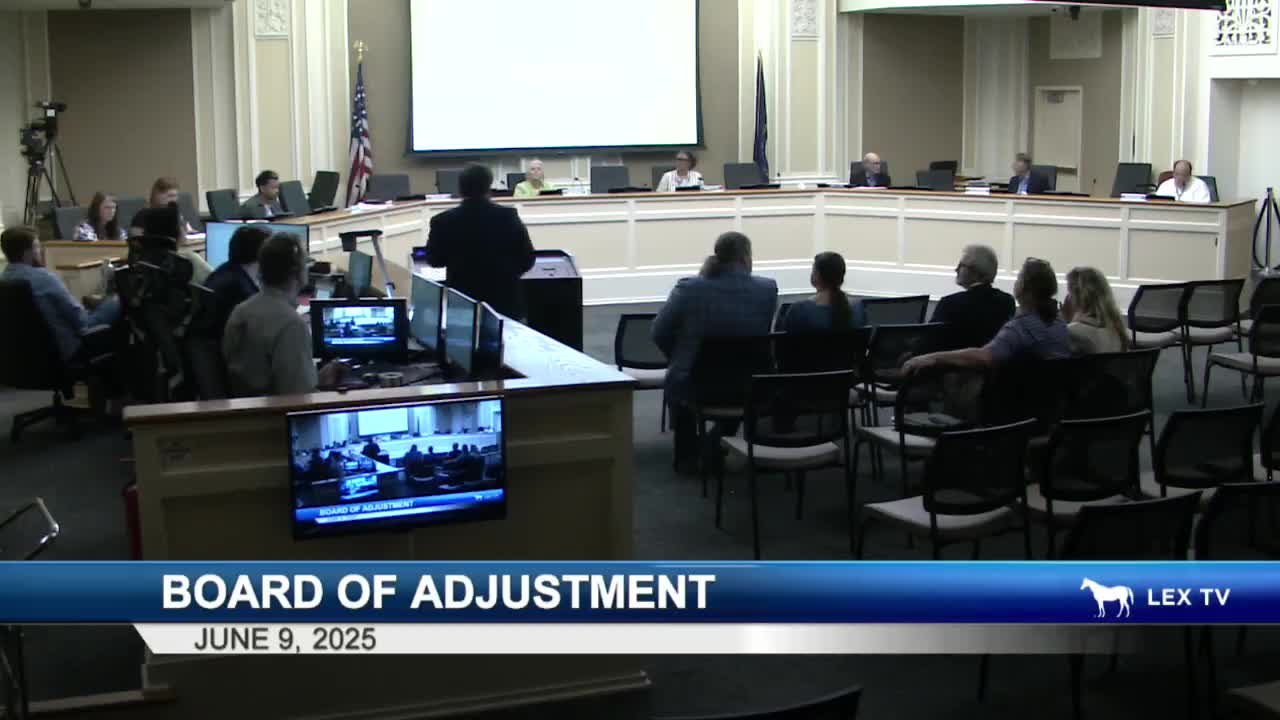
Board hears multiple short‑term rental requests; staff and rural‑land easement dispute shapes decisions
Summary
At the June 1 Board of Adjustment hearing the panel handled multiple short‑term rental matters and a dispute over whether a recorded PDR easement prohibits STR activity at one Arlington‑area farm; the board approved two STRs in other locations and left at least one contested AR‑zone case unresolved while parties seek written determinations.
The Lexington‑Fayette Urban County Board of Adjustment on June 1 took up several short‑term rental (STR) requests and related conditional‑use permits. The hearing highlighted two competing rules: the zoning code’s STR spacing and concentration limits, and the limits written into permanent purchase‑of‑development‑rights (PDR) easements that may prohibit commercial uses of conserved farmland.
PDR easement vs zoning: the most contested case involved a parcel subject to a PDR easement. Planning staff recommended disapproval because the property is restricted by a recorded PDR easement held by the Fayette County Rural Land Management Board and the U.S. Natural Resources Conservation Service (NRCS). Beth Overman, director of the rural land management board, told the board the recorded easement specifically prohibits “commercial or industrial uses” not explicitly reserved in the deed and that NRCS concurs. An NRCS official emailed staff during the review period saying short‑term rentals would be a prohibited activity under the recorded deed. The applicant and his attorney argued the property had been used as short‑term lodging since 2019 and that a zoning compliance permit was denied because staff had not finalized the AR‑zone rule changes then under consideration; they said the prior use should be treated as a legal nonconforming use. Board members debated whether a recorded public easement is a threshold legal issue the board can decide and whether the case should be continued while the parties seek a written determination from the land‑management board and NRCS or pursue a court declaration. After extended discussion a motion to adopt staff’s recommended disapproval was moved and then failed; the board did not adopt staff’s recommendation at the hearing and the matter remained unresolved at the close of the session pending further administrative or legal steps.
Other STR decisions recorded at the hearing: - PLNBOA25‑53 (Dr. Thomas Larkin, short‑term rental at 2751 Military Pike): Approved. The owner confirmed the detached guest‑house plumbing connects to the same septic system and planning staff recommended approval; the board voted to grant the conditional‑use permit subject to the usual conditions attached to STR approvals. - PLNBOA25‑54 (Loralee/Laura Lee Trim, unhosted STR at 401 Redding Road, Unit 6): Approved. The applicant reviewed and accepted four staff conditions; with no public opposition the board approved the conditional use permit. - PLNBOA25‑56 (Jonathan Rollins): Staff had recommended disapproval and the case was placed on the heard docket. At the time of this transcript the board heard the case; the transcript shows planning staff had recommended disapproval but does not include a final roll‑call approval/denial recorded in the public minutes here. (See the official minutes for the formal vote.)
What the board and residents focused on: When STRs touch preserved farmland the hearing turned into a technical review of recorded deed language and who has the authority to interpret and enforce it. The rural land management board and NRCS said the recorded PDR deed explicitly prohibits short‑term rentals; the applicant said the property was in use for STR purposes before the easement and prior county practice allowed similar uses. Planning staff said the zoning ordinance does allow some STRs in AR zones but that those approvals must not conflict with a recorded public easement; staff told the board a letter from NRCS and the rural land board’s interpretation made the PDR restriction a threshold issue that should be resolved before the BOA grants permission.
Board members pressed legal staff for guidance about whether the BOA should accept or reject an interpretation by another public agency (the land management board), and legal counsel advised caution: because the federal government and the rural land board are parties to the recorded easement, the board should avoid issuing a permit that would be inconsistent with the deed without a definitive determination from the easement holders or a court.
The hearing also recorded several routinely approved STRs and a number of cases where planning staff and owners were able to resolve or accept conditions for approval. For the contested AR‑zone case the hearing ended with further administrative and possible legal steps required before the board could adopt a clear outcome.
Votes at a glance (items discussed at the June 1 hearing; vote outcomes appear as recorded in the meeting transcript): - PLNBOA25‑53 (Dr. Thomas Larkin, 2751 Military Pike): approved (motion passed at hearing). - PLNBOA25‑54 (Laura Lee Trim, 401 Redding Road, Unit 6): approved (motion passed at hearing). - PLNBOA25‑56 (Jonathan Rollins): staff recommended disapproval; transcript does not show a final recorded outcome in the public part of this hearing (consult official minutes for final action). - PLNBOA25‑41 (Chad Walker, 5167 Briar Hill Road — AR zone): staff recommended disapproval based on a PDR easement; the board debated the threshold question of the easement. A motion to adopt staff’s recommendation failed at the hearing; the matter remained unresolved in the transcript and may require administrative resolution with the rural land board, NRCS, or court action before a final BOA decision.
What to watch next: any subsequent submission by applicants or written determinations from the Rural Land Management Board or NRCS. Where recorded easements conflict with zoning, the board will look for either an explicit release or written concurrence from the easement holder, or a court‑ordered interpretation, before approving an STR that contradicts deed restrictions.