Get Full Government Meeting Transcripts, Videos, & Alerts Forever!
Get email alerts on the Water Utilities topic
No spam. Unsubscribe anytime.
Leesburg utilities report: Richmond water outage avoidable; Leesburg says its plants have redundancy and testing
Summary
Leesburg utilities director reviewed the January Richmond water treatment outage findings and compared Richmond’s failures to Leesburg operations, saying Leesburg maintains redundancy, routine maintenance, training records and a plan for extended outages; the item was information‑only and no council action was requested.
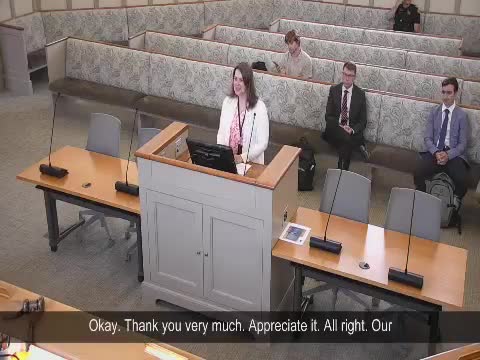
Amy Weicks, director of utilities for the Town of Leesburg, briefed the council on lessons from the January water treatment outage in Richmond and summarized how Leesburg’s operations compare.
Weicks said Richmond lost power to its treatment plant on Jan. 6 and that a consultant hired by the Virginia Department of Health found the incident “completely avoidable,” citing deficient maintenance and overreliance on manual processes. The Richmond outage led to a boil‑water advisory that took several days to lift, despite the initial power loss lasting about an hour.
“We have a Virginia Department of Health‑approved plan for extended power outages,” Weicks said, describing Leesburg’s practices: routine maintenance and testing of automatic transfer switches, fuel procurement contracts, preventive maintenance and regular training for newly hired and existing waterworks staff. She said Leesburg operates two plants on 24‑hour staffing (10‑hour rotating shifts), maintains computerized asset management, and is modernizing SCADA to reduce manual processes.
Weicks said the state recently circulated draft guidelines tied to new reporting requirements: waterworks will be required to report critical equipment failure, malfunction or contamination “as soon as practical, but no more than two hours after discovery.” Town staff said they are working with VDH on the draft guidance and that VDH inspected Leesburg facilities on April 25 and May 9; inspection reports were not yet provided in the transcript.
On federal funding, Weicks told the council that some preparedness grants (for example, EMPG‑style programs) face federal uncertainty and that state and local planning and memoranda of understanding remain important. She noted mutual‑aid memberships (e.g., National Capital Region mutual aid, Metropolitan Council of Governments participation) and local volunteer partnerships such as the Loudoun County Medical Reserve Corps.
Council member questions addressed whether Leesburg identified process improvements after reviewing Richmond (Weicks said further cross‑training on incident command and after‑action reviews are under way), the town’s staffing model (two 10‑hour rotating shifts cover 24‑hour operations) and whether the town’s plant configuration would be vulnerable to basement flooding like Richmond’s (Weicks said Leesburg’s plant construction differs and such flooding was less likely, but the town nonetheless maintains preventive maintenance and testing).
The presentation was information and discussion only; Weicks said she was not requesting council action. She highlighted Leesburg’s 20 consecutive Excellence in Waterworks Performance awards from the Virginia Department of Health and said staff will provide VDH inspection reports when received.